
Reimagining Stop Loss Insurance for High-Cost Therapies
A Symetra Project
Balancing customer protection and company risk: innovating stop loss insurance for the era of million-dollar therapies.
I led workshops and research that helped the team uncover opportunities and shape new product concepts to strike that balance.I facilitated workshops and led research to uncover hidden opportunities in gene therapy for Symetra's Stop Loss insurance.
TEAM
James L - Researcher, and workshop facilitator / designer
Lisa K - Product sponsor
Jason - Stopp Loss lead
Doug - Stop Loss actuary
Stop loss team - workshop participation
My Role
Market research
Research synthesis
Ideation
Workshop facilitation
Problem prioritization
Solution prioritization
Value prop development
DURATION
2.5 months

Under Non-Disclosure Agreement
Some of the details in this case study are purposely vague to protect the client’s intellectual property
01/ Summary
Services
Miro workshops
Ideation
Market research
Opportunity evaluation
Deliverables
Miro board
Survey summary
Idea prioritization sheet
Presentations to executives
Outcomes
Significantly improved understanding of the industry, the challenges, and the opportunity
10+ whitespace opportunities in Gene Therapy
2 successful initiatives launched
02/ Opportunity
When million-dollar cell and gene therapies started reshaping healthcare, Symetra’s Stop Loss team faced a dilemma: how to protect employer customers from runaway costs without putting the company at risk.
What is Stop-Loss Insurance?
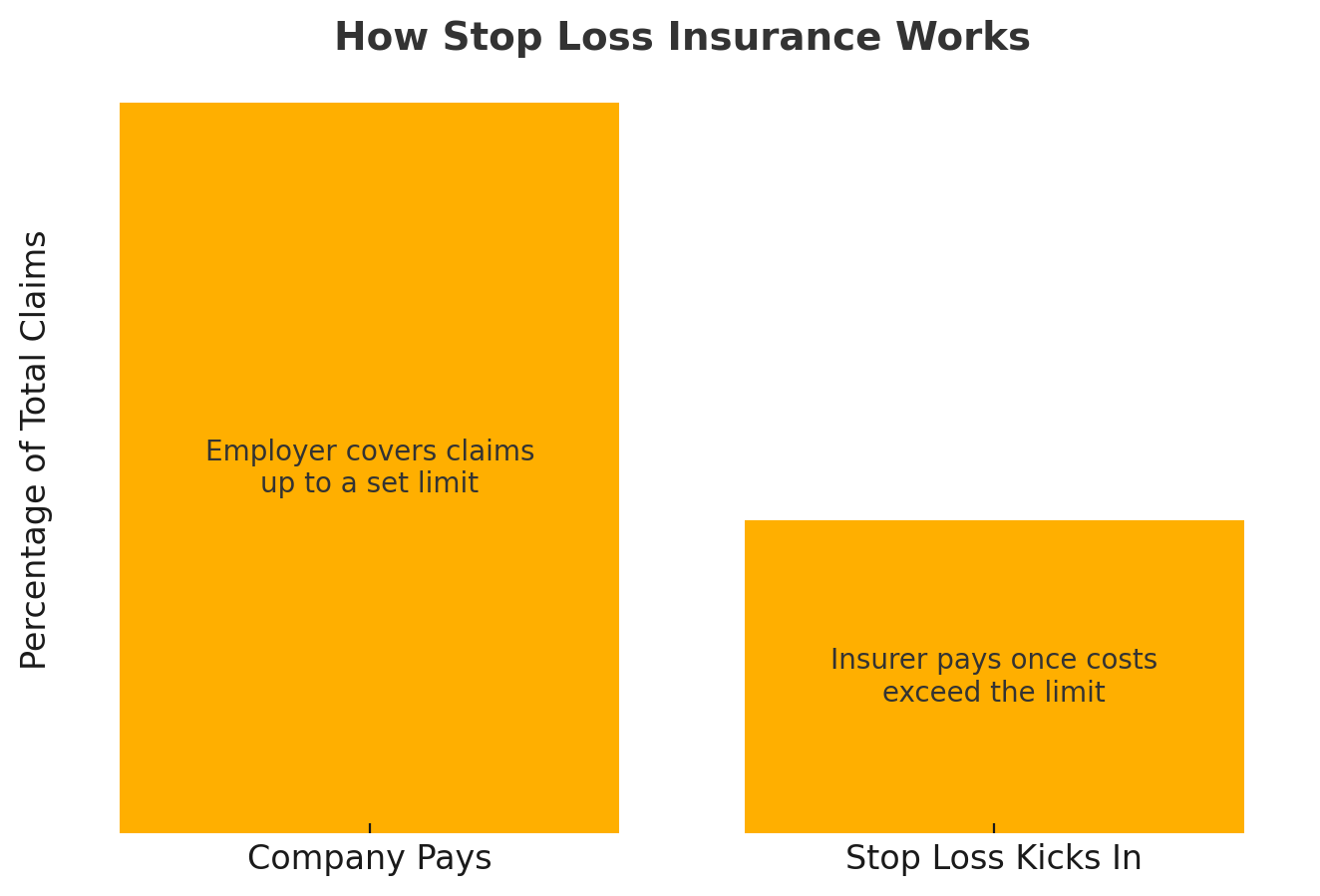
Stop-loss insurance protects companies that self-fund employee health plans by covering costs exceeding a predetermined limit.
Normally, companies bear the risk of employee claims, but if claims or total costs become unexpectedly high, stop-loss insurance steps in to help.
Stop loss insurance acts as a safety net: once claims go over a certain dollar amount (the “stop loss limit”), the insurance kicks in and pays the rest.
High Costs
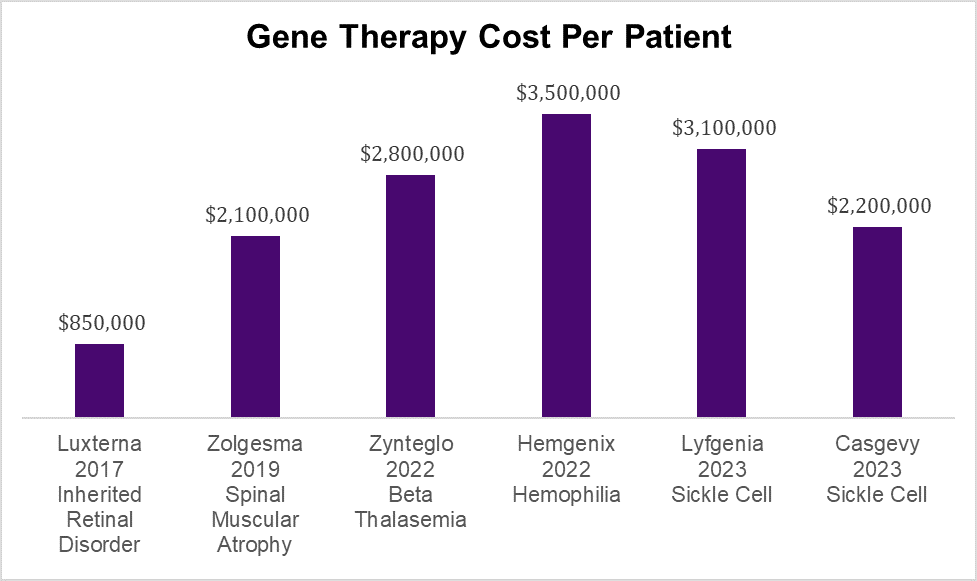
Cell and gene therapies represent both a breakthrough in healthcare and a major financial challenge — a single treatment can cost over a million dollars.
For Symetra’s stop loss insurance group, this created a tension:
Employers needed stronger protection against catastrophic claims to keep their health plans sustainable.
Symetra needed to avoid taking on unsustainable risk that could threaten its own stability.
The Opportunity
Design solutions that deliver better outcomes for employers and their employees, while safeguarding Symetra’s financial health.
03/ Process
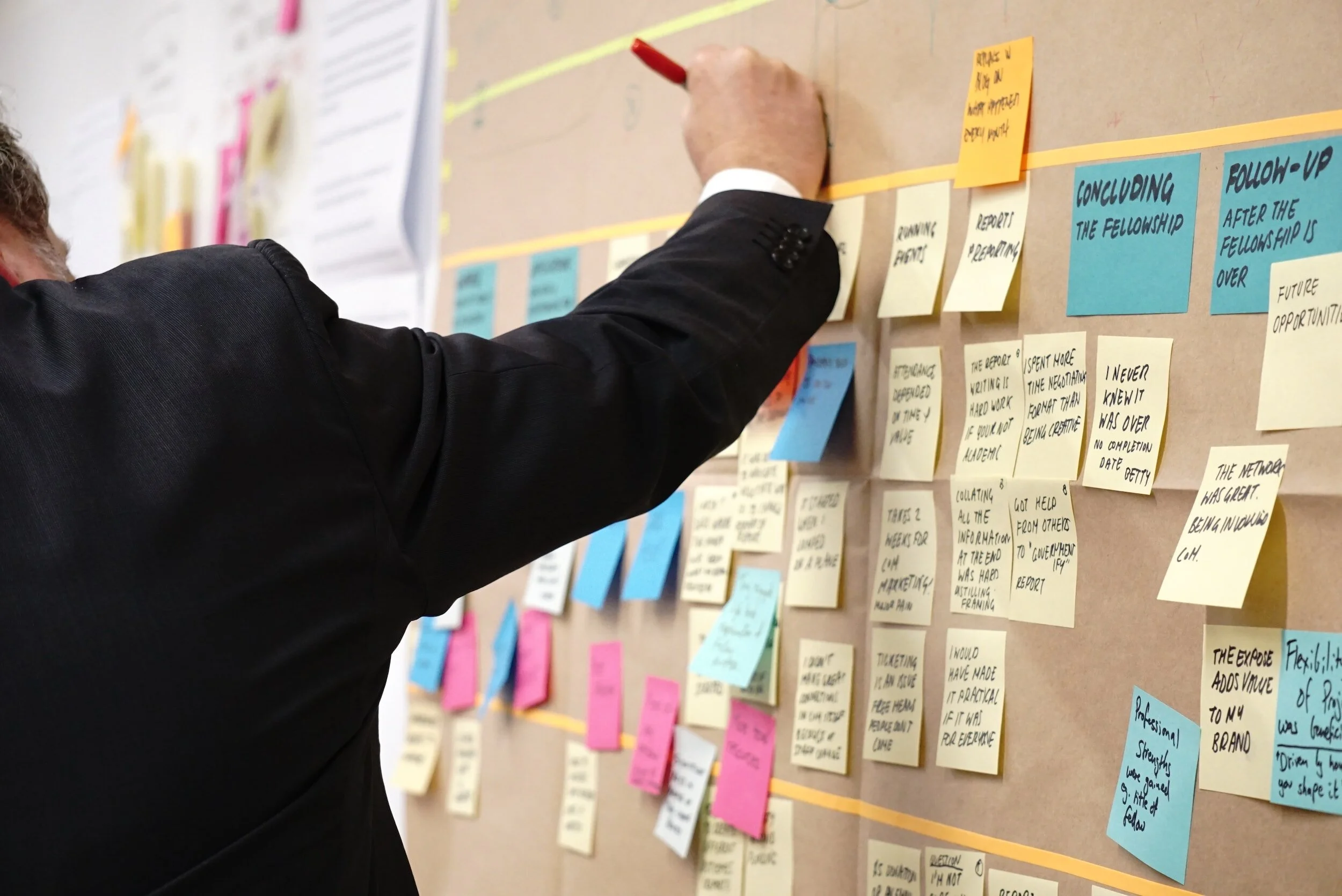
After initial alignment with the key Stop Loss stakeholders, I laid out a multi-day workshop agenda that would allow us to review emerging trends, spot whitespace opportunities, ideate on solution concepts, and prioritize the most promising ones for development!
The workshops were designed to foster collaboration and innovation in addressing the financial challenges posed by gene therapies. By leveraging structured brainstorming and prioritization techniques, we developed actionable solutions that align with Symetra's strategic goals and improve financial sustainability for employers.
-
Framing the Opportunity
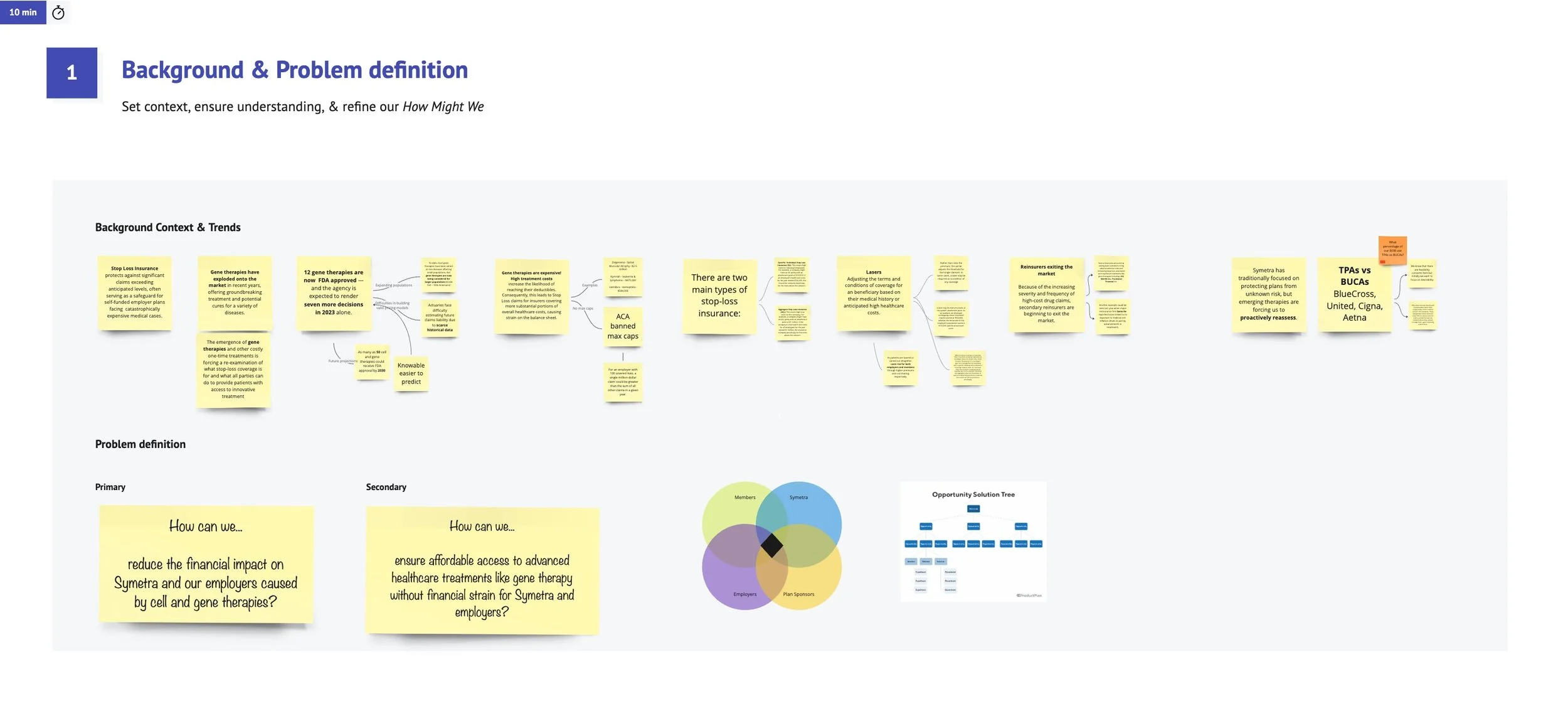
We kicked things off by establishing the background context and framing the challenges and opportunities to ensure everyone was aligned.
-
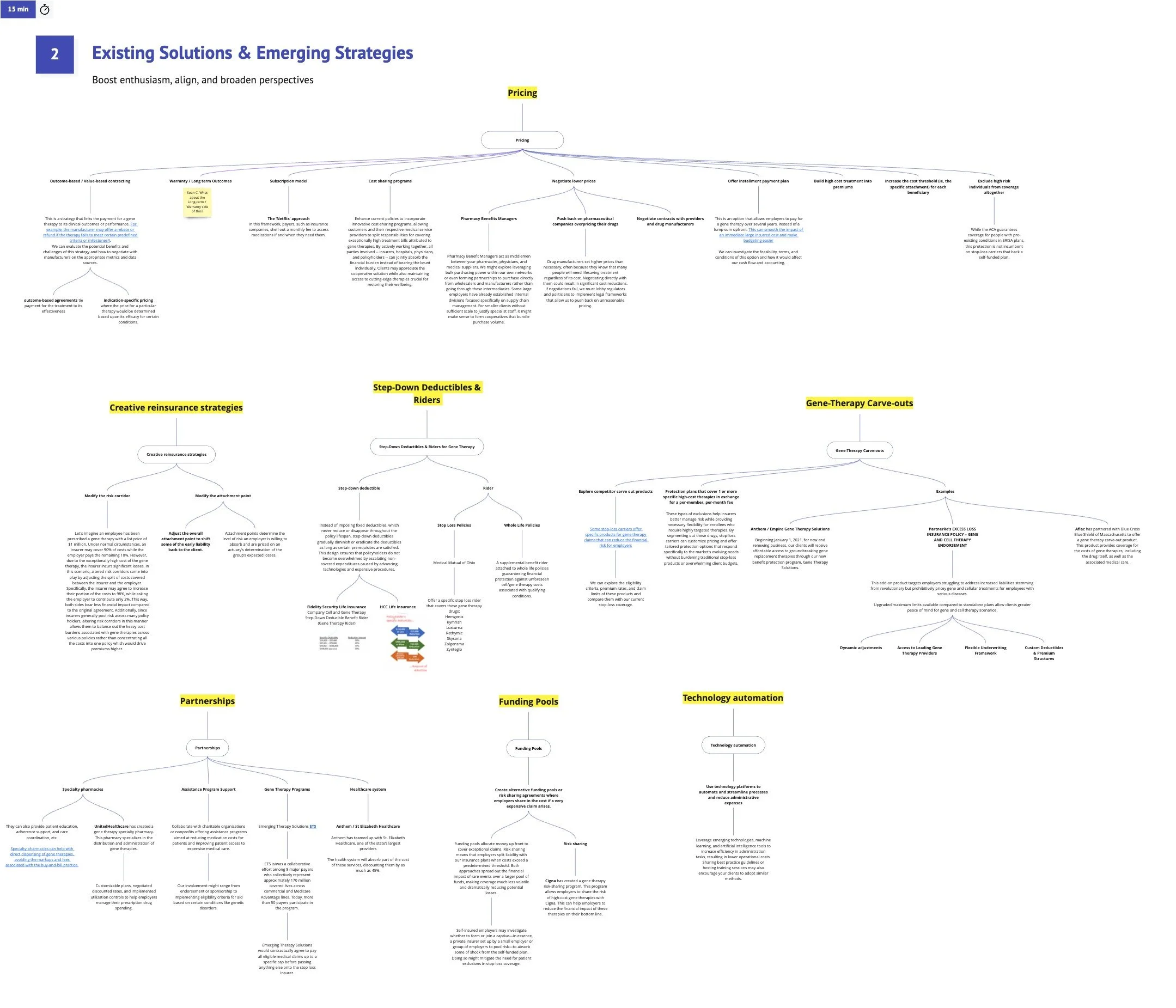
Research & Trends
Before diving into ideation, I’ve found it often helps to gain inspiration from existing ideas and emerging trends.
-
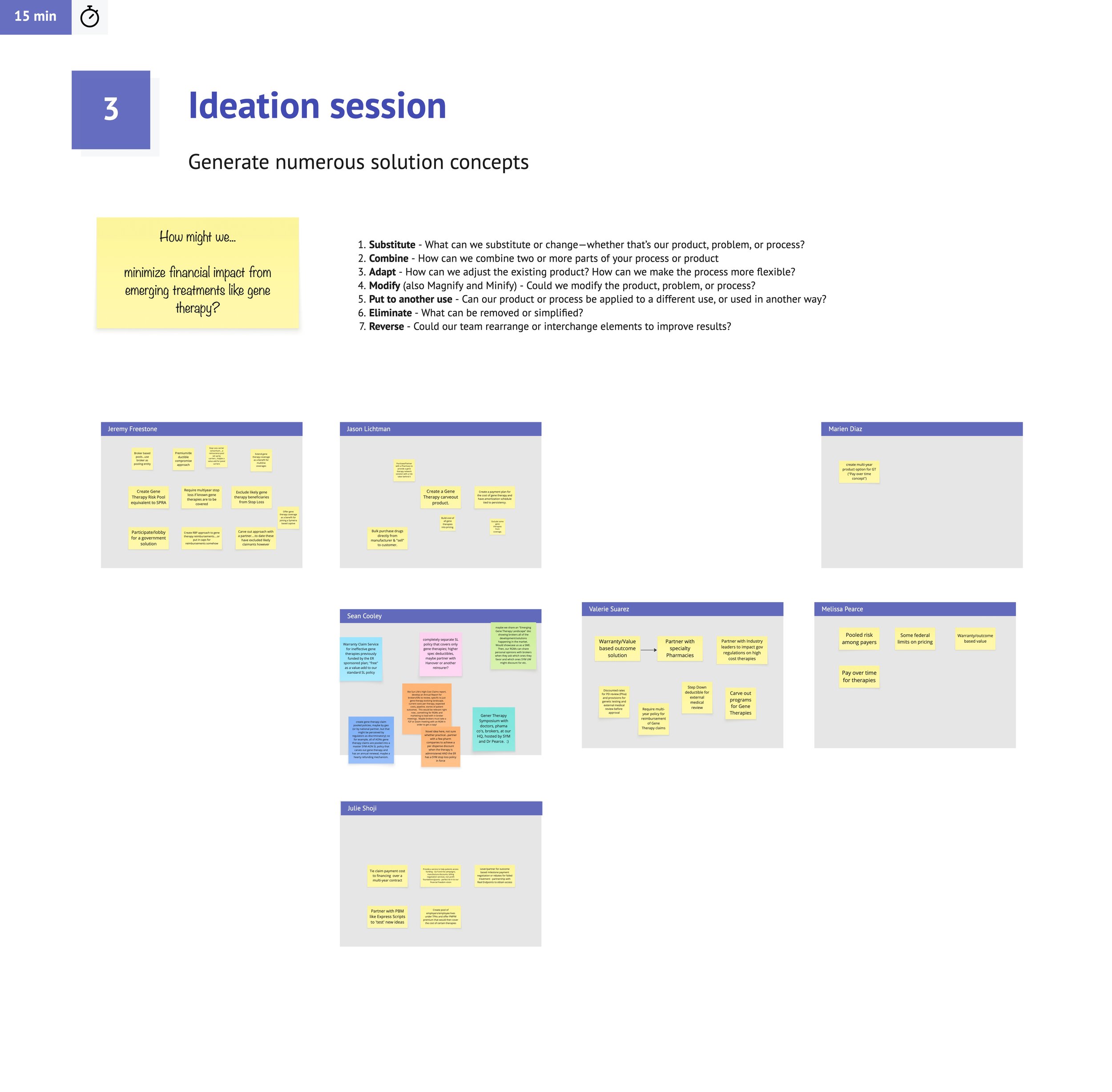
Ideation
Using the context and the inspiration, we jumped into an ideation session with one of my favorite ways to remix existing solutions with new ideas: S.C.A.M.P.E.R.
-
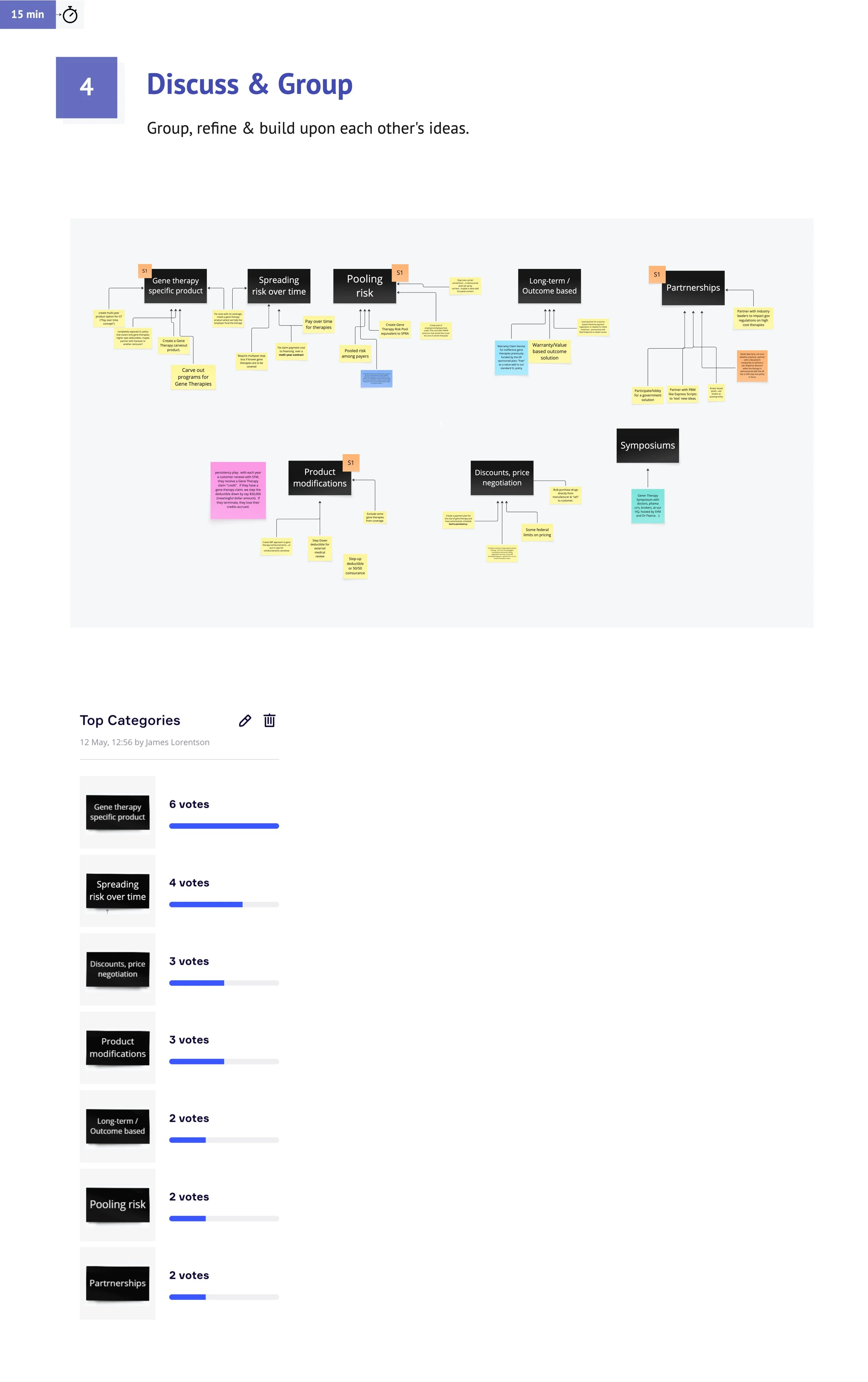
Grouping and Voting
-
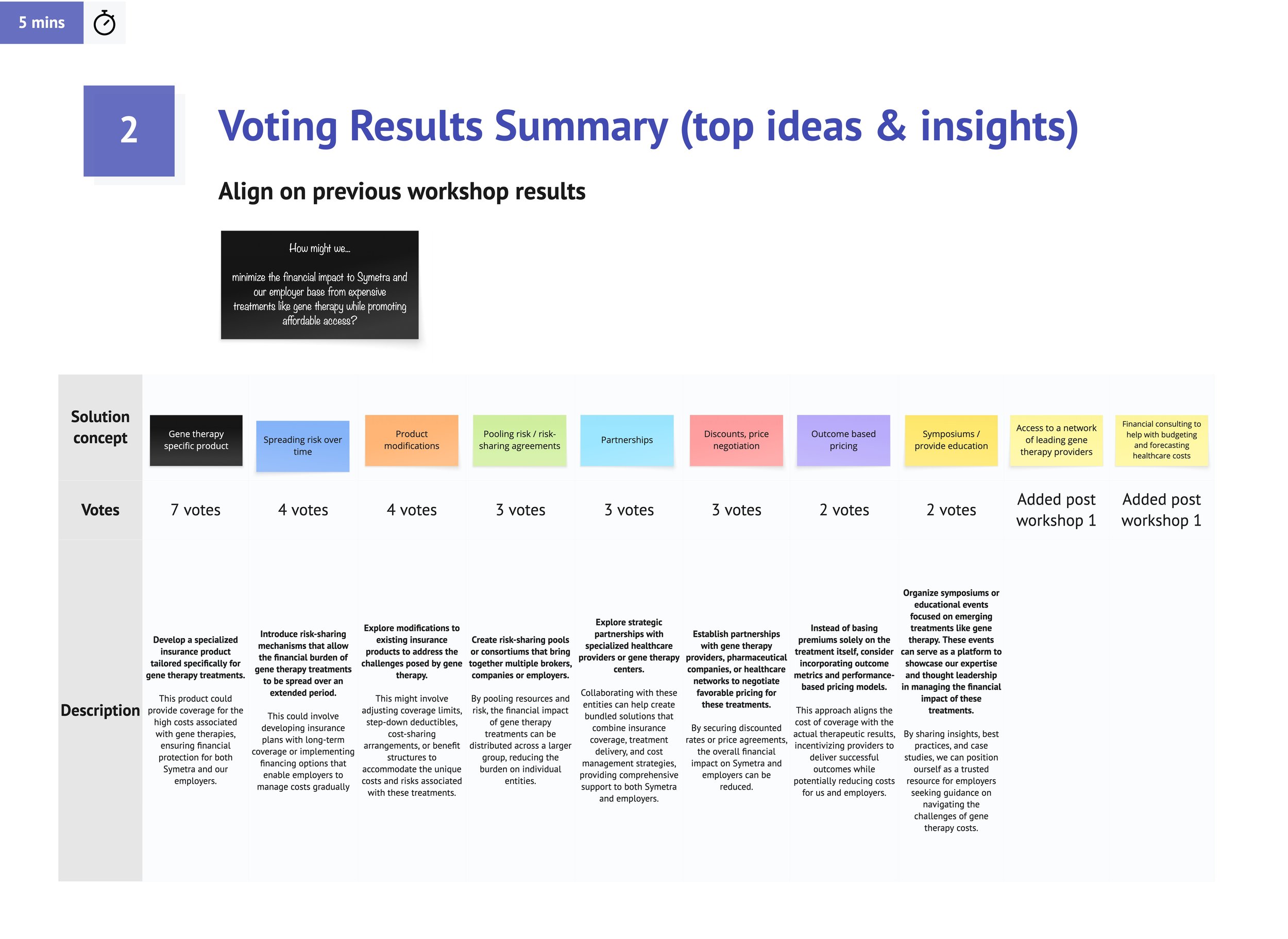
Voting
Voting results to move the team forward.
-
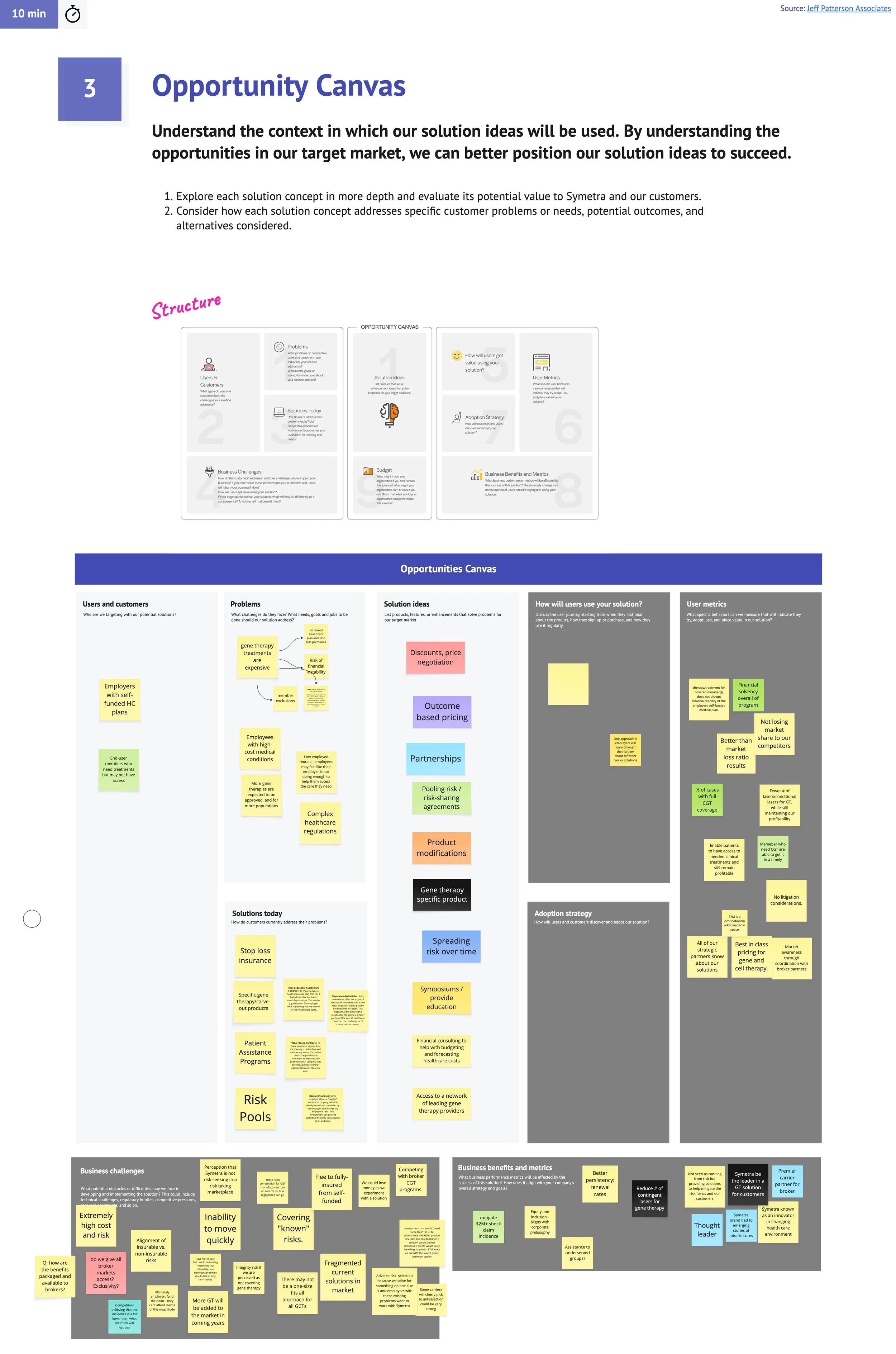
Opportunity Canvas
We used an opportunity canvas to unpack our beliefs about these new potential features and capabilities.
-
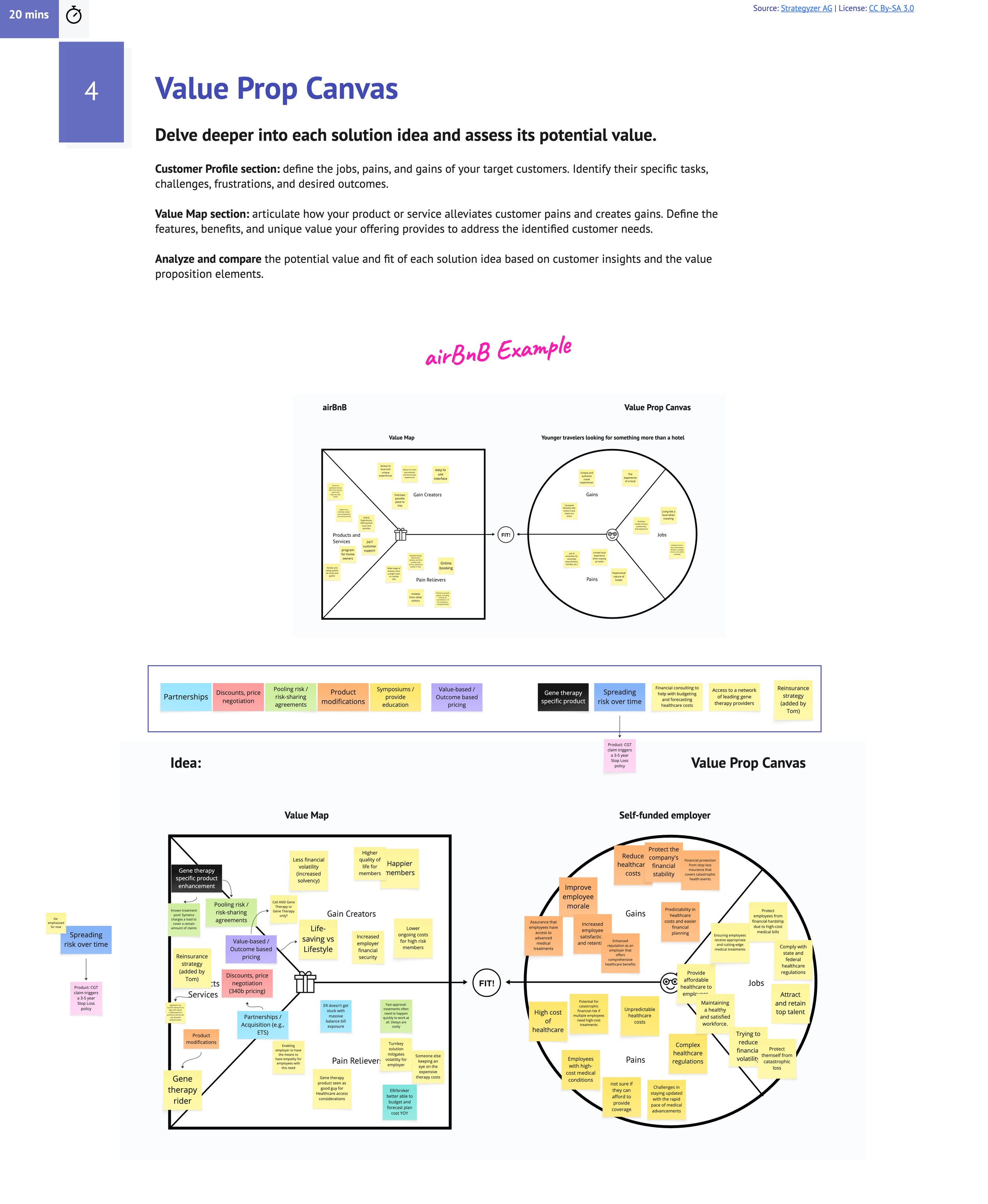
Value Proposition
Getting clear on the product / customer need fit.
-
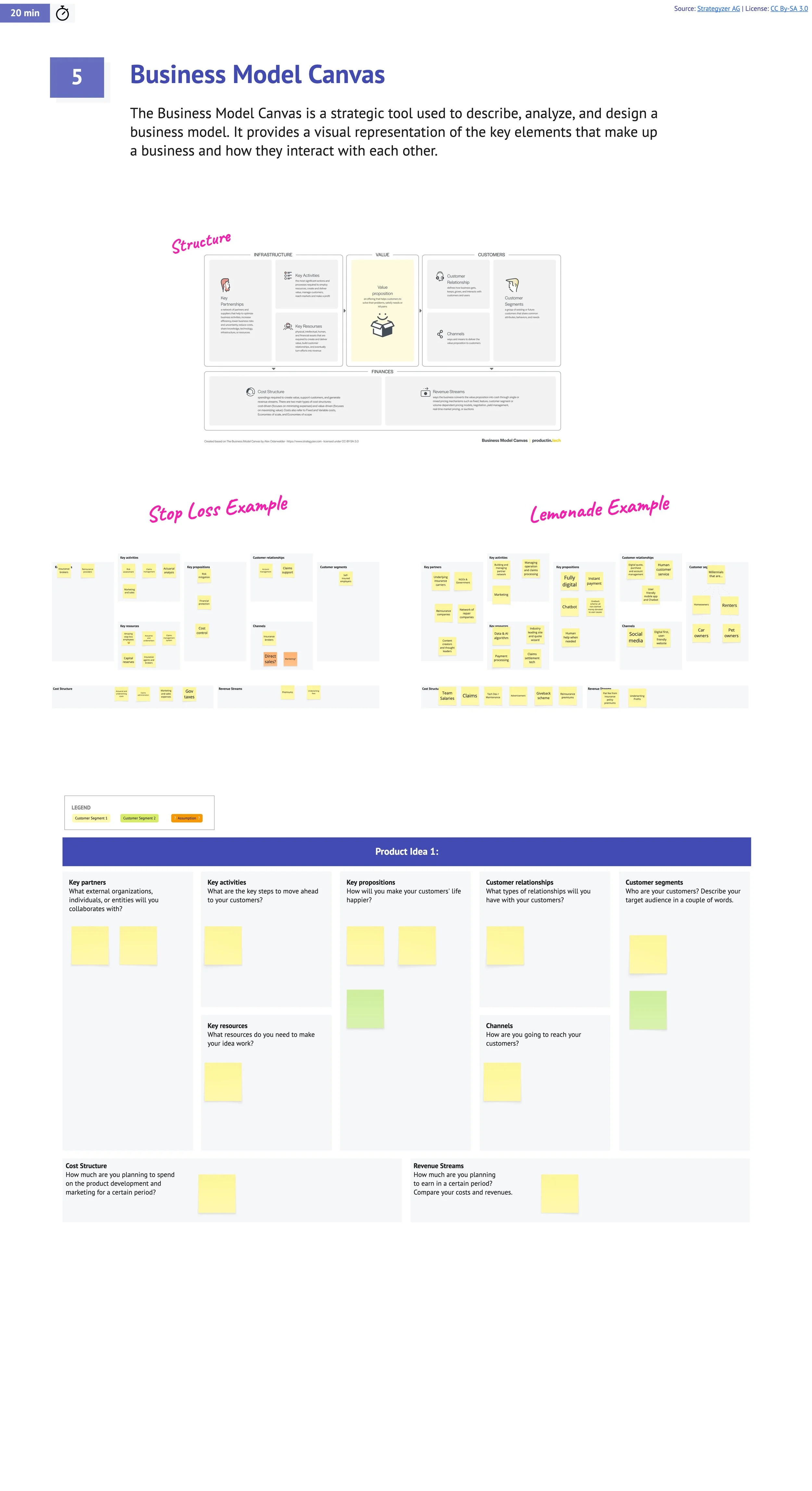
Business Model
Providing a holistic overview of how we would create, delivers, and captures value, and visually mapping the abstract ideas to real costs and revenue streams.
-
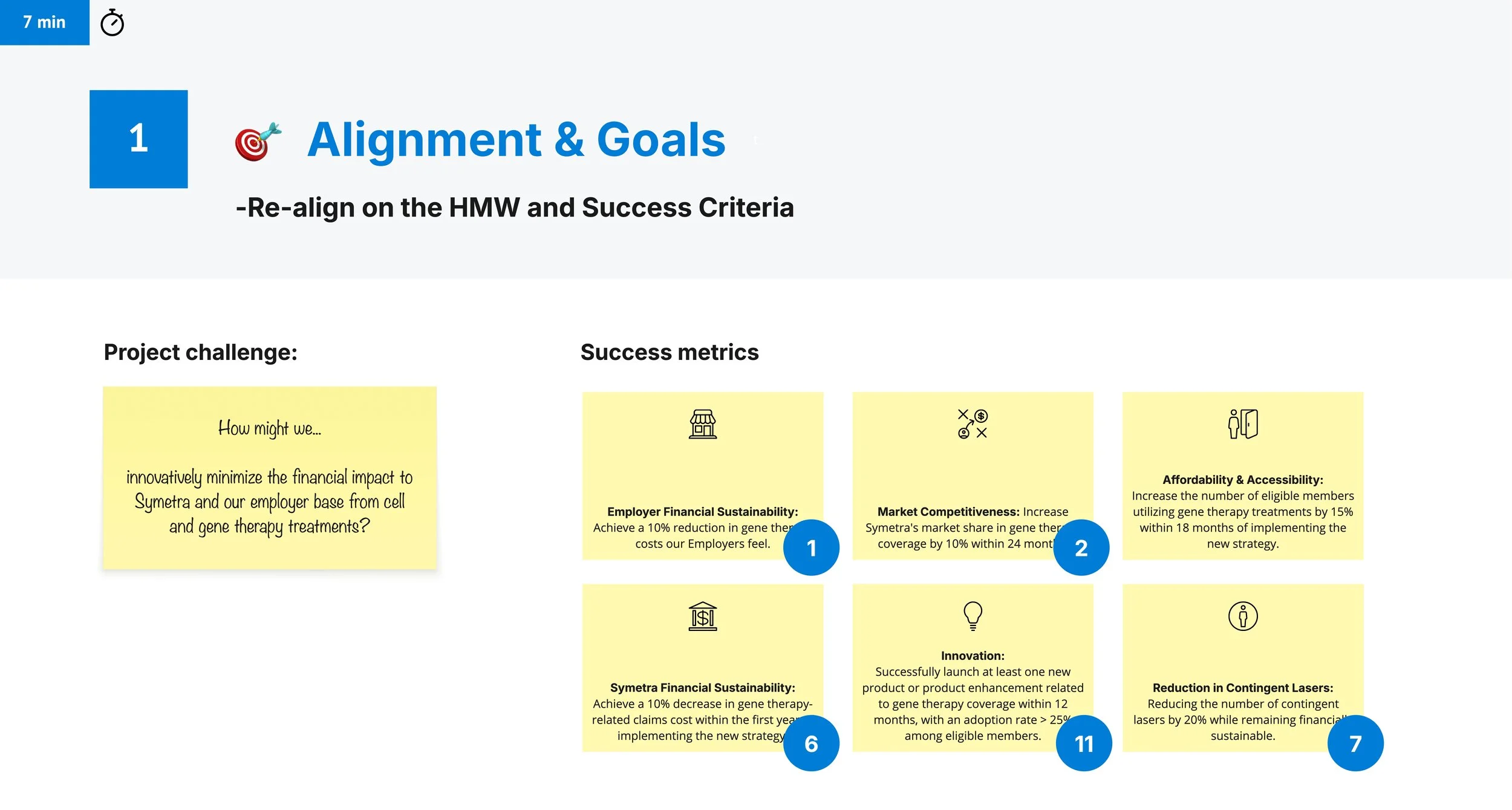
Re-alignment
For Workshop 3, we started by realigning on our goals. Senior level stop loss professionals are a challenging group to wrangle, with tons of experience as opinions, so it was critical to keep checking in and moving the group as a whole.
-
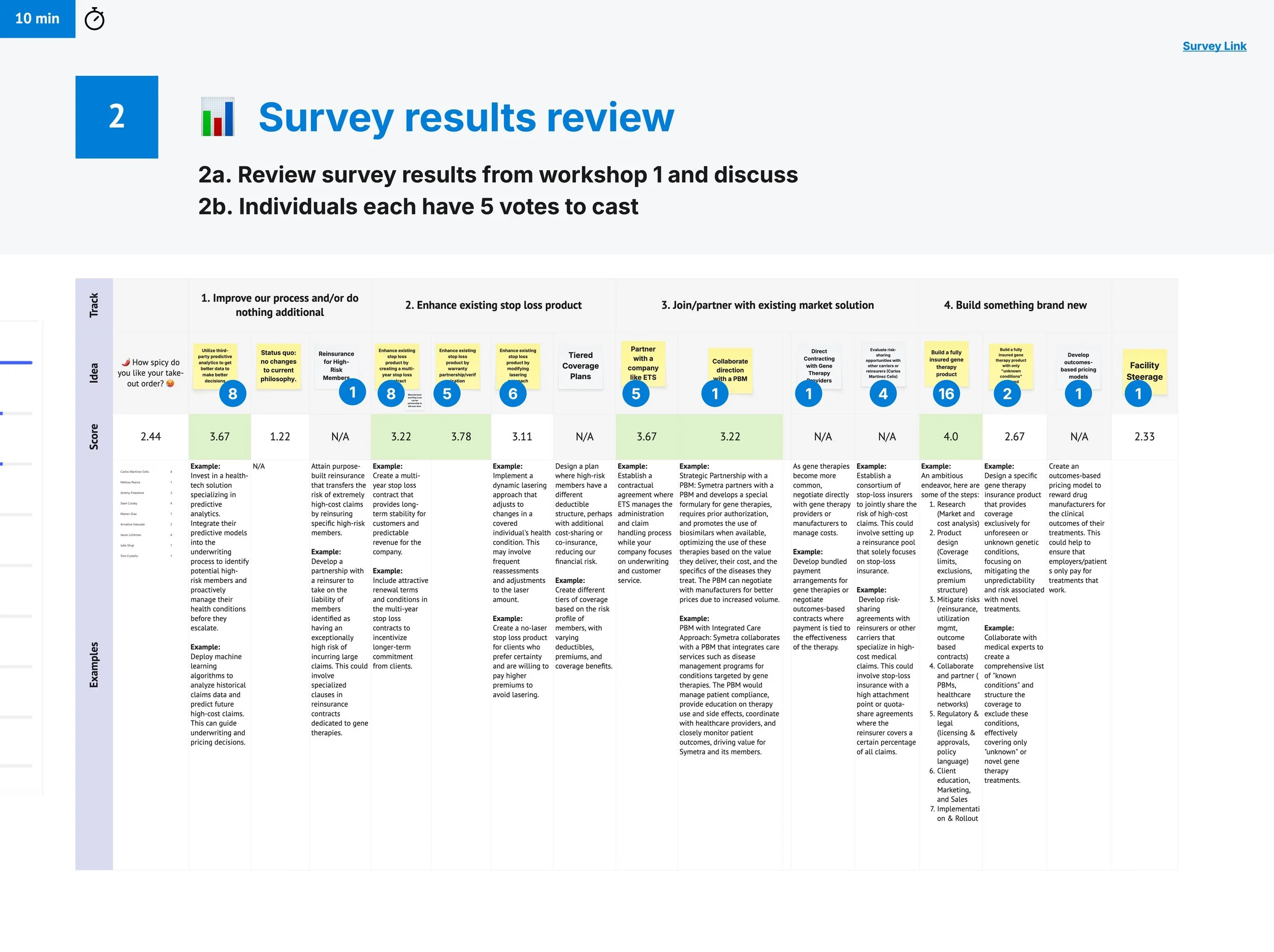
Survey
To gain some customer insight, I reached out to existing stop-loss customers with a survey to have them weigh in on our ideas.
-
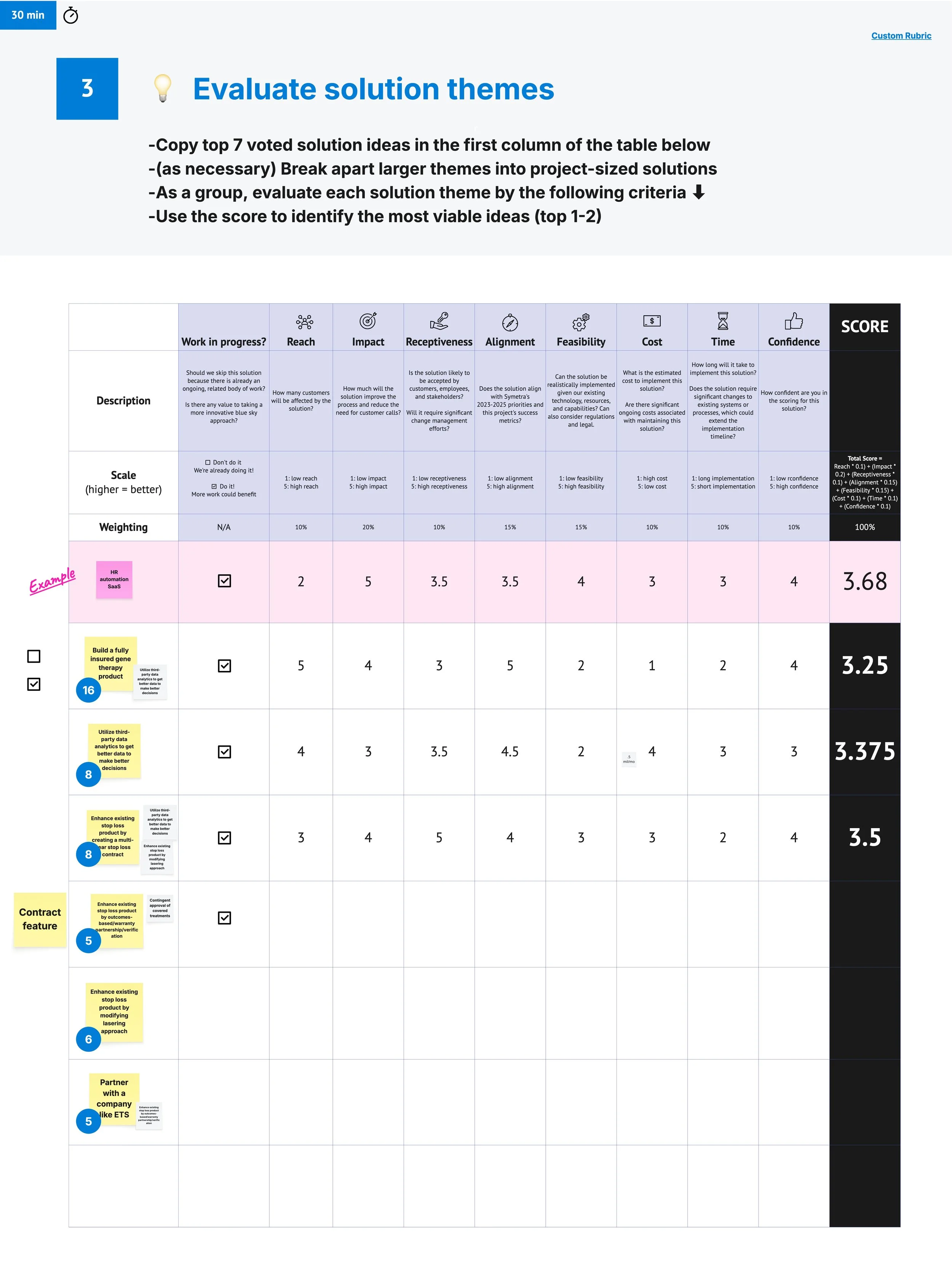
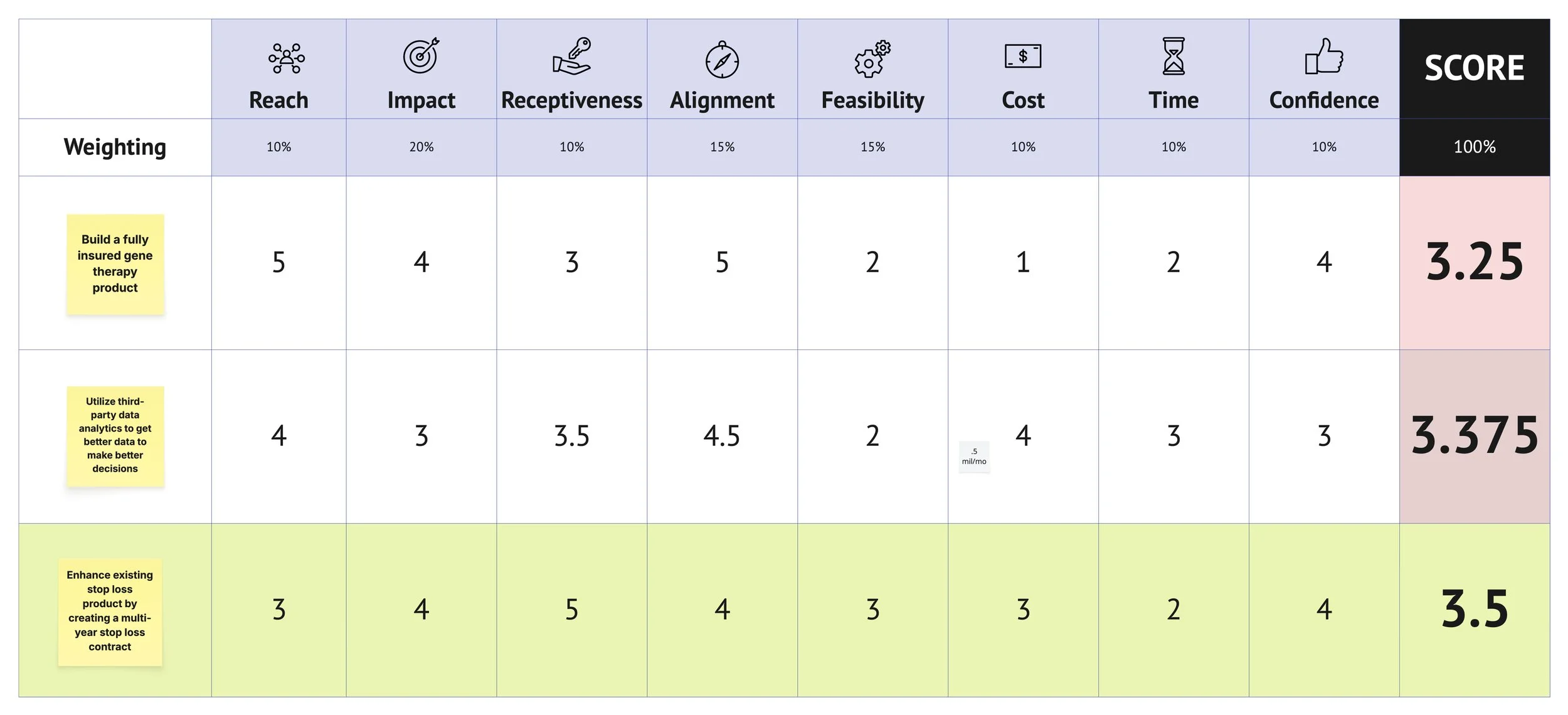
Solution Evaluation
I created a weighted scoring system to help us evaluate and score our backlog of ideas.
-
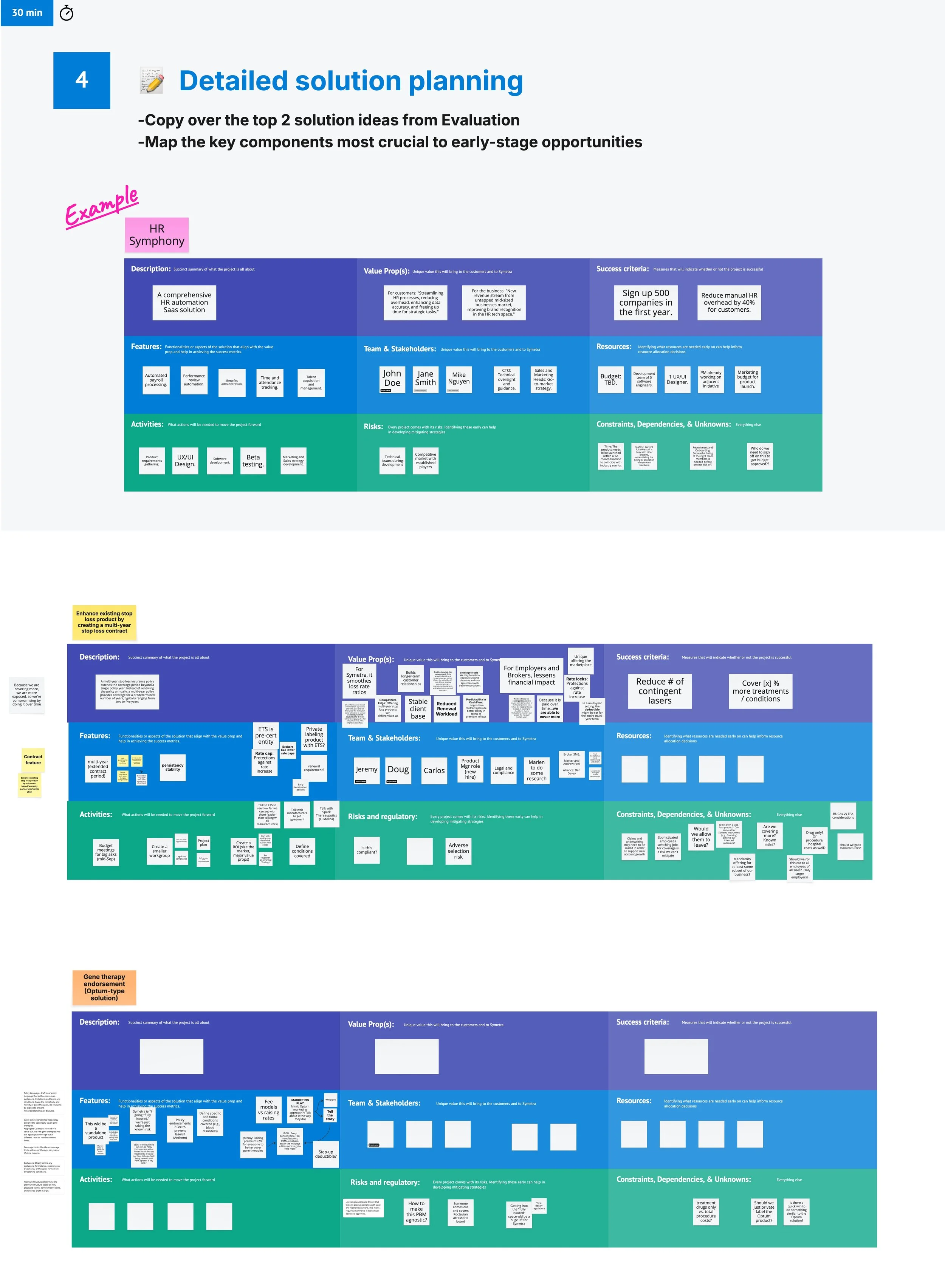
Detailed Solution Planning
It was time to hone in on our chosen 2 big ideas.
-
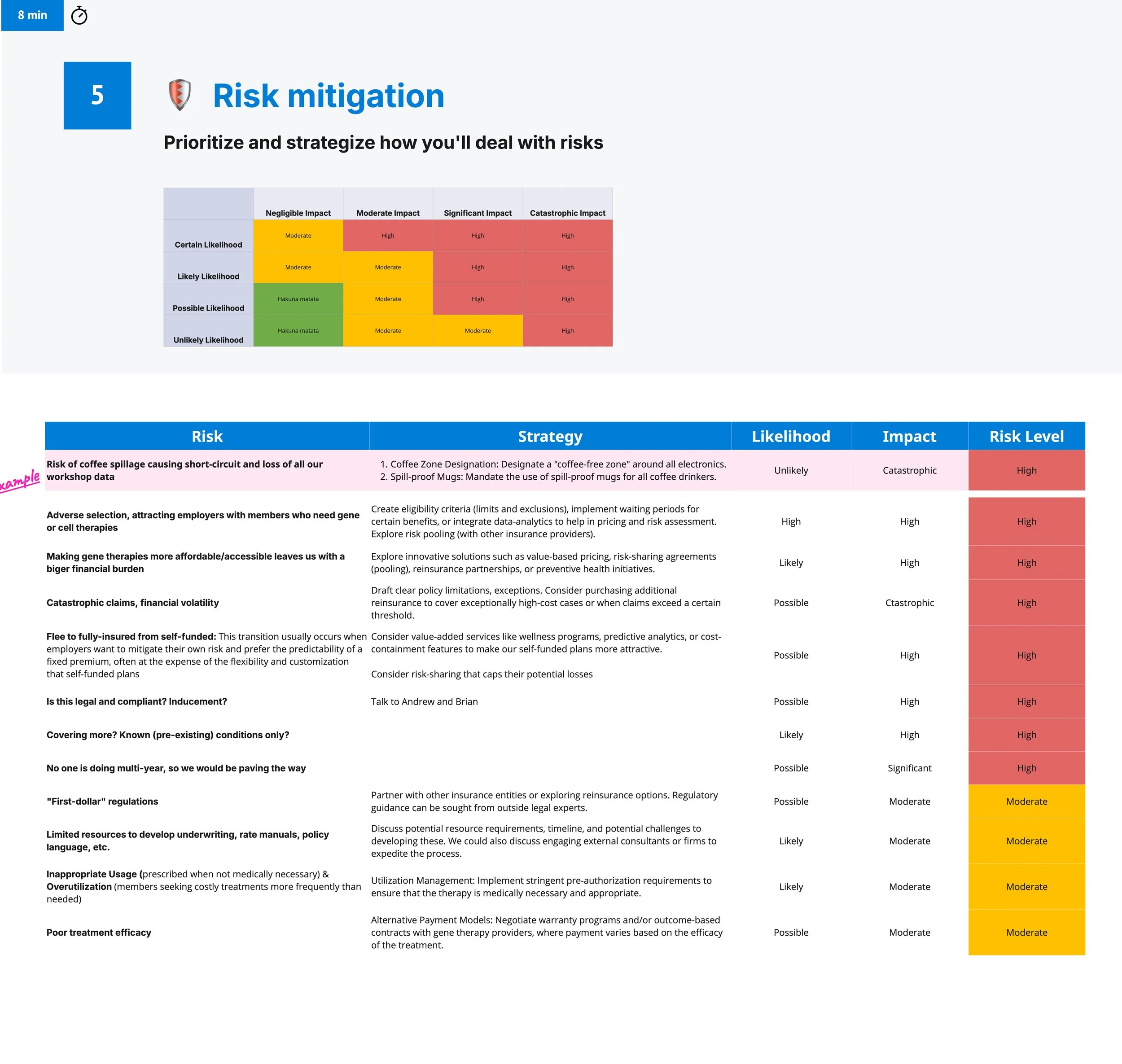
Risk Mitigation
Any new product or feature comes along with a set of risks. And that was especially true when we're dealing with millions of dollars of claims and integrated systems. Admit it, the risks by documenting them and coming up with ways to mitigate them.
04/ Solutions
After the larger group workshops were finished, it was time to move our selected concepts into action. We established small work parties for further development.
Under Non-Disclosure Agreement
Some of the details in this case study are purposely vague to protect the client’s intellectual property
04/ Outcomes
This work positioned Symetra to lead, not react, as gene therapy costs reshape the industry
Through this project, I helped Symetra’s Stop Loss team clarify a complex challenge. Over four workshops, we united experts around understanding high-cost therapy risks and identified over ten insights. We then developed two product concepts for future work.
I learned how crucial facilitation, prioritization, and alignment are with expert stakeholders. I also gained insights into stop loss insurance, cell and gene therapies, and ways insurers can improve outcomes while managing risk.
By the end, the team had two promising ideas and a repeatable workshop framework for future challenges.
Successes
Facilitated four cross-functional workshops that brought alignment across seasoned stop loss experts, actuaries, and business leaders.
Generated 10+ actionable insights and narrowed them into two refined product concepts for budgeting season.
Established smaller working groups to advance the most promising ideas into future development.
Created a shared understanding of the gene therapy challenge and positioned Symetra to respond proactively.
Learnings
Learned the importance of prioritization and structured facilitation when working with highly knowledgeable, opinionated stakeholders.
Built deeper understanding of stop loss mechanics, cell and gene therapies, and the financial levers available to balance customer benefit with company stability.
Confirmed that alignment exercises (opportunity canvases, value prop canvases, and structured voting) were critical in moving from divergent ideas to convergent solutions.
What’s next?
Two selected product concepts entered workstream incubation, with smaller teams assigned for refinement and testing.
Continued exploration of emerging therapy costs as a long-term industry challenge, keeping Symetra ahead of competitors.
The workshop framework is being reused by the Stop Loss group to tackle future strategic challenges.