
Cares iOS app
A Symetra initiative
From concept to product launch—Empowering caregivers with one-touch check-ins and critical health and safety monitoring.
TEAM
James L - Designer
Amber F - Designer
My Role
Concept strategy
Research
Content
Branding & art direction
Design
Testing & refinement
TIME
Mar 2023 - Dec 2023

Under Non-Disclosure Agreement
Some of the details in this case study are purposely vague to protect the client’s intellectual property
01/ Summary
Services
Business modeling
Market research
User research
Copywriting
Branding
Ideation
UX/UI design
Information architecture
User testing
Marketing
Deliverables
Competitive analysis
User interviews
Copy
Personas
App flows
App styles (fonts, colors)
Research synthesis
Brand voice & values
iOS wireframes
Design system
Logo & icon design
Prototypes
Landing page
Analytics environment
App Store screens
iOS App (worked w/ external devs)
Outcomes
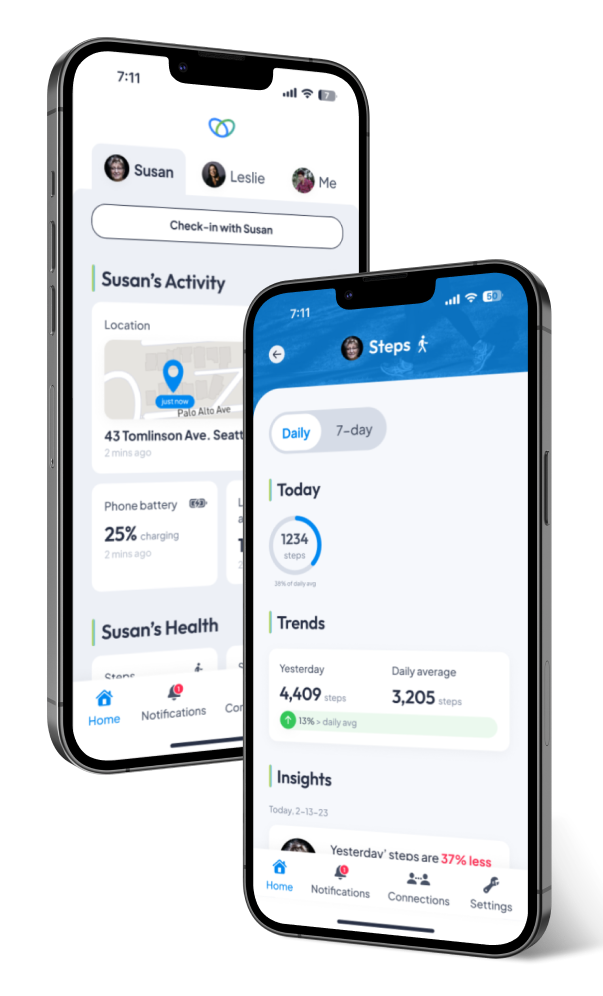
An intuitive iOS app tailored for sandwich caregivers, offering seamless health/activity data sharing, one-touch check-in, and cutting-edge critical notifications, leading to increased caregiver peace of mind and efficiency.
My role
I was involved in this project from early in the funnel as our small New Ventures team was tasked with finding a white space opportunity to help Symetra serve an underserved market outside of traditional insurance.
02/ Opportunity
Project goals
-
01/
Grow revenue by 10% by 2025
-
02/
Bring in new customers from an underserved market
-
03/
Create a new product outside of Symetra's core insurance business focused on holistic wellbeing
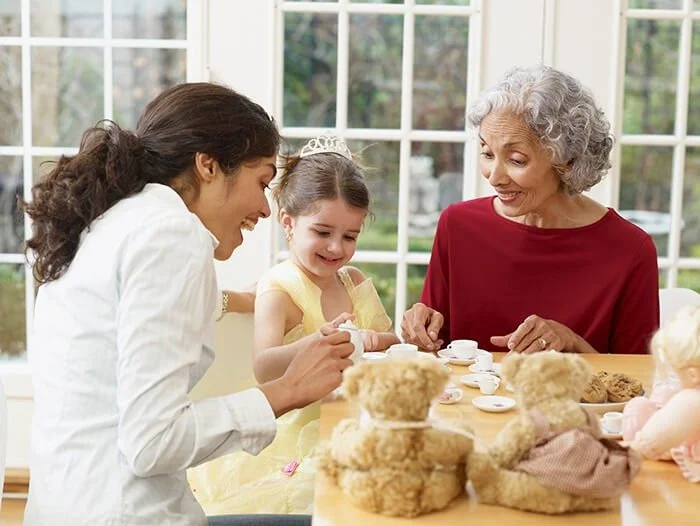
Early on in our blue sky research, we learned that ‘sandwich caregivers’, those balancing dual caregiving responsibilities for both children and elder loved ones, often face significant time constraints and stress. They needed a solution to efficiently monitor their loved ones’ health and well-being without adding to their daily burdens.
20% - a big problem!
The Pew Research Center reports that more than every 2 in 10 parents are caring for an adult in addition to their children.
No specific tools available
The lack of existing tools catering specifically to the unique needs of sandwich caregivers.
how to balance innovation w/ Ease of use?
The need for a solution that balances detailed health monitoring with ease of use and non-intrusiveness.
03/ Process
We aimed to learn about the current caregiving landscape and truly understand the needs of caregivers and their elderly family members.
Team approach
I joined a 4-person team including a Venture Builder, project manager, CX Researcher, and data scientist.
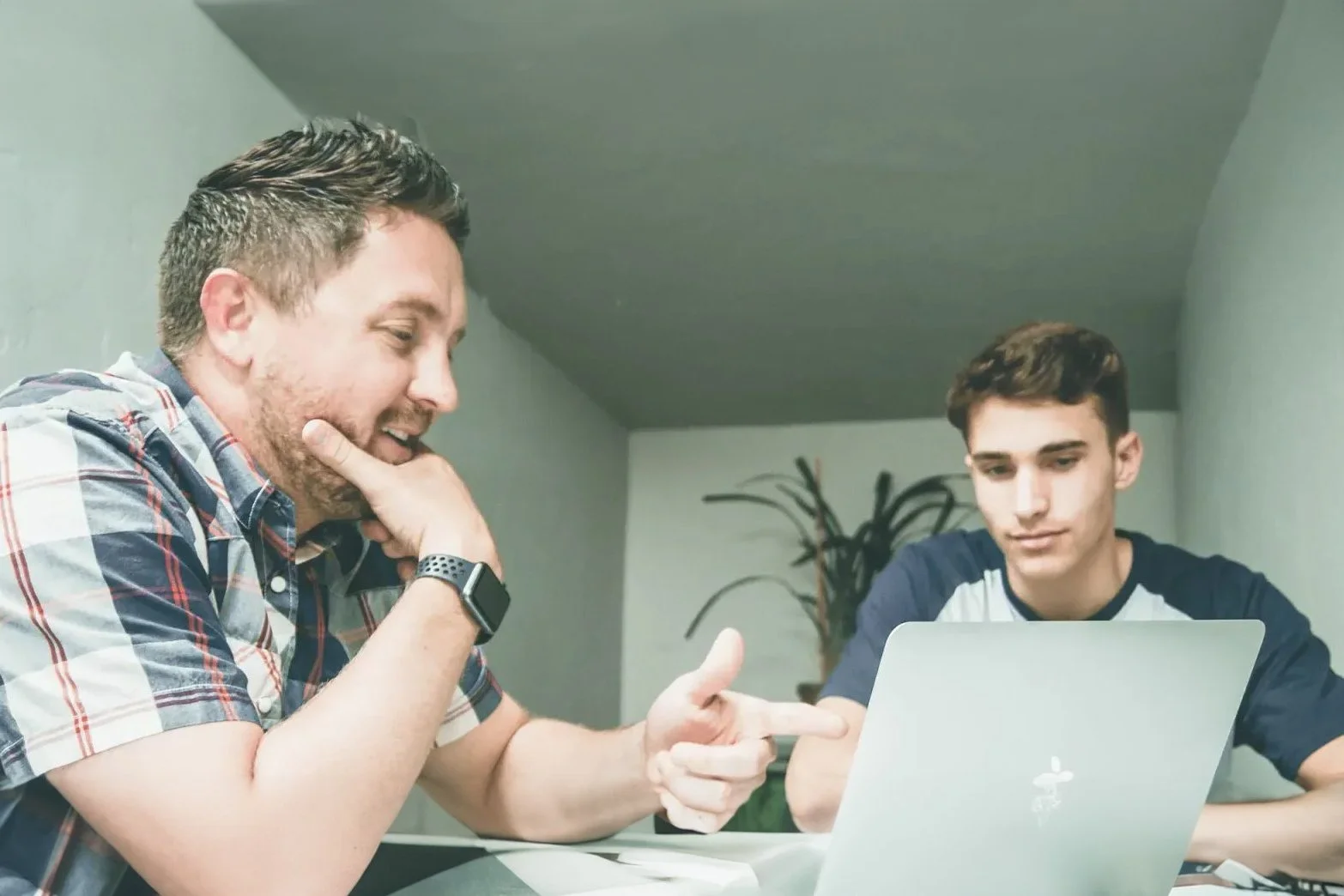
Non-Linear & Iterative
We spent months doing diverse research and refining our hypothesis through ideation.
Research activities
-
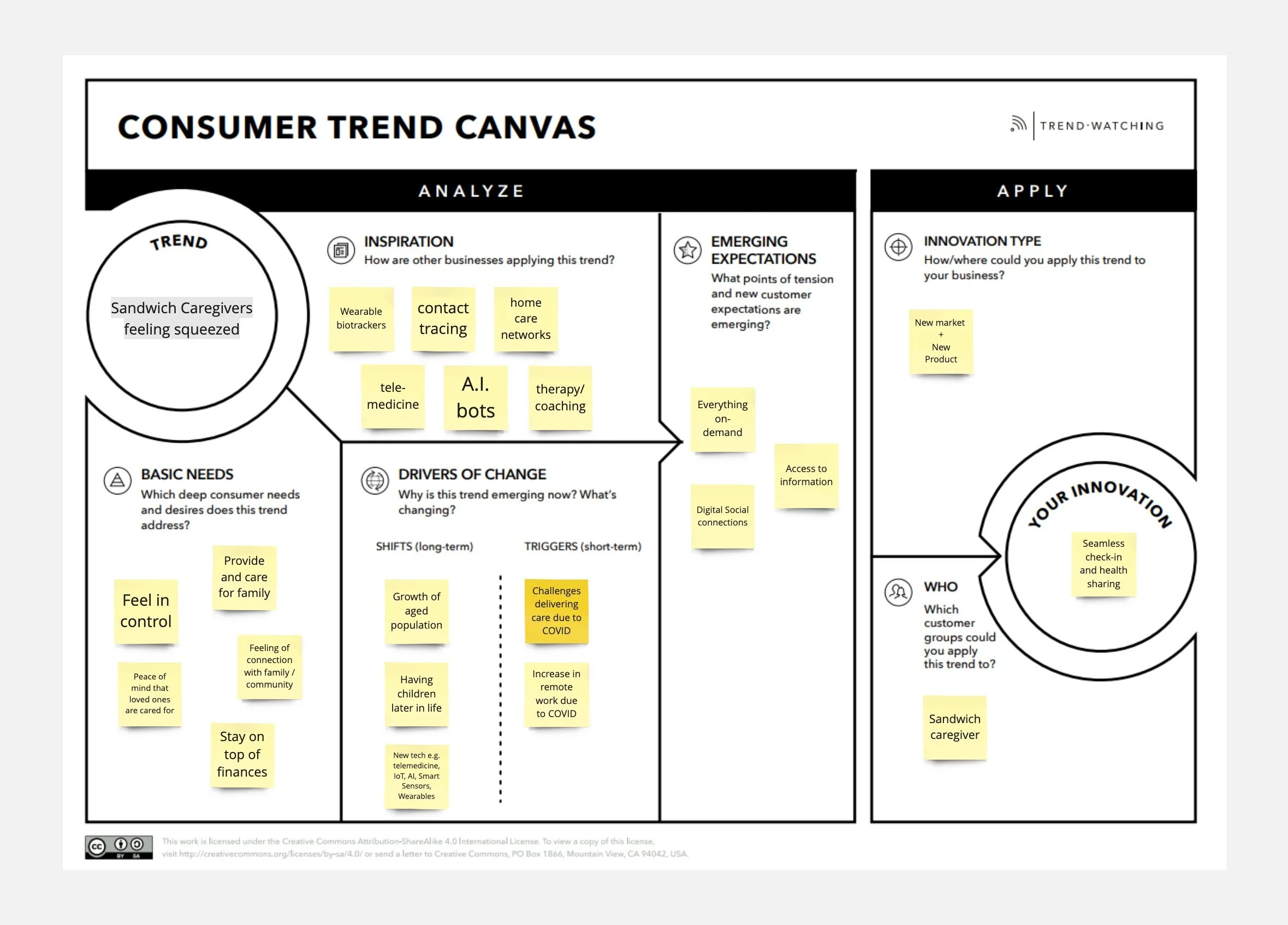
Consumer trend analysis
An examination of market data and trends to predict the future direction of consumer behaviors and preferences. This helped us ensure that the app not only addressed current needs but was also positioned to adapt to evolving trends and expectations in caregiving and health technology sectors.
-
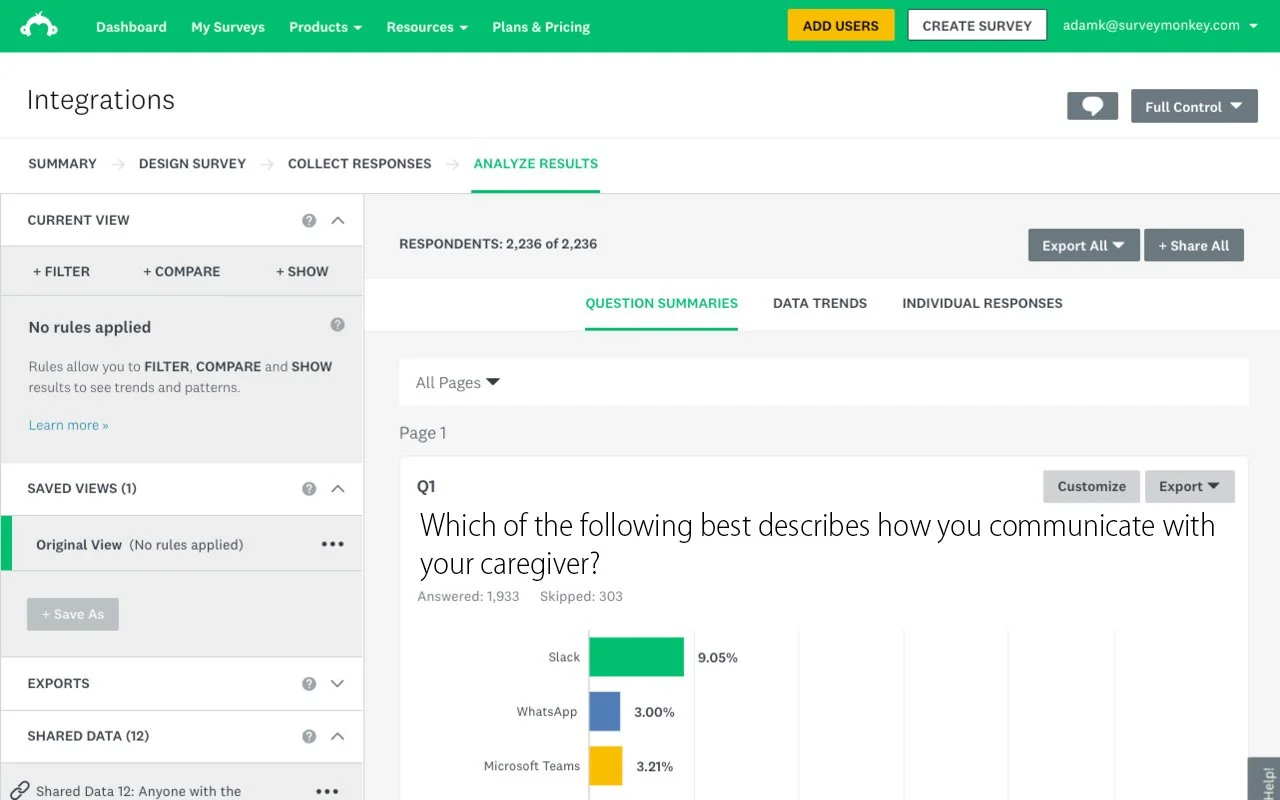
Market and survey research
Identified the 'sandwich caregiver' as an underserved market. Surveyed to understand their challenges and needs. Conducted multiple rounds of large sample size surveys on SurveyMonkey.
-
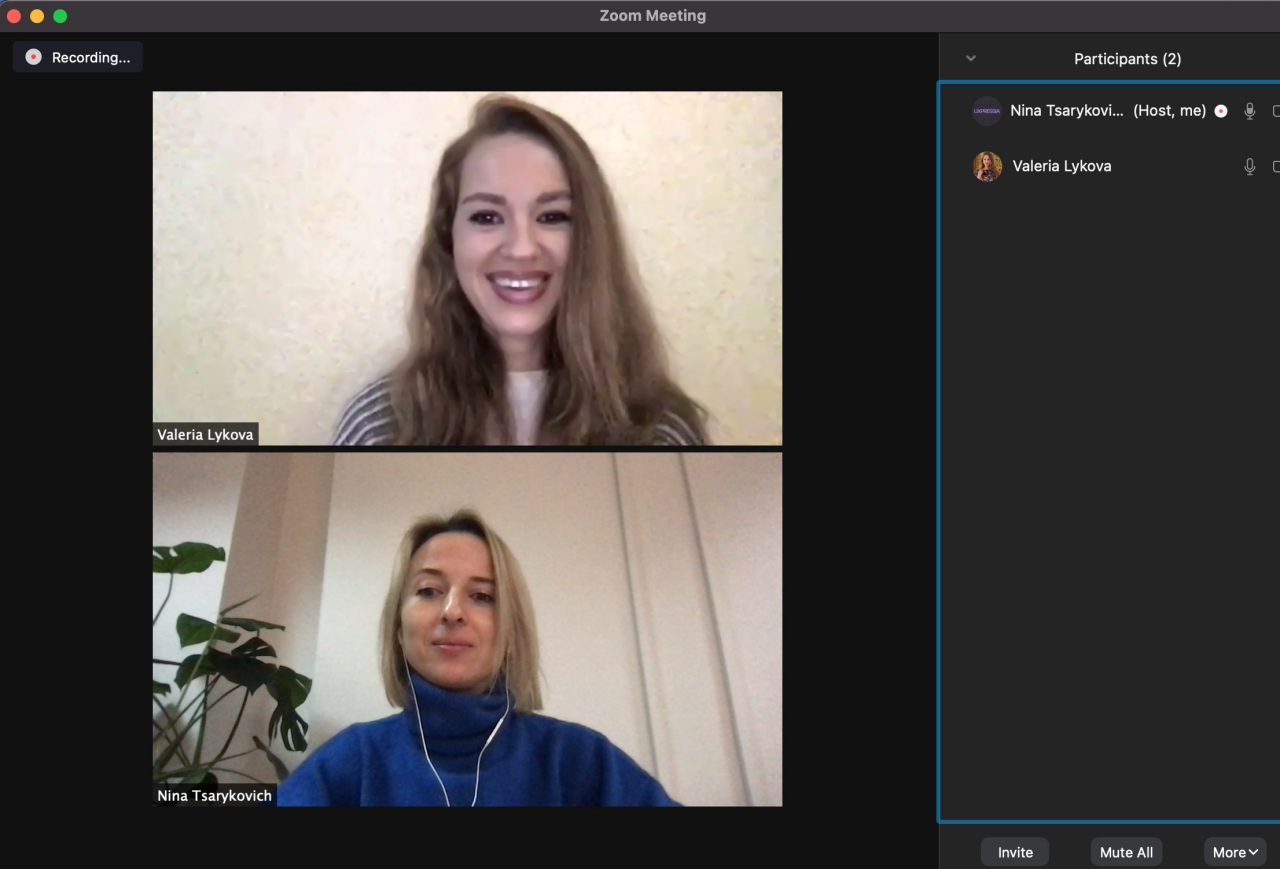
User interviews
Conducted User Testing interviews with potential users to gain deeper insights and validate assumptions. I built separate screeners and interview guides and we conducted multiple rounds with caregivers and elders who receive care.
-
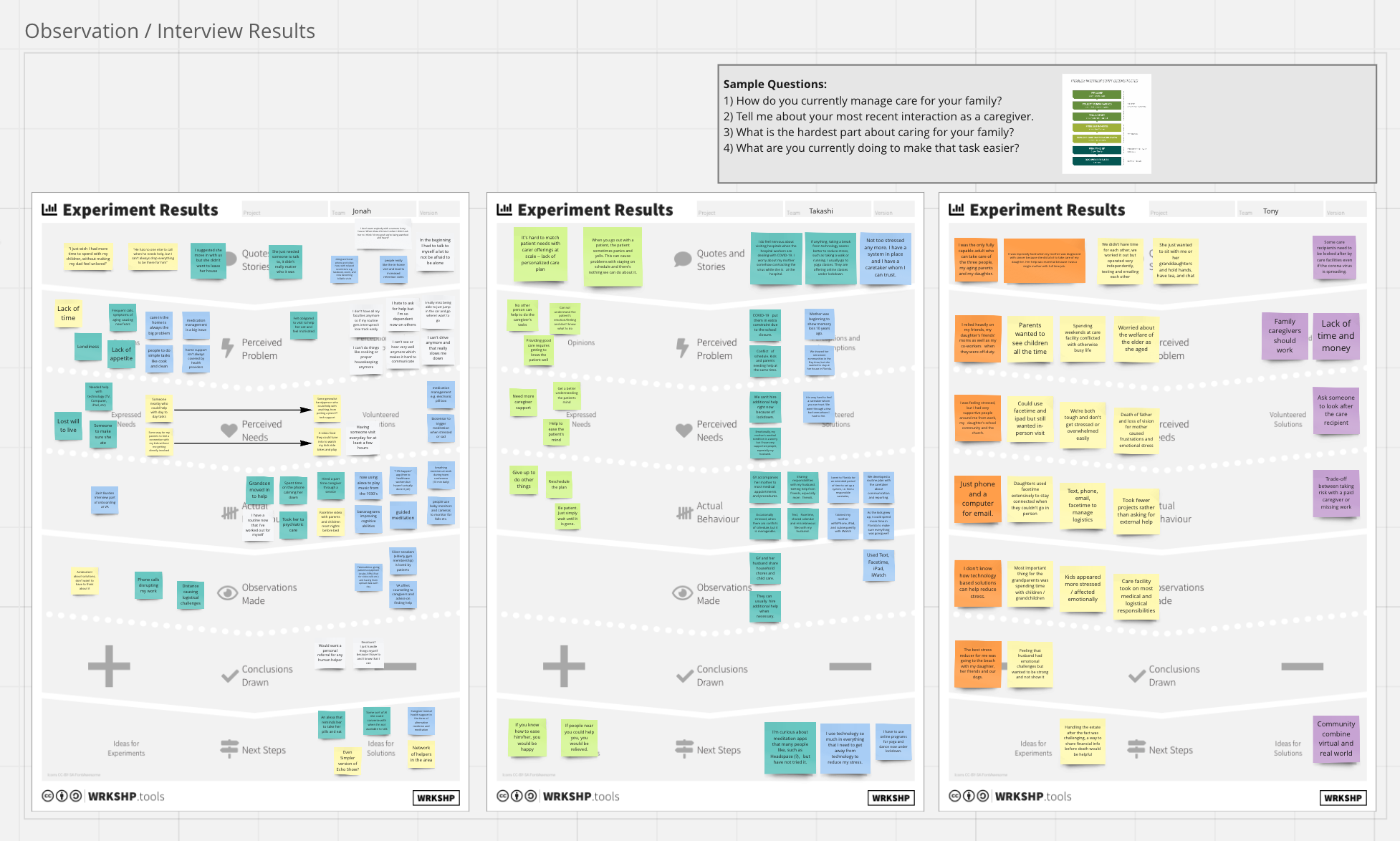
Survey & interview insights
I used Miro to store, prioritize, and affinitize our survey and interview insights
-
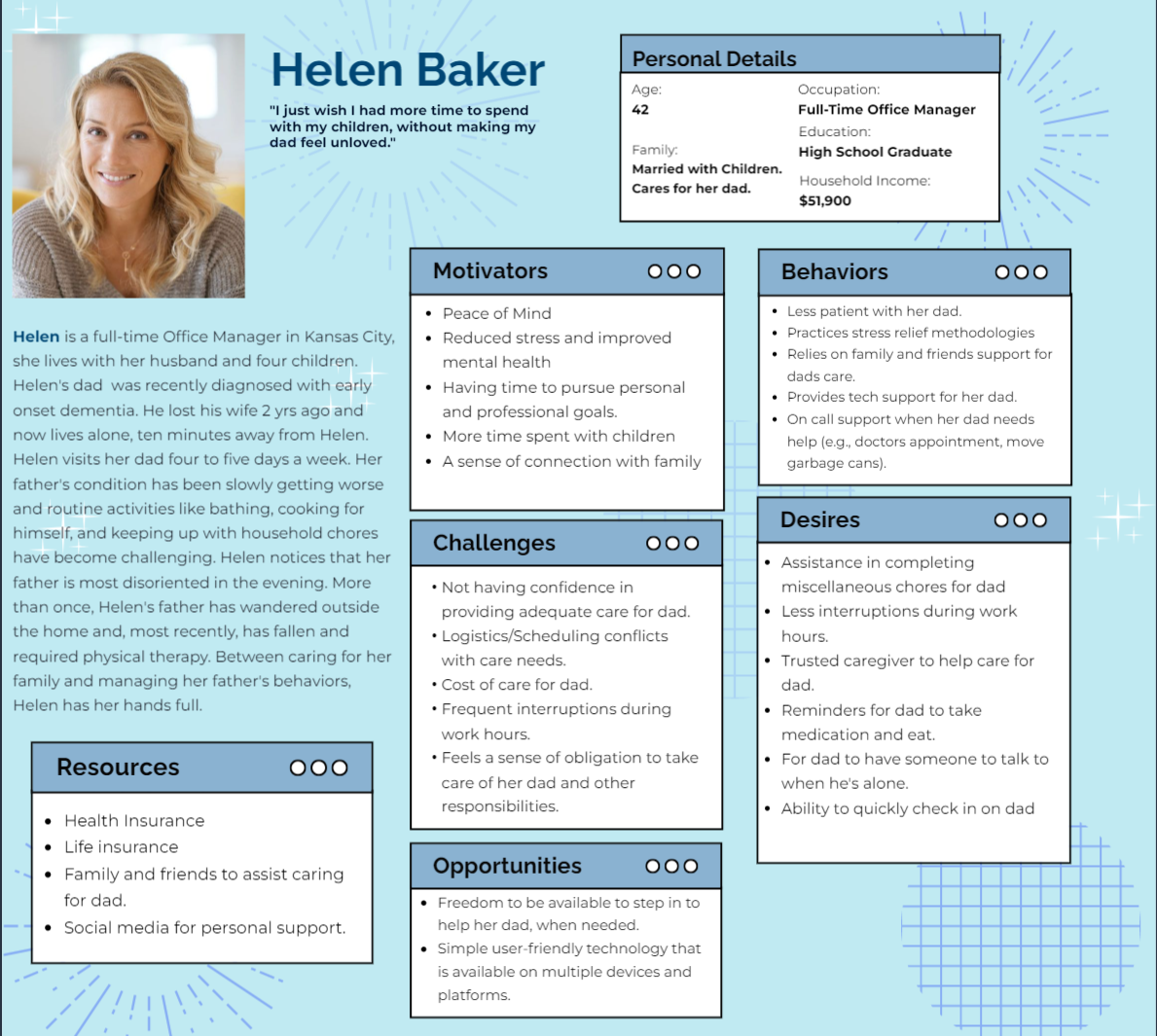
Persona
Creating a persona helped in tailoring the app’s design and functionality to the specific preferences, behaviors, and needs of our primary user group
-
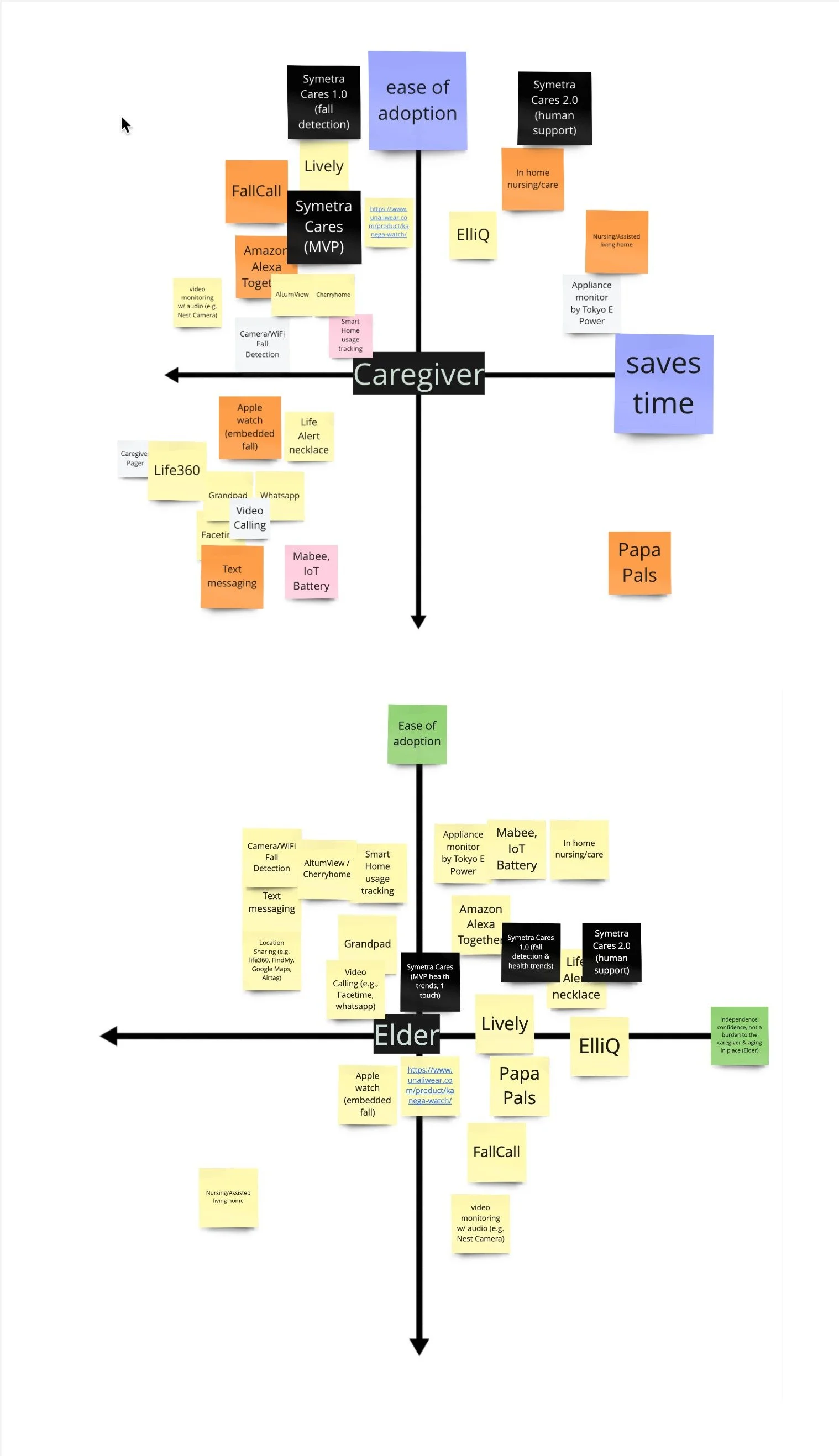
Whitespace analysis
Analyzed existing solutions to identify gaps and opportunities for differentiation.
Research take-aways
Provide peace of mind
'Is my loved one okay?' Caregivers constantly worry about their loved one's well-being, affecting their mental health.
Keep it simple
Caregivers will prioritize simple digital tools to stay connected with their elder family members over other "care" related solutions.
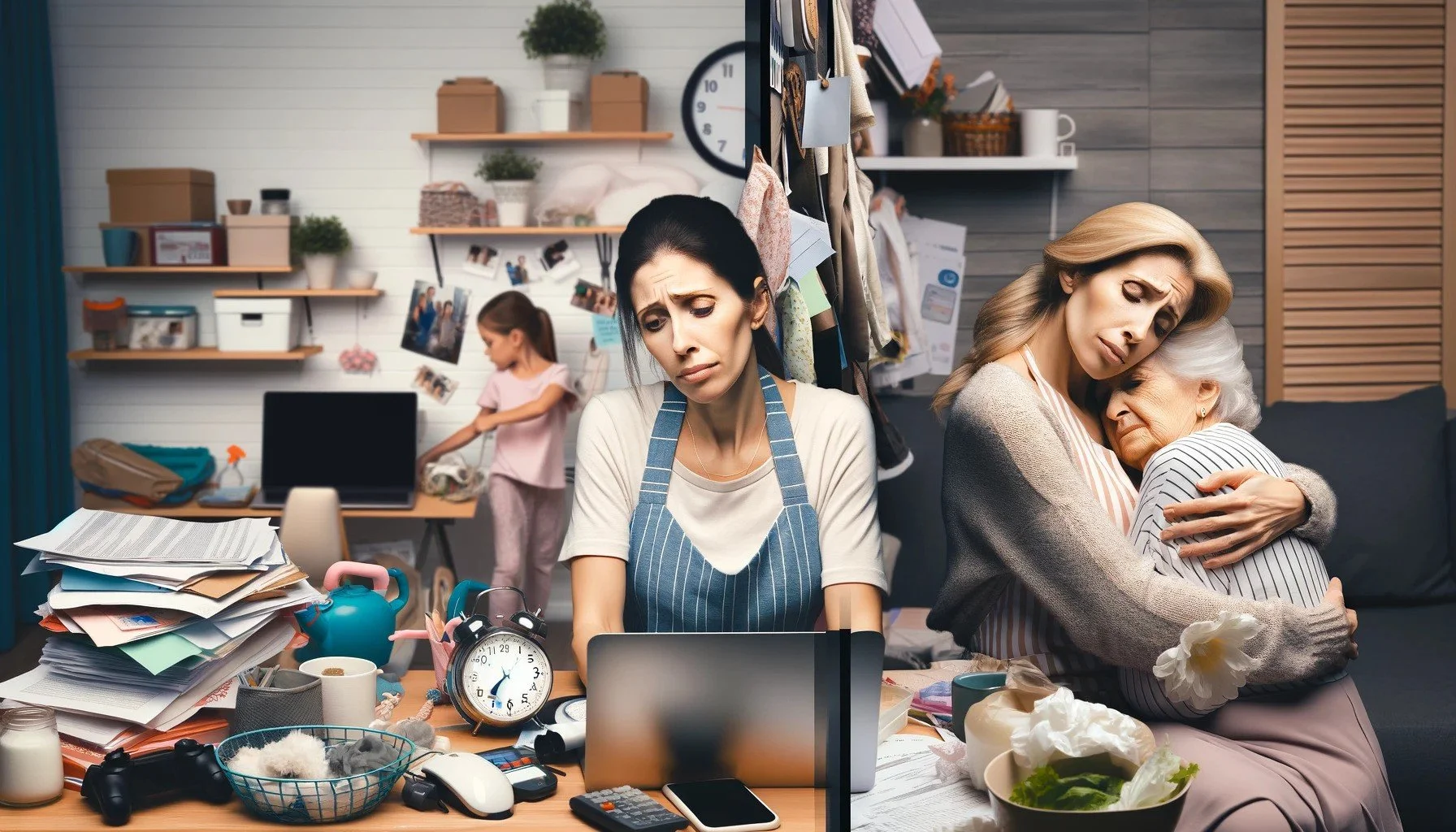
stressed, overworked, and in need
Amid pandemic, four times more people are out of the workforce caring for relatives, esepcially women, per Federal Reserve’s report.
Our market and survey research confirmed this troubling trend.
Save caregivers time
Our findings reveal the challenges of 'sandwich caregivers'—squeezed between caring for their immediate family and aging loved ones. Juggling multiple roles leaves little time for themselves, leading to burnout and reduced care quality. Recognizing this, we see the importance of time-saving tools for them.
More Research, Ideation, Business Modeling
-
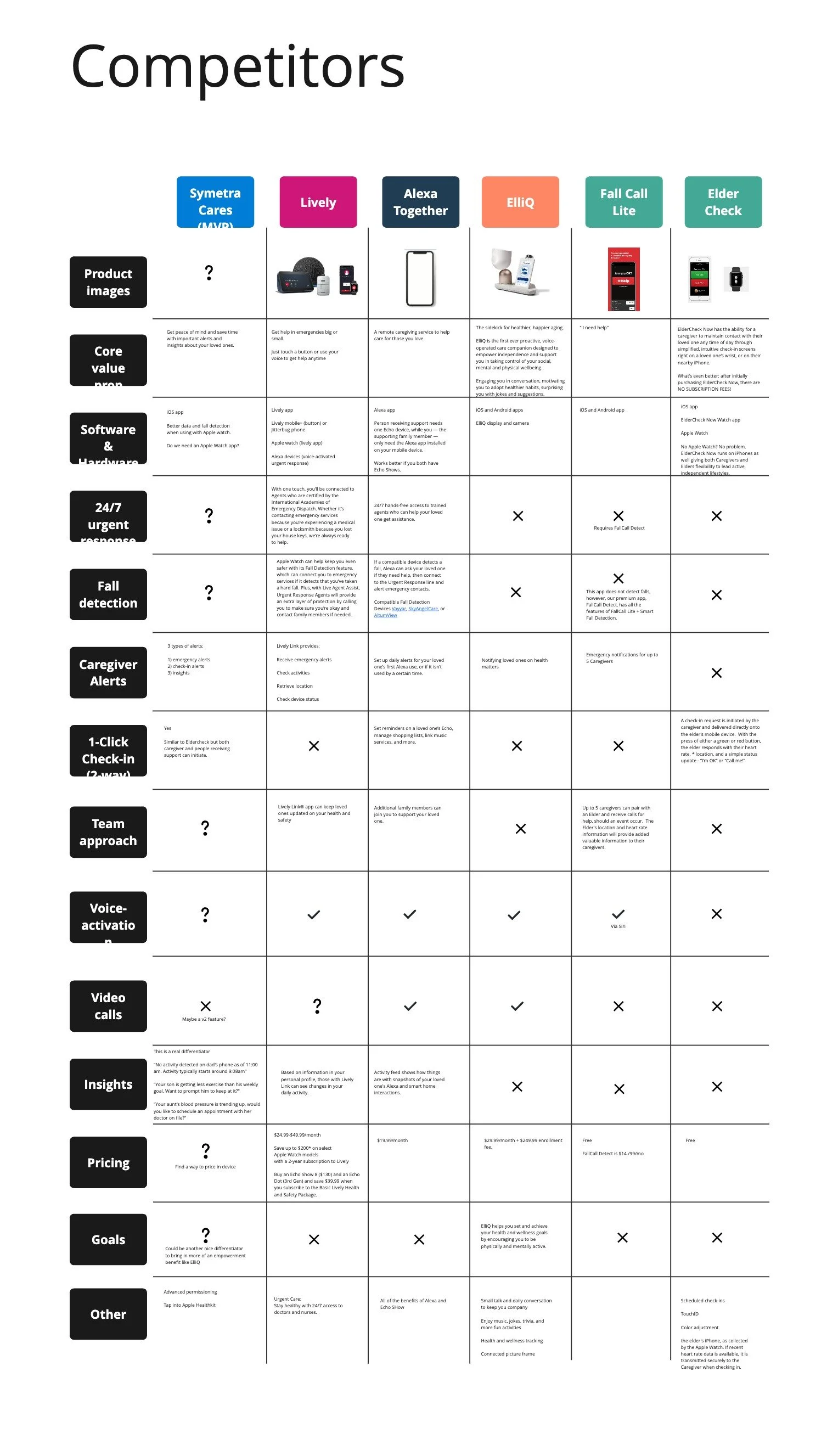
Competitor analysis
We then looked at competitors around the whitespace we identified.
-
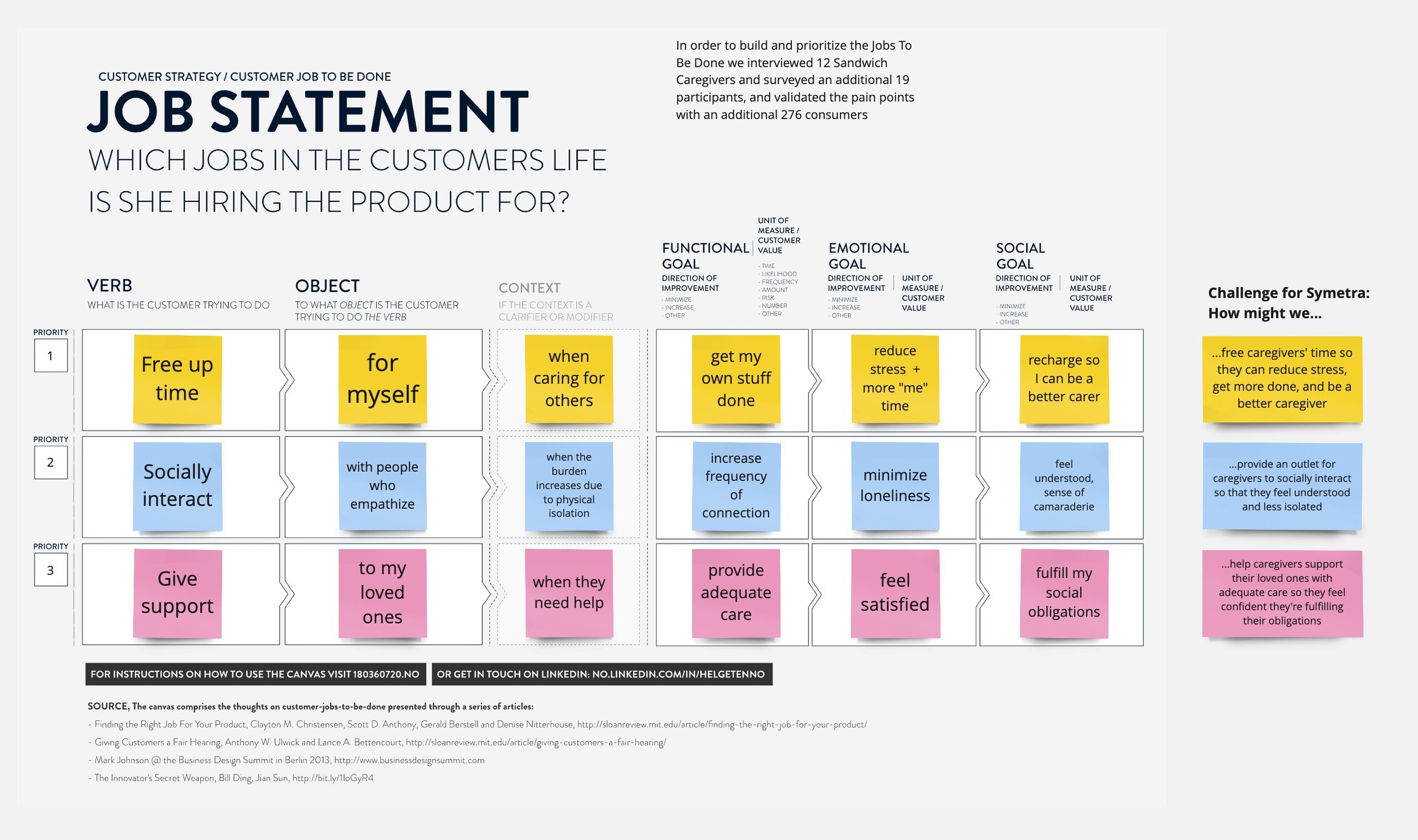
Jobs To Be Done (JTBD)
This framework helps us pinpoint the exact needs and challenges of sandwich caregivers that our app could address.
-
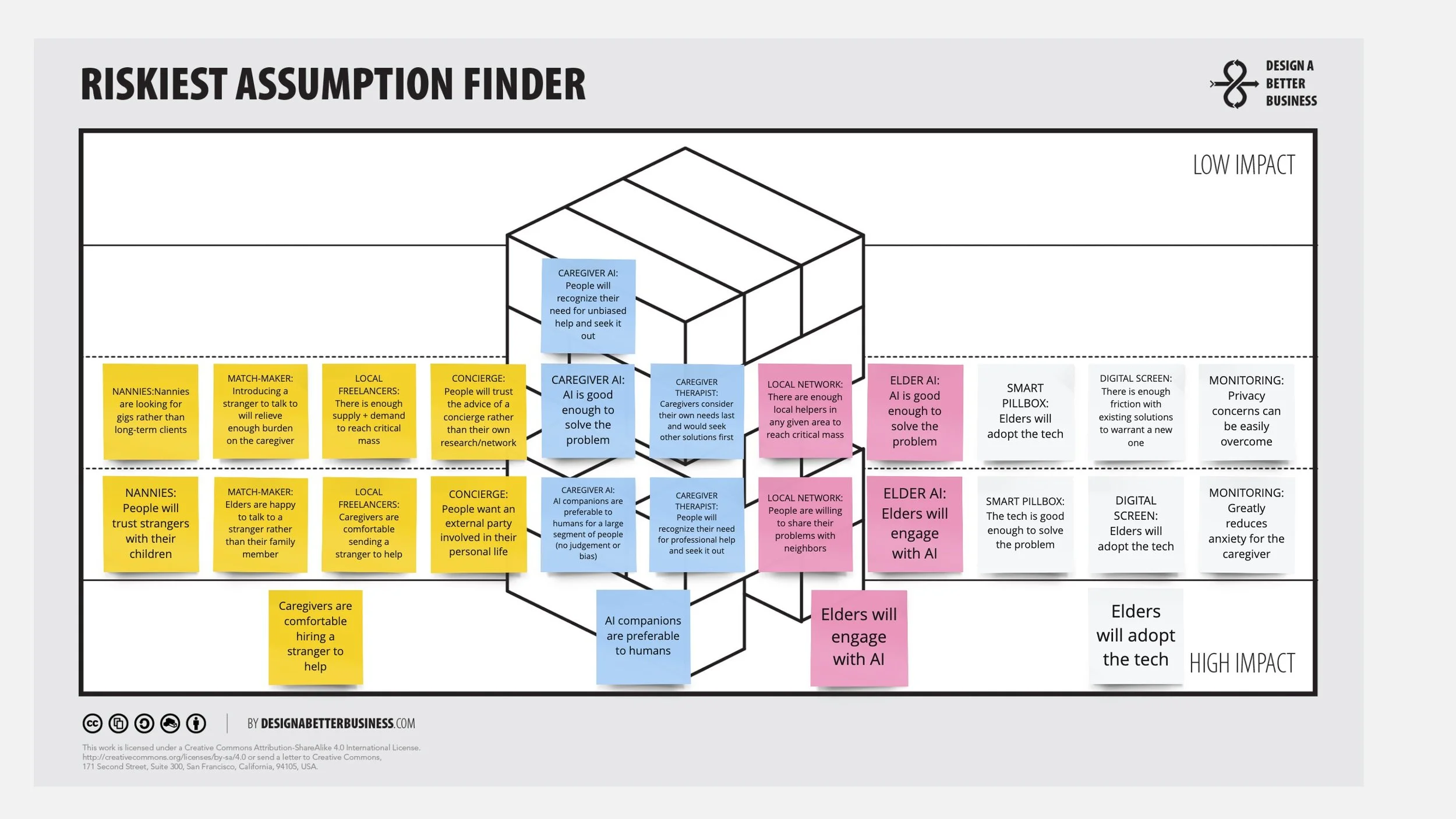
Riskiest assumptions
Identification of assumptions that, if incorrect, would cause the project to fail. This step was crucial in preemptively addressing potential pitfalls and guiding the project focus toward areas needing the most validation.
-
Business Model & Value Prop canvas
Developed to align the app’s features with caregiver needs and market opportunities.
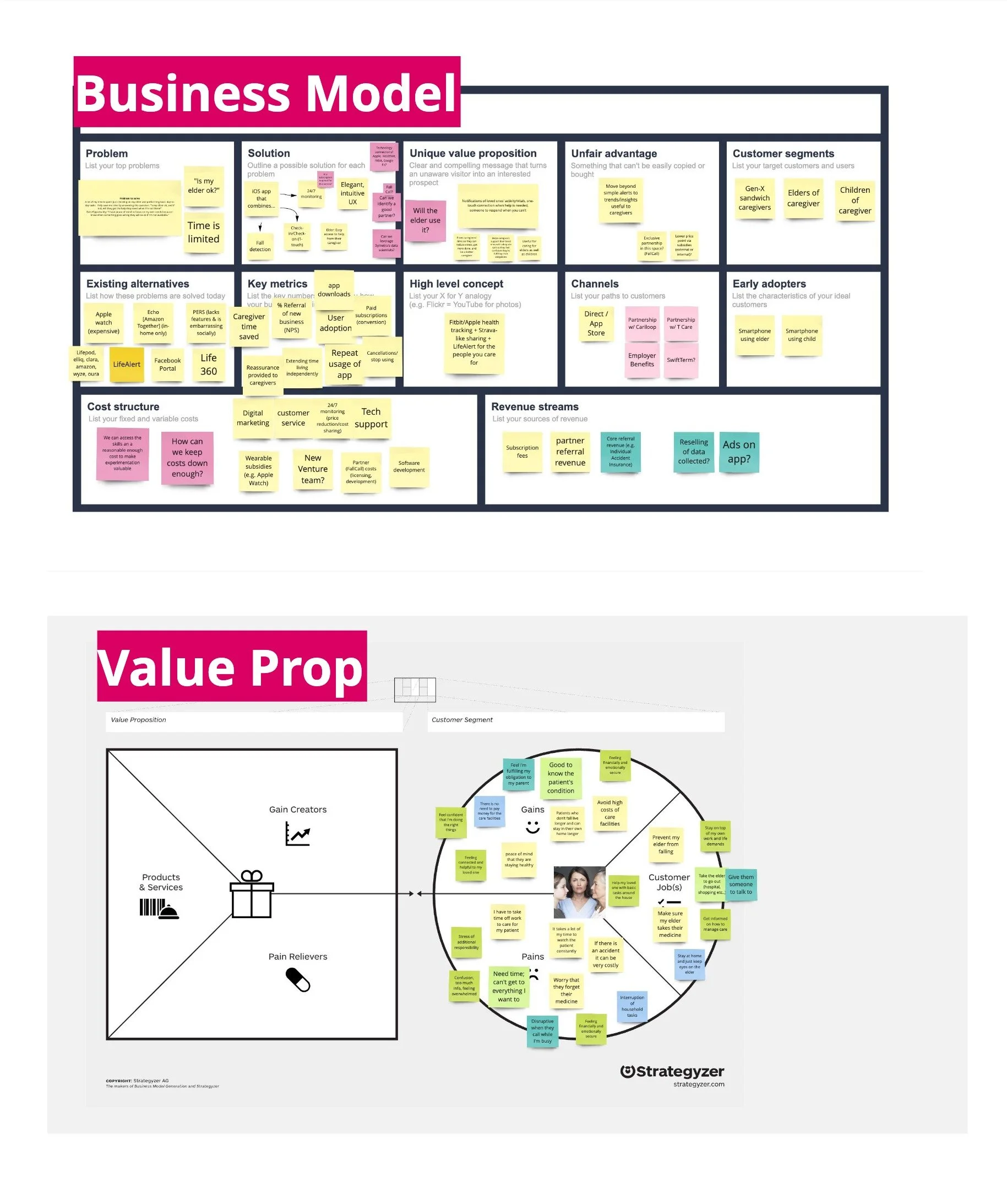
Our critical features would rely on phone calls, location services, push notifications, and the phone’s gyroscope, so we knew a mobile app would be a solution.
Design principles
-
01/
Branding should be derivative of Symetra’s fun and friendly branding, while also exploring and evolving the brand to suit the new B2C mobile app platform.
-
02/
Cares’ personality is empathetic, simple, contemporary, holistic, and trustworthy
-
03/
Easy enough for elders to use, comprehensive enough for caregivers to get excited about
-
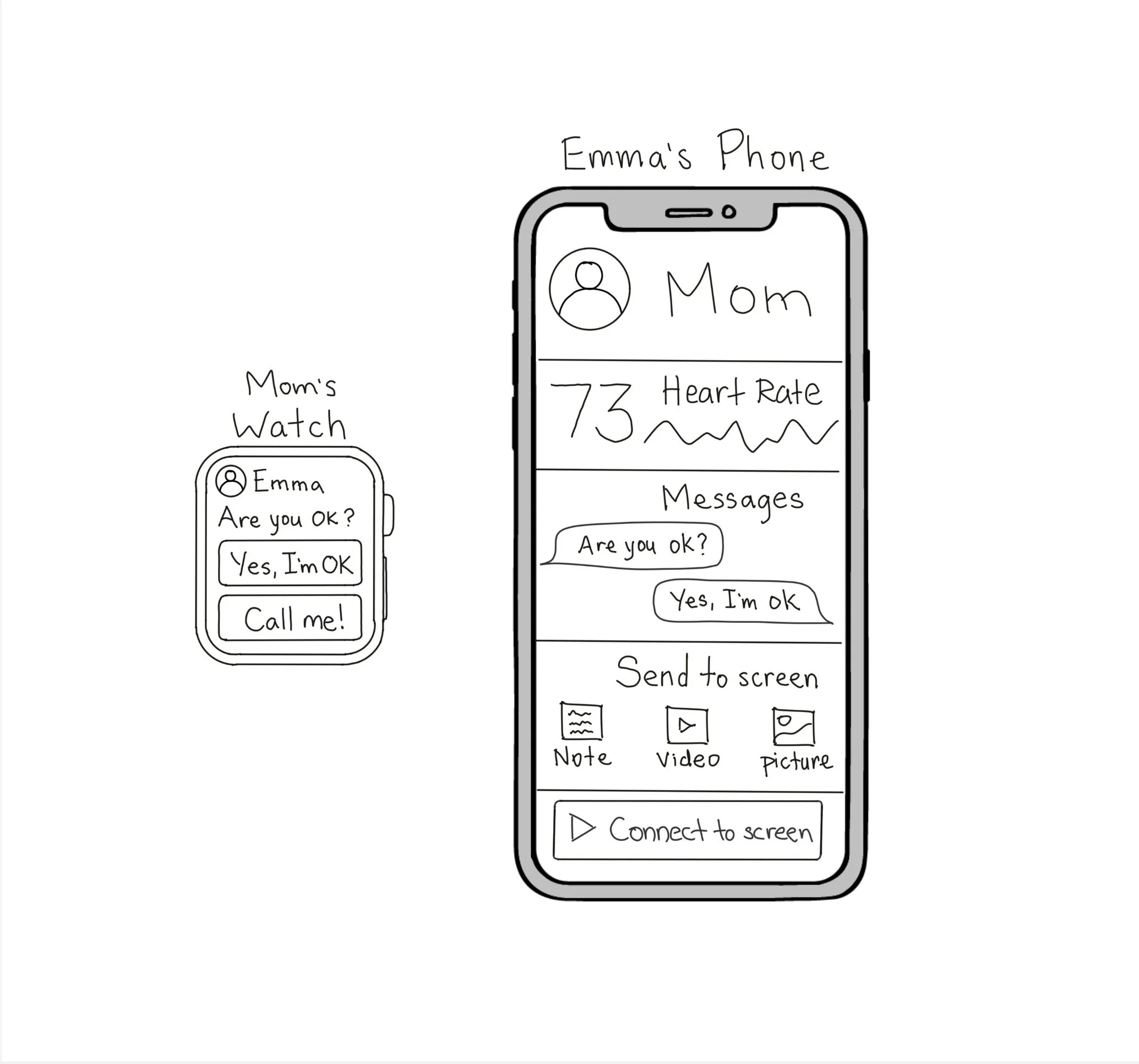
Initial sketches
A lot of our initial ideas revolved around ‘fall detection,’ which meant accounting for and pairing with the Apple Watch.
-
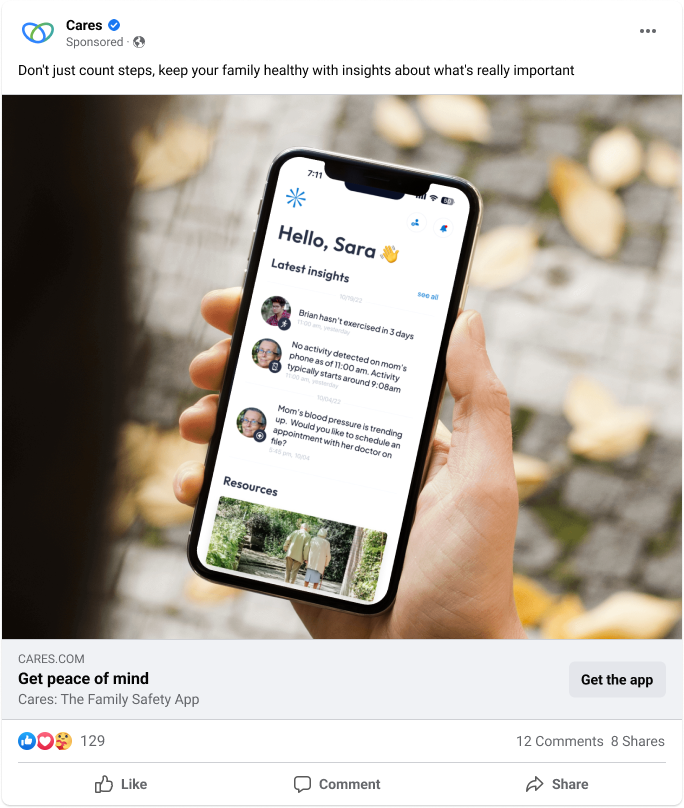
Facebook fake-door ads
Having developed initial wireframes, I A/B tested different value propositions to assess feature desirability.
-
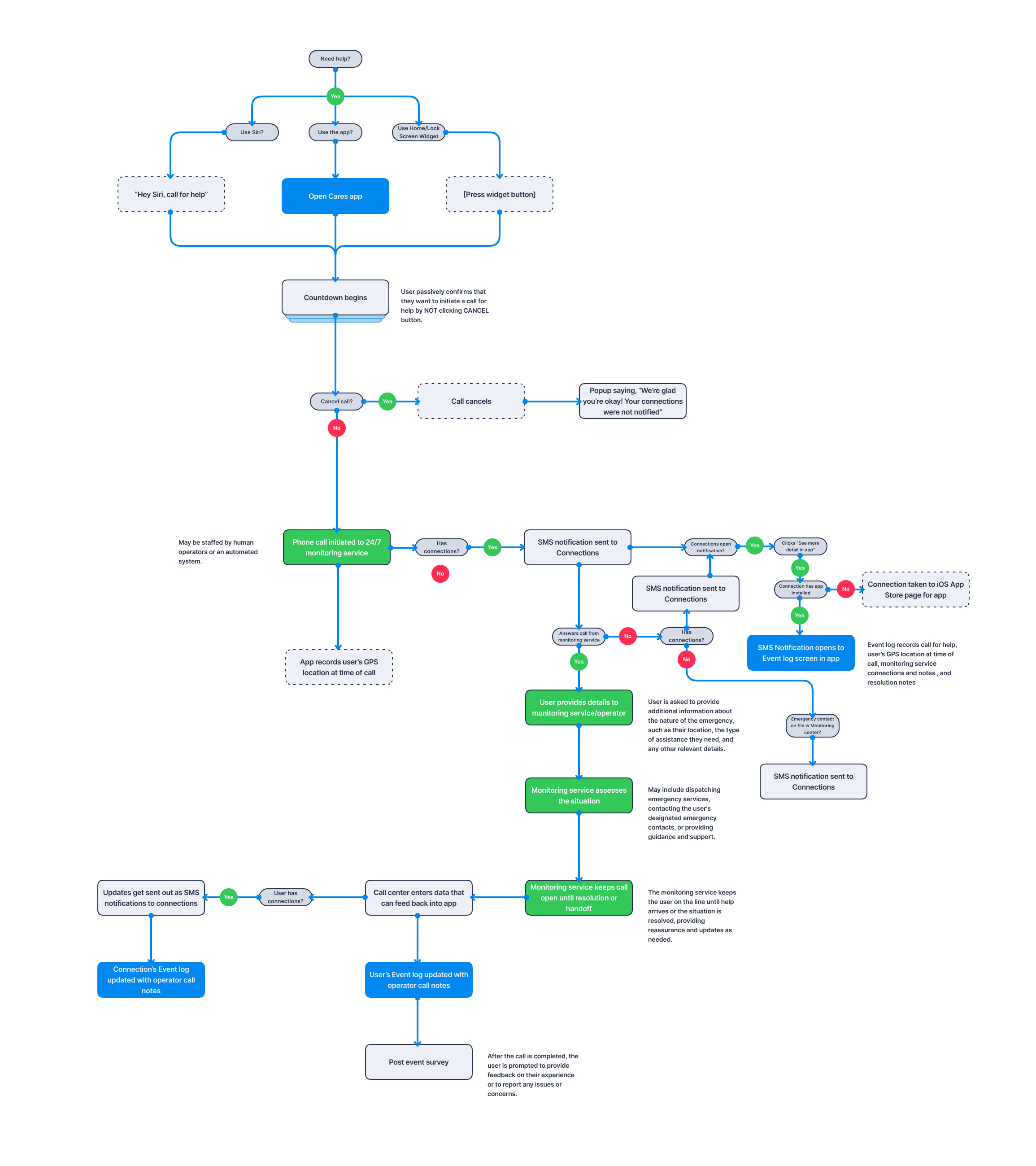
Flow mapping
Information architecture and data modeling for the Urgent Response monitoring
-
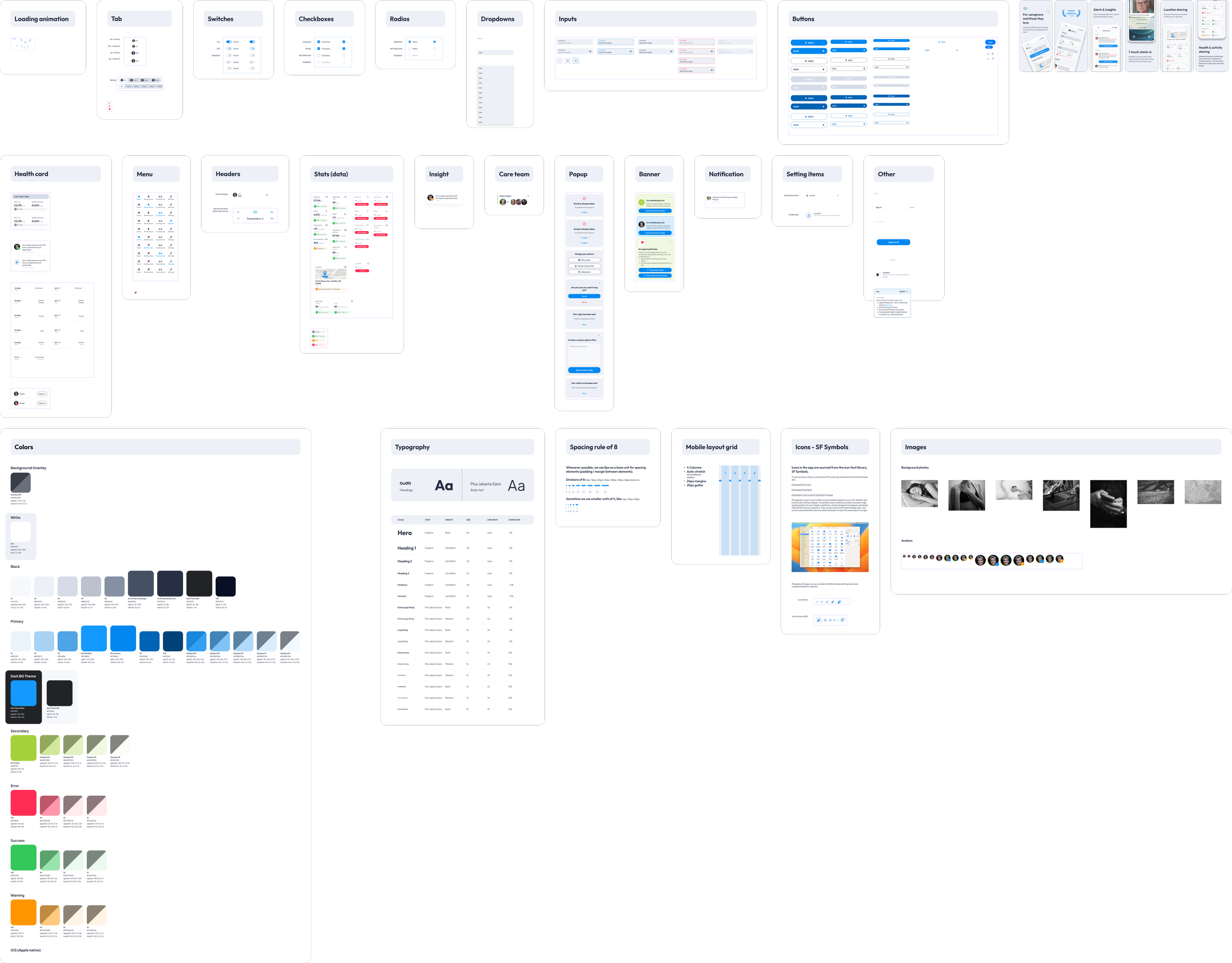
Styles & component library
I created reusable design components and style guidelines to establish a standardized visual language. This made it easier to maintain a cohesive look and feel across all interactions.
-
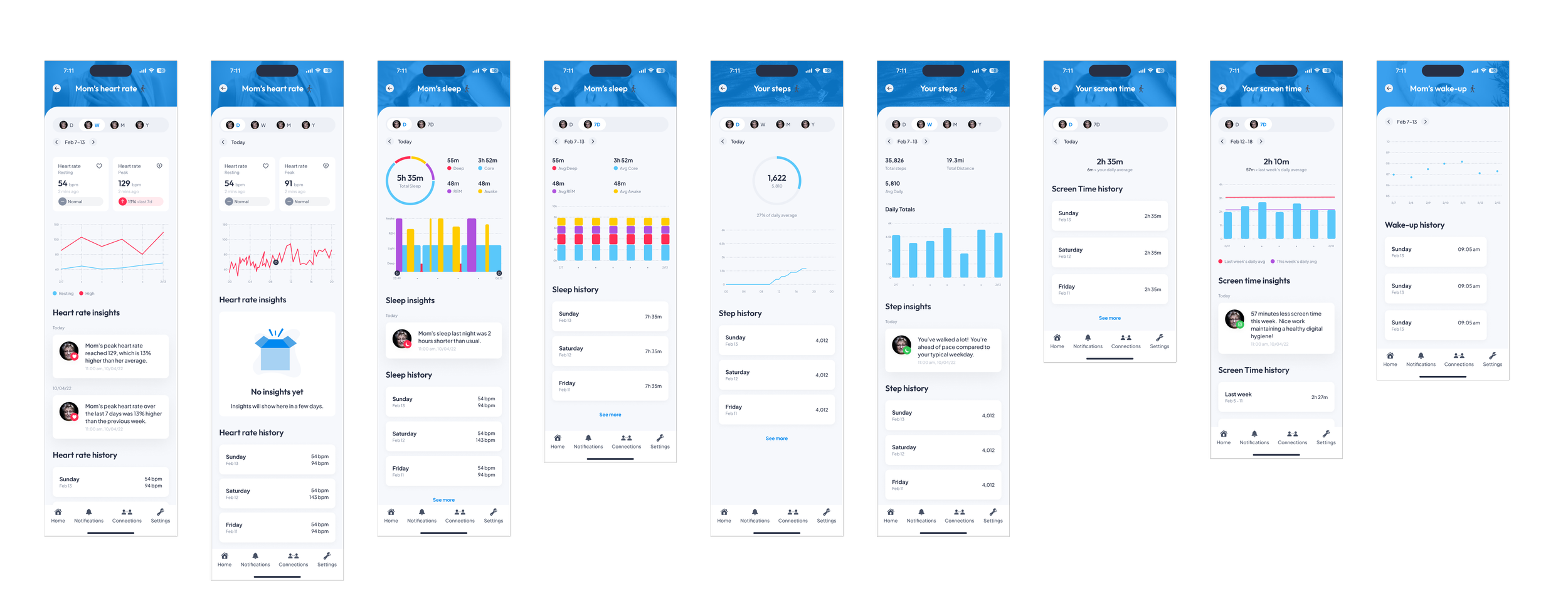
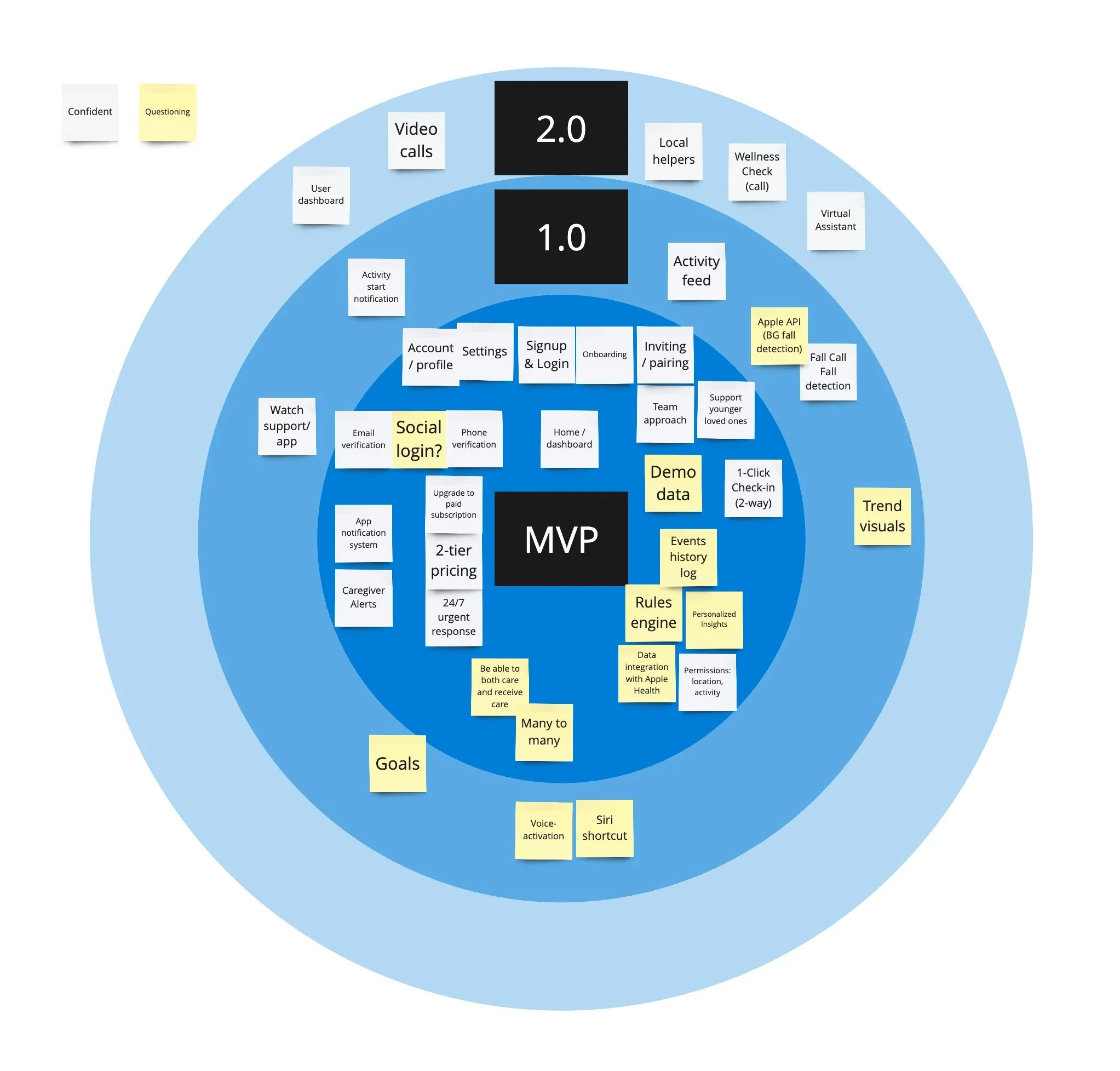
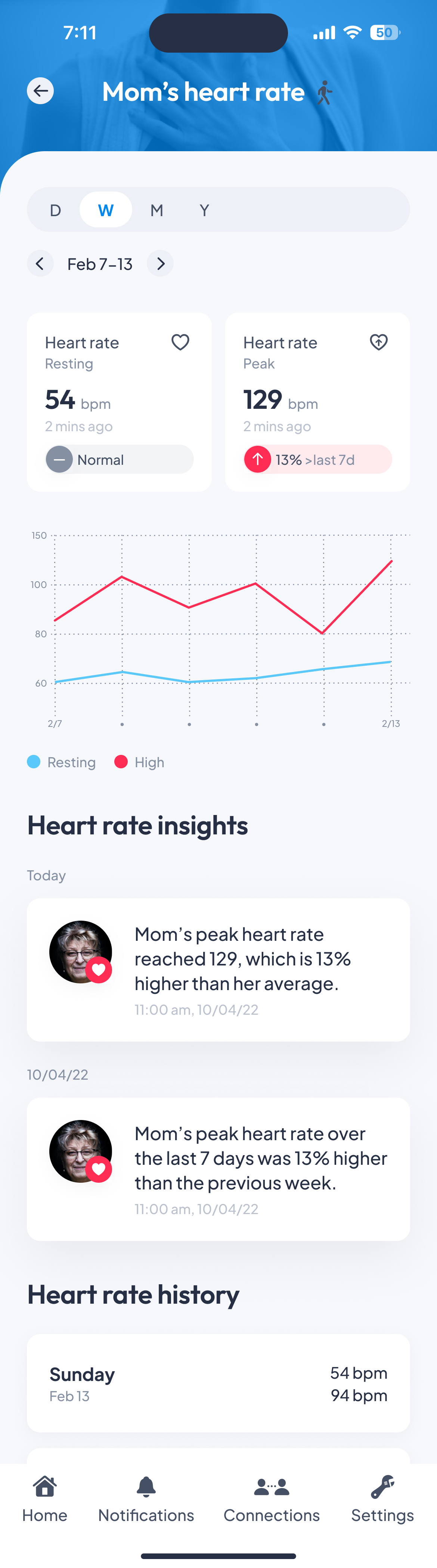
Health & Activity Stats
These features were pushed to post-MVP. hit with tester. After validating the MVP in the market, we knew we’d return to the more visual health statistics as they were a big hit.
-
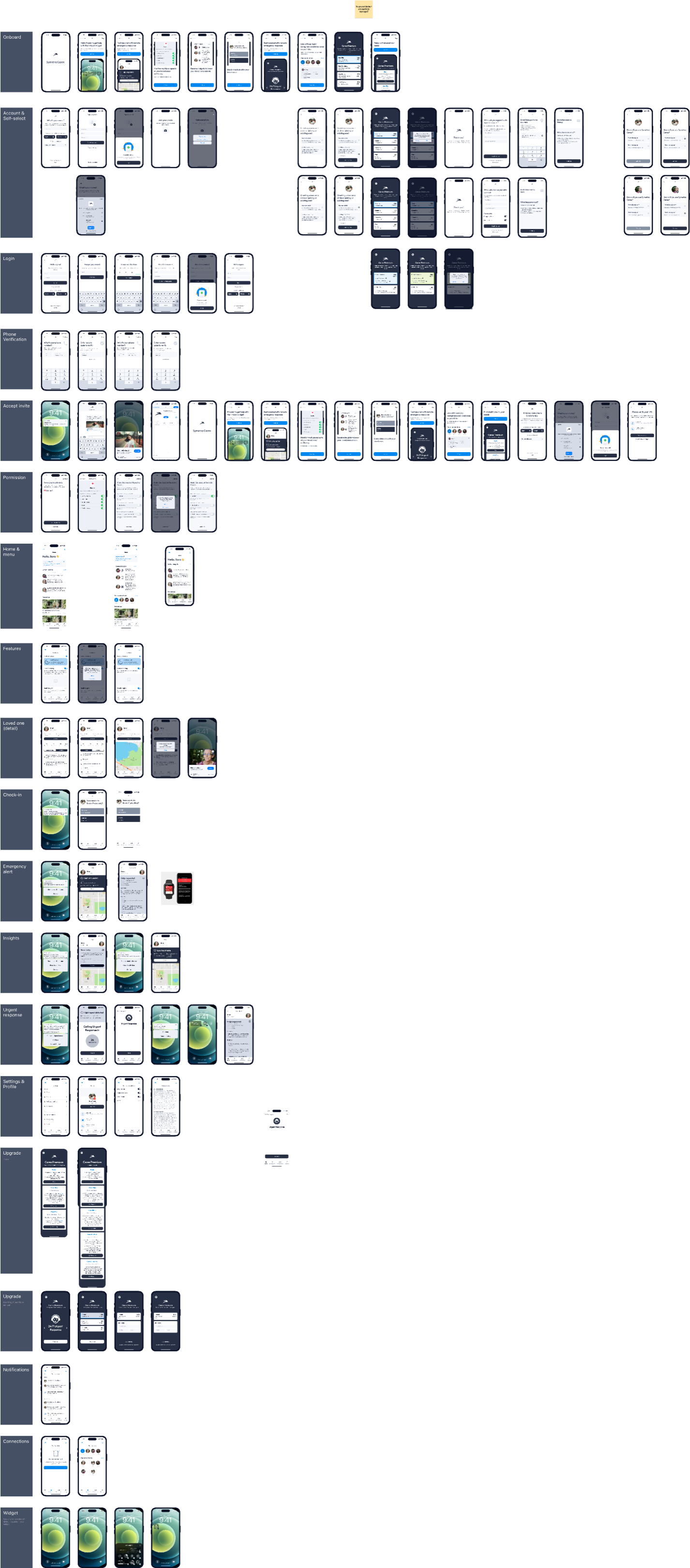
Figma wireframes
Rather than start with low-fidelity wireframes, the team wanted to simultaneously wrestle with the flow and visuals.
Final steps
-
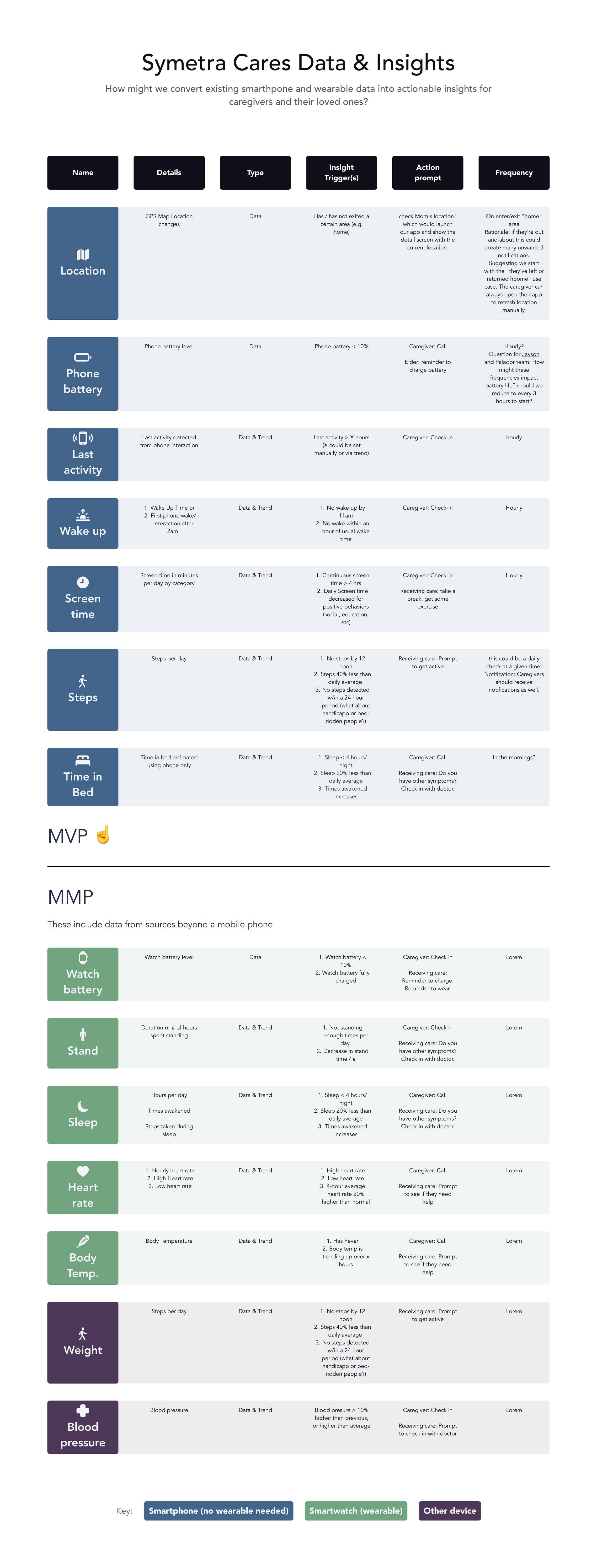
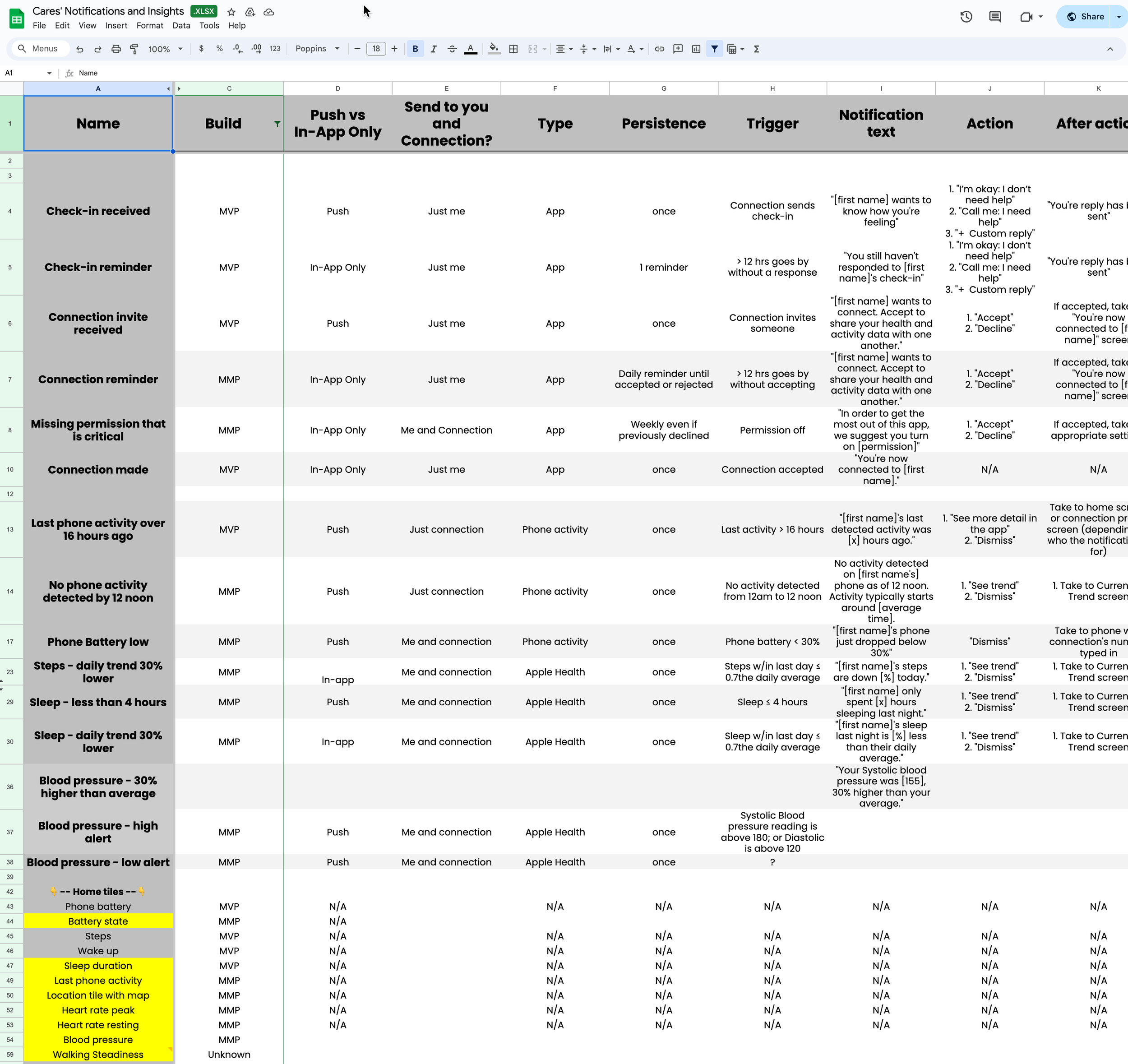
Data rules & Insights
A deep dive outlining how we might convert existing smartphone and wearable data into actionable insights for caregivers and their loved ones.
-
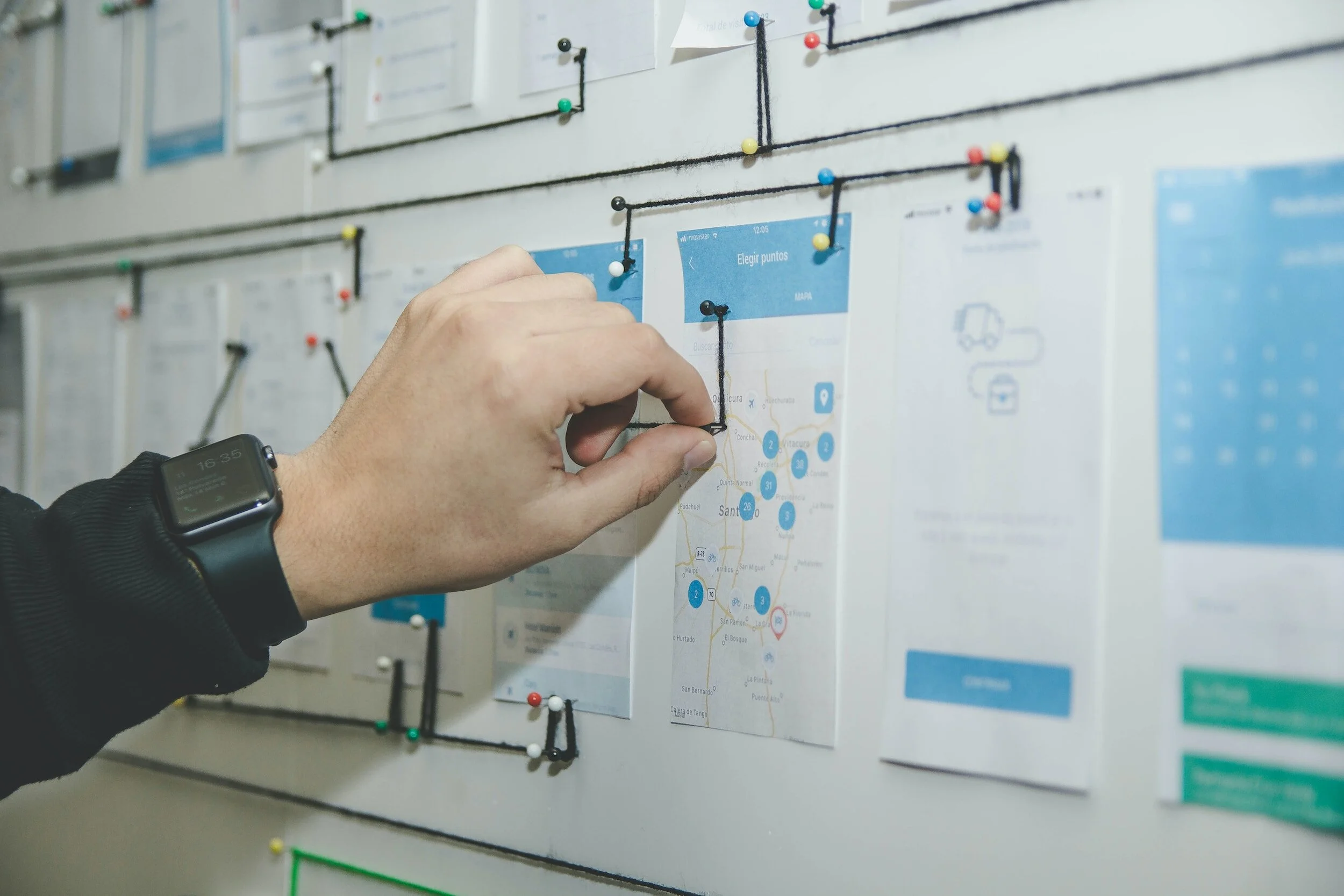
User Testing
Iterative testing to refine UX and UI. We conducted multiple rounds of testing to isolate the feedback to each feature in isolation.
-
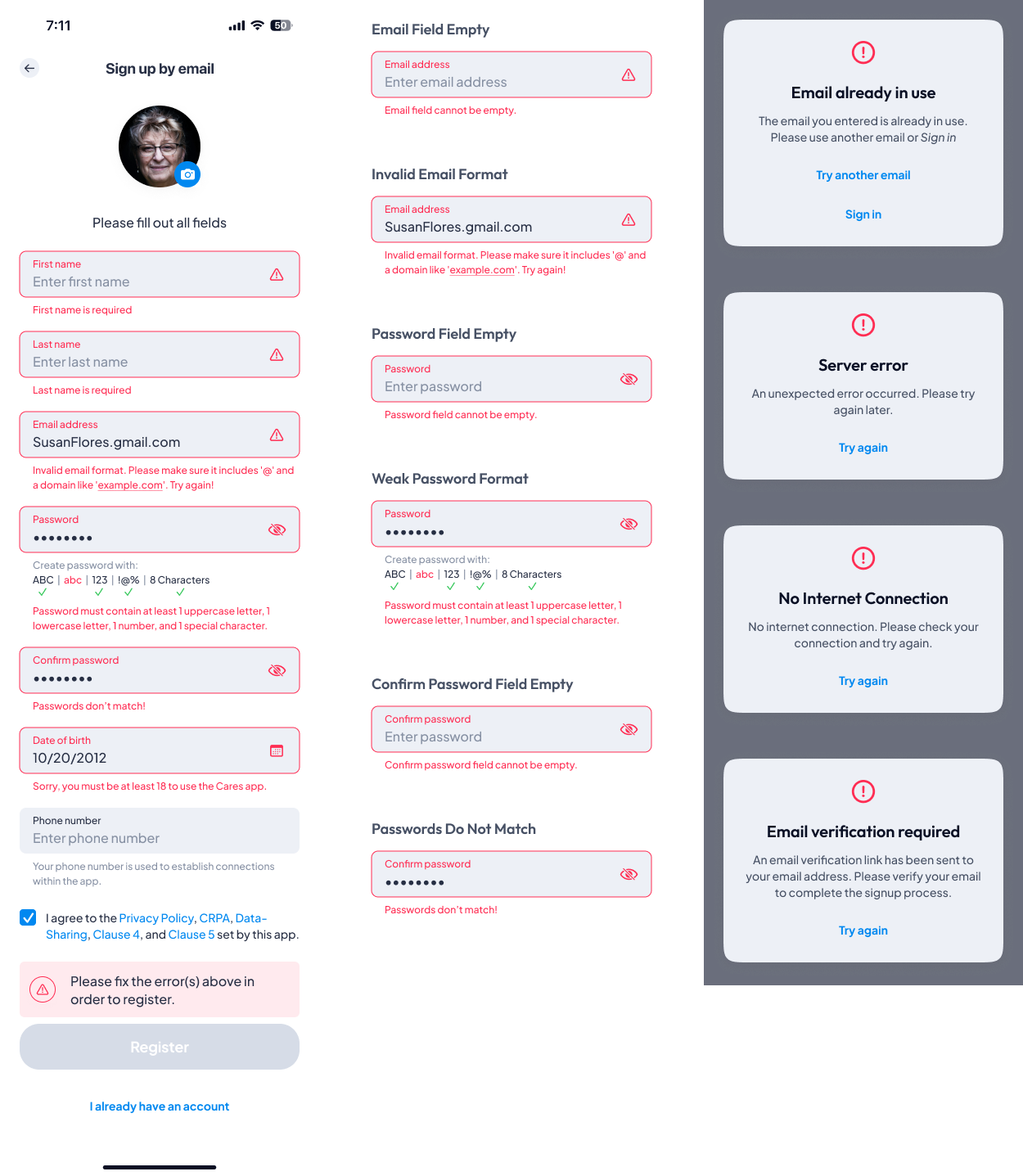
Error handling
Besides making the interface as intuitive as possible, it was critical to define how we handle errors.
-
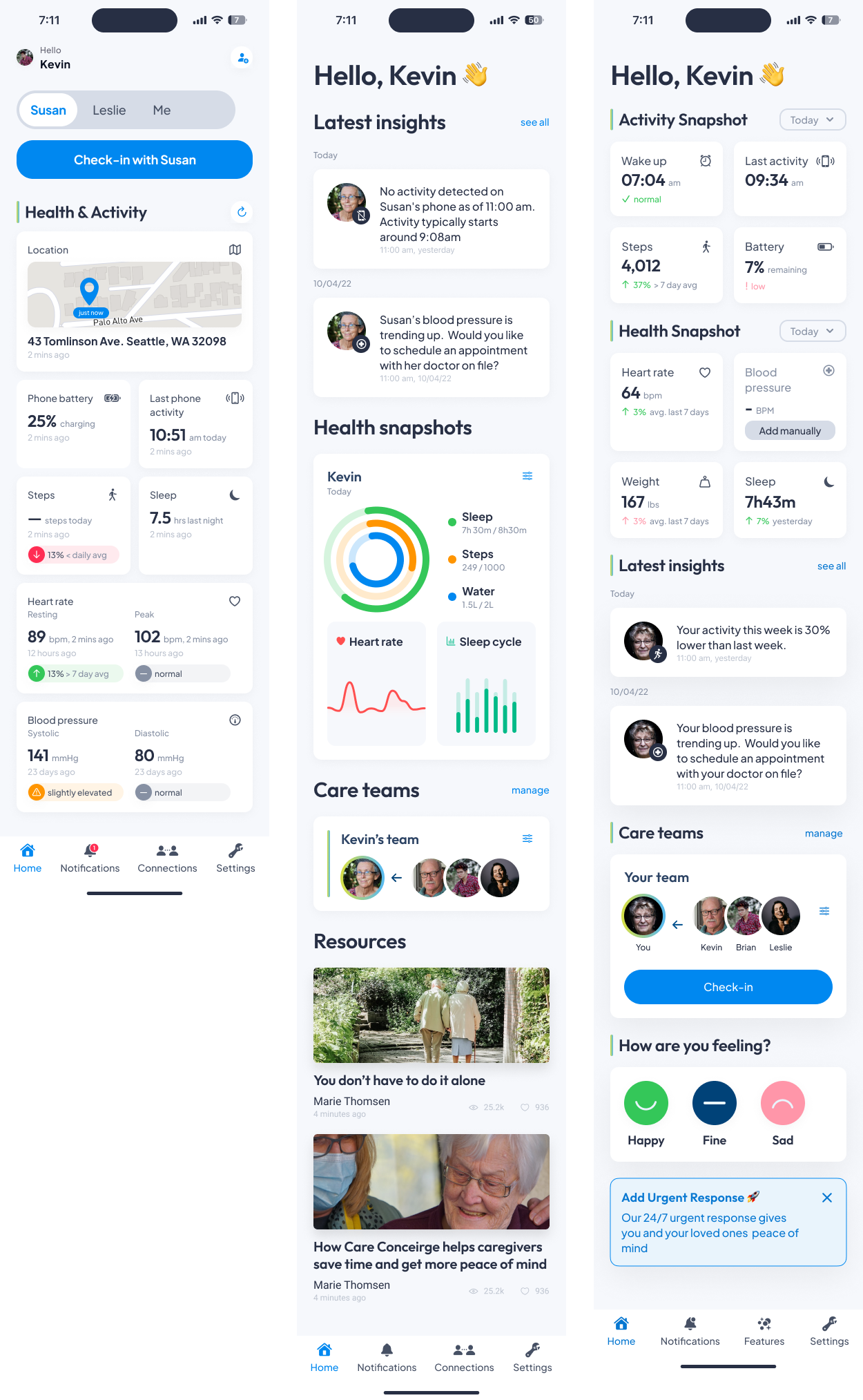
A/B Testing - Home
For key features like one-touch check-ins, critical insights, and the Home screen, I created multiple variants for preference and A/B tests.
-
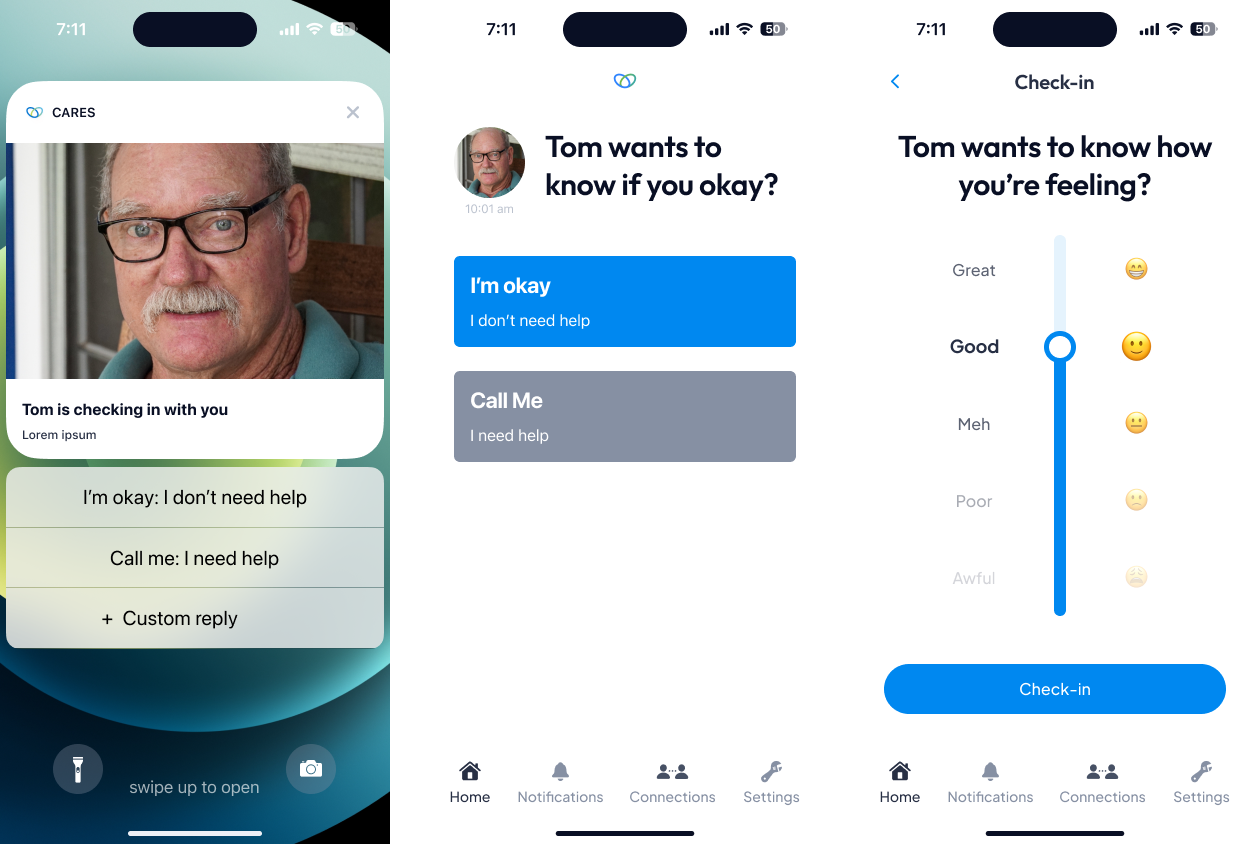
A/B Testing - Checkins
For key features like one-touch check-ins, critical insights, and the Home screen, I created multiple variants for preference and A/B tests.
-
Feature refinement
Based on feedback and test results, iteratively refined app features.
-
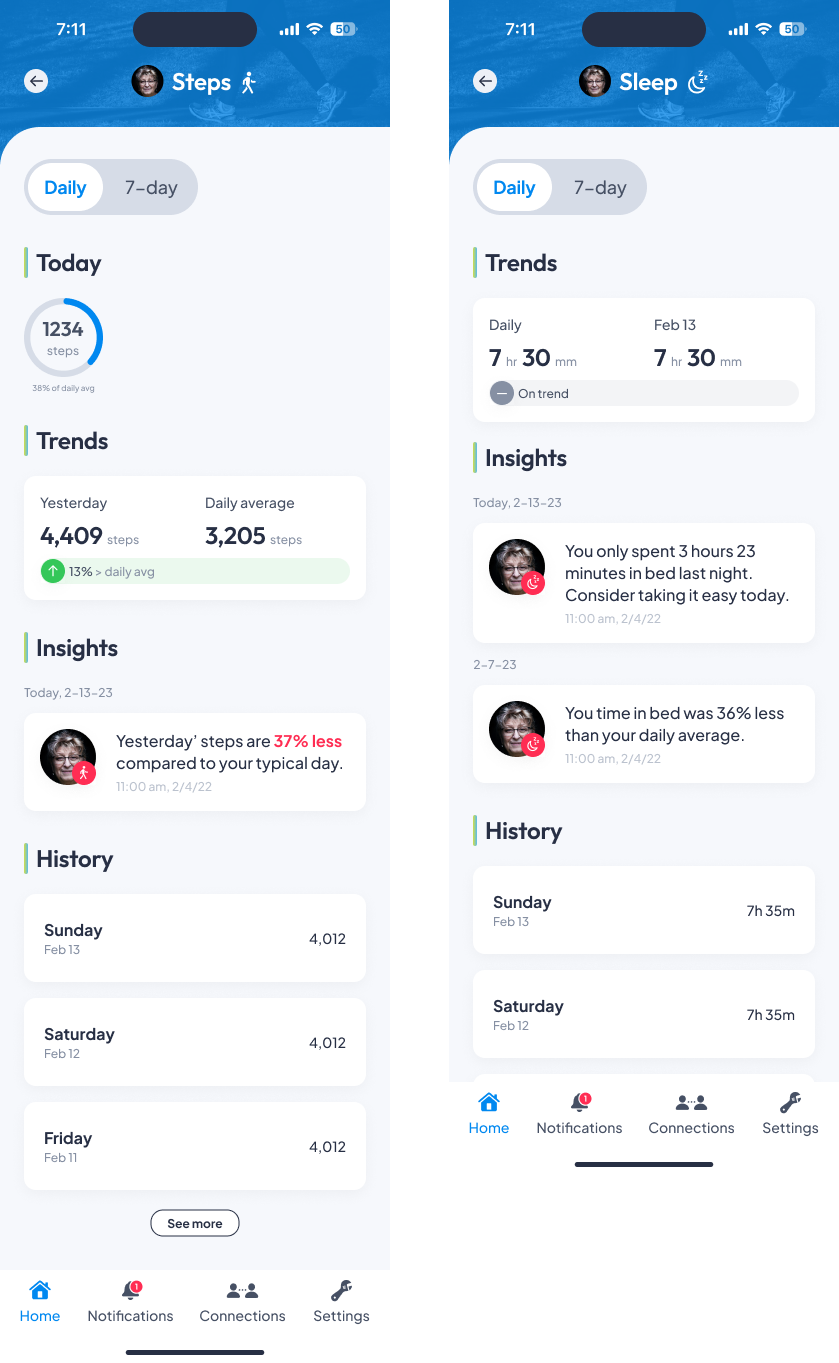
Health & activity detail pages
Detail screens were deprioritized for MVP, but will be a priority for post-launch feature exploration.
-
App Development
Collaborated closely with our external development team via 2x weekly calls and sprint reviews to bring the app to life.

-
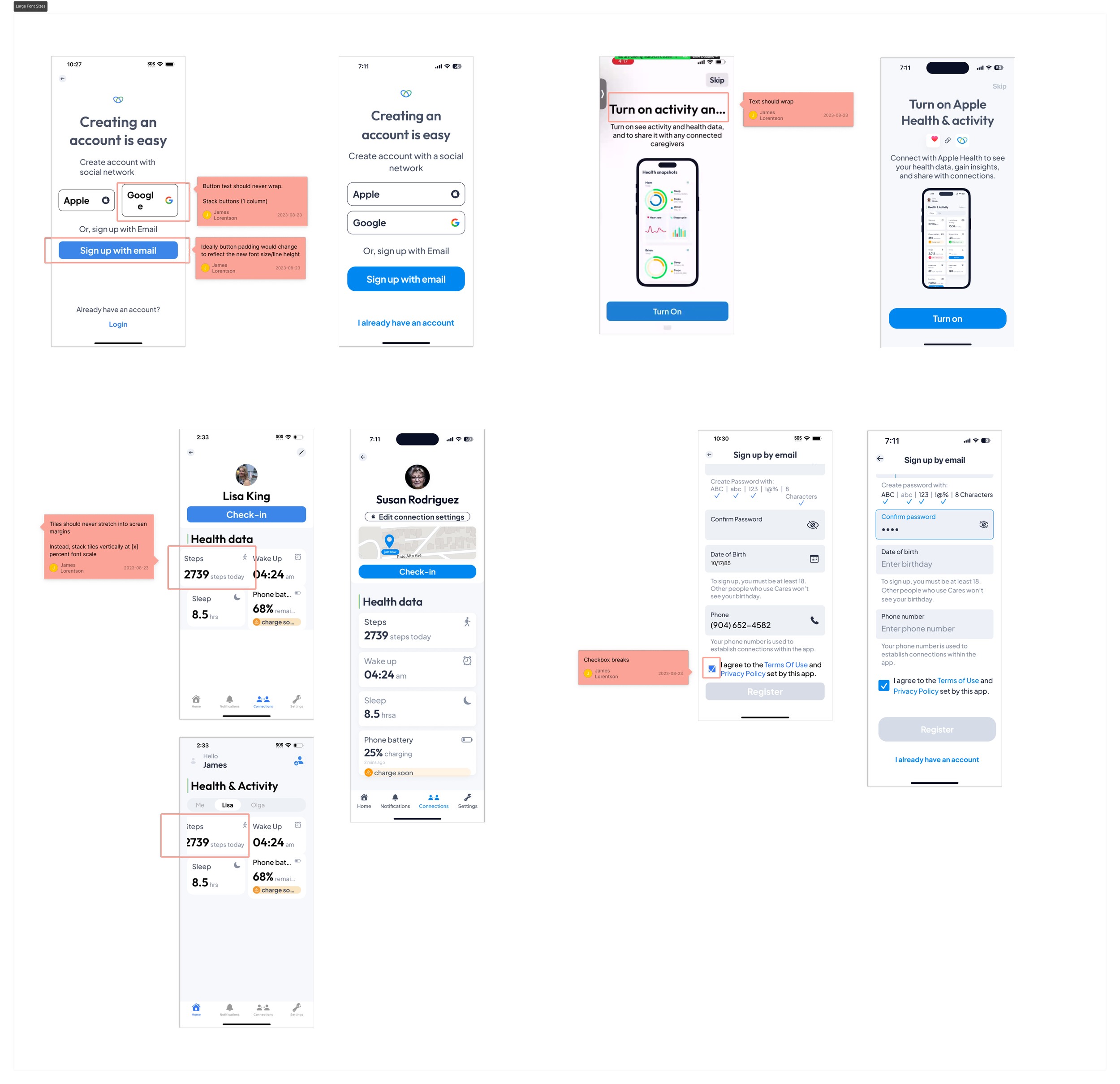
Accessibility & large font sizes
Since elders were a core subset of our user base, it was critical that our app could handle user-modified accessibility controls like larger font sizes.
-
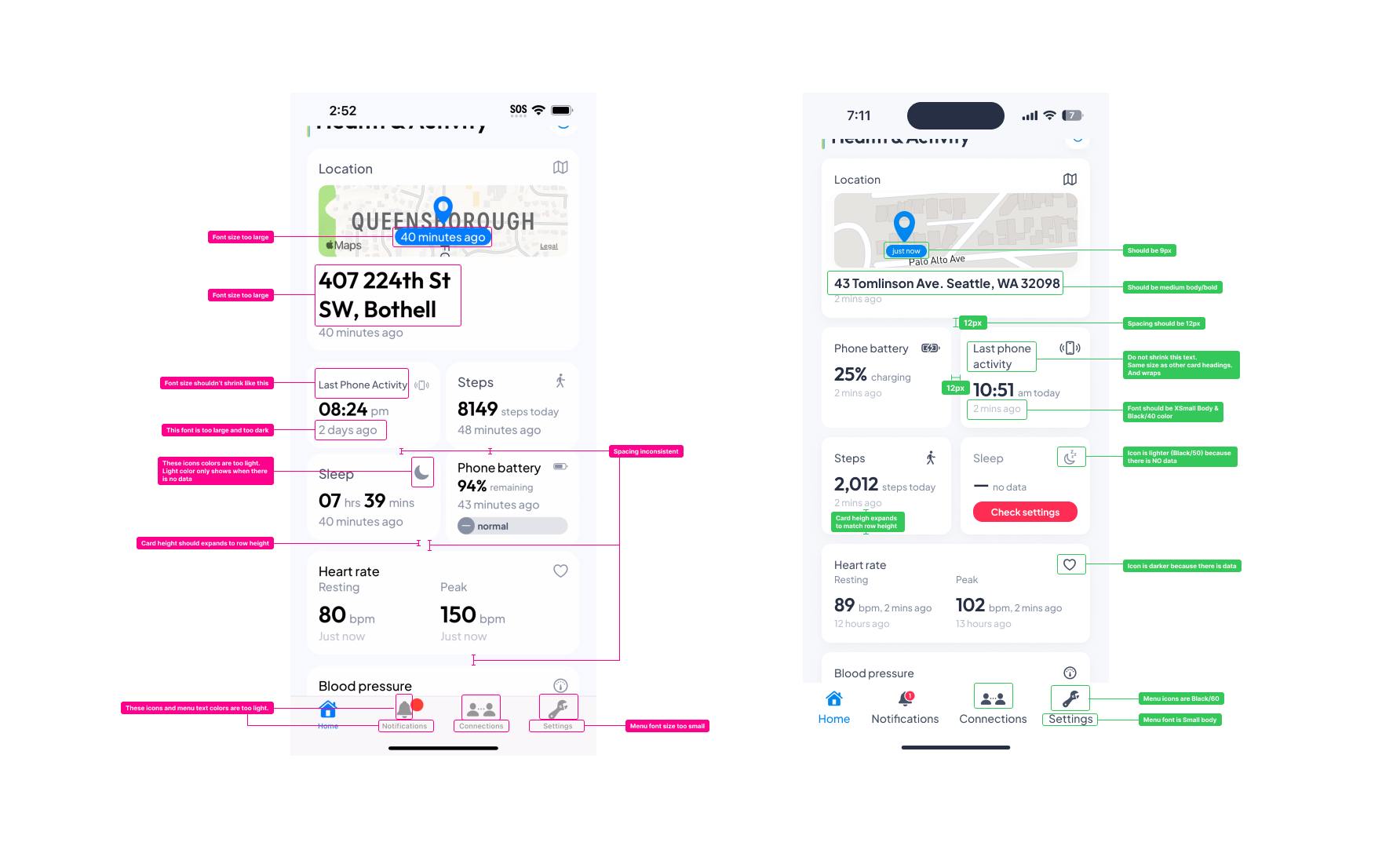
Dev:Design inconsistencies
After reviewing the live build, I annotated inconsistencies to make it easy for developers to get the build in order.
-
Diary Study Testing
After several rounds of iterative feature and design refinements, we were ready to get the app in the hands of real users.
I conducted four separate 2-3 week-long diary studies with caregivers and elders to gather real-world insights into their experiences and behaviors over an extended period. This provided valuable insights for further development.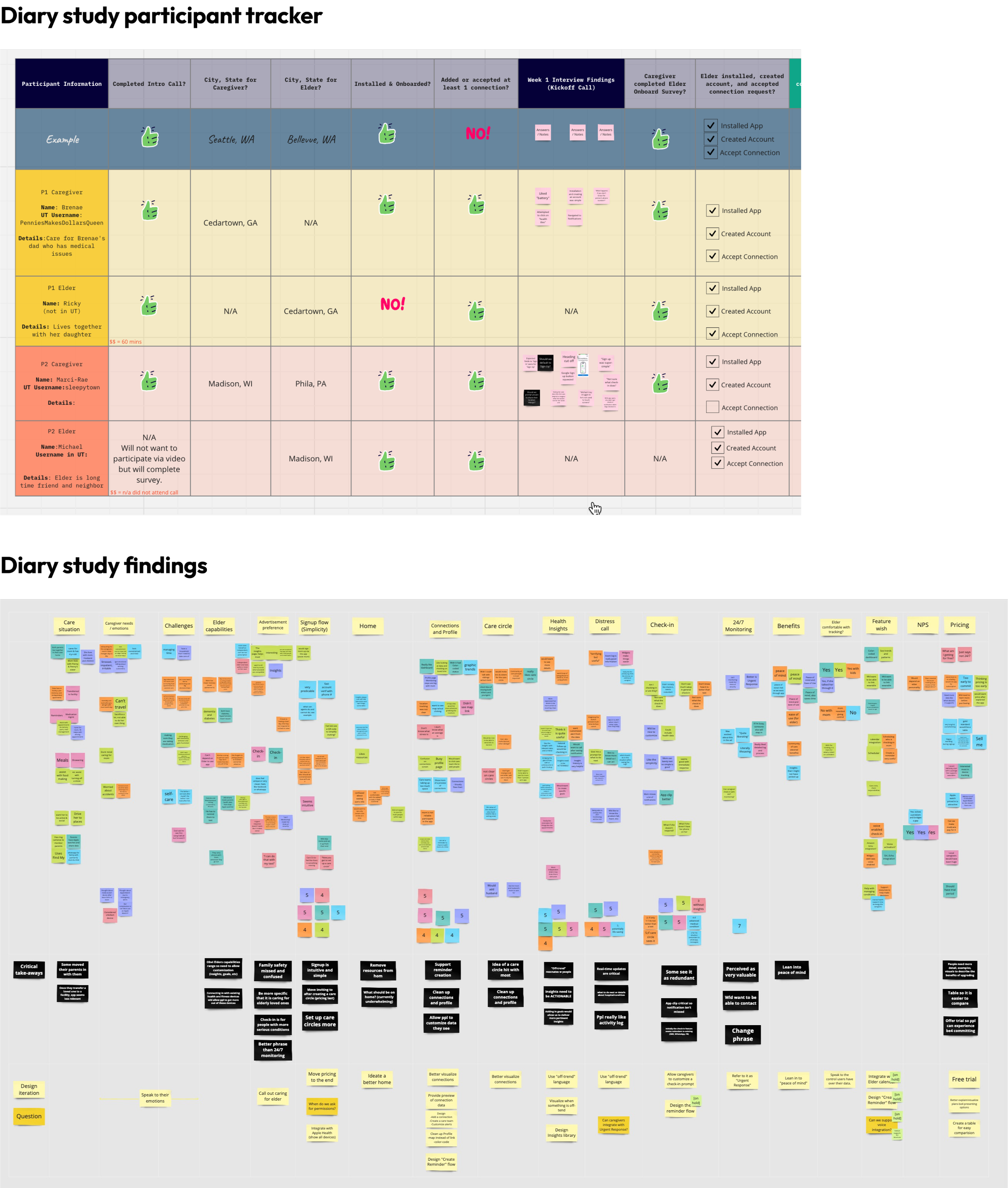
-
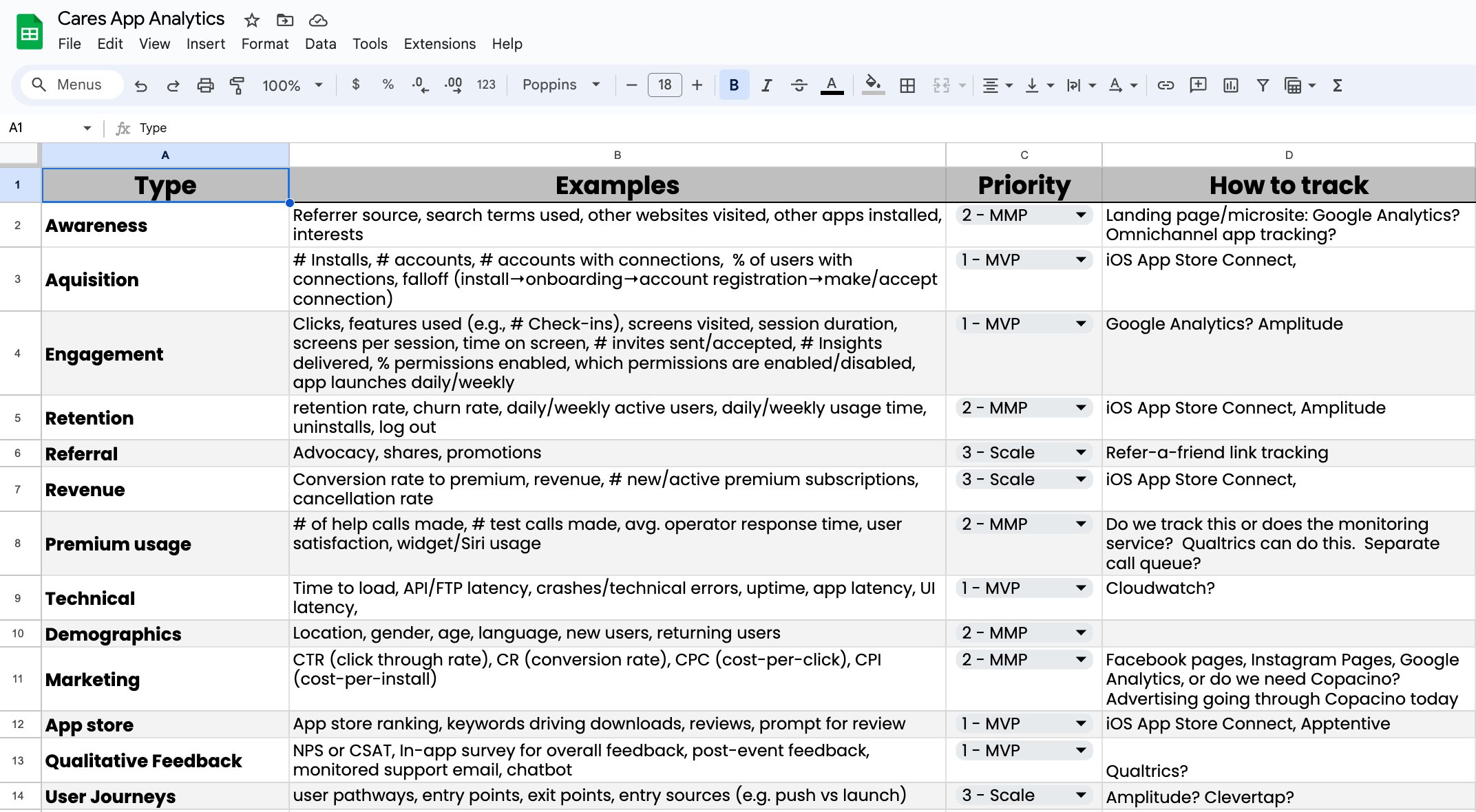
App analytics
Defining the data and metrics we would be tracking to ensure success
-
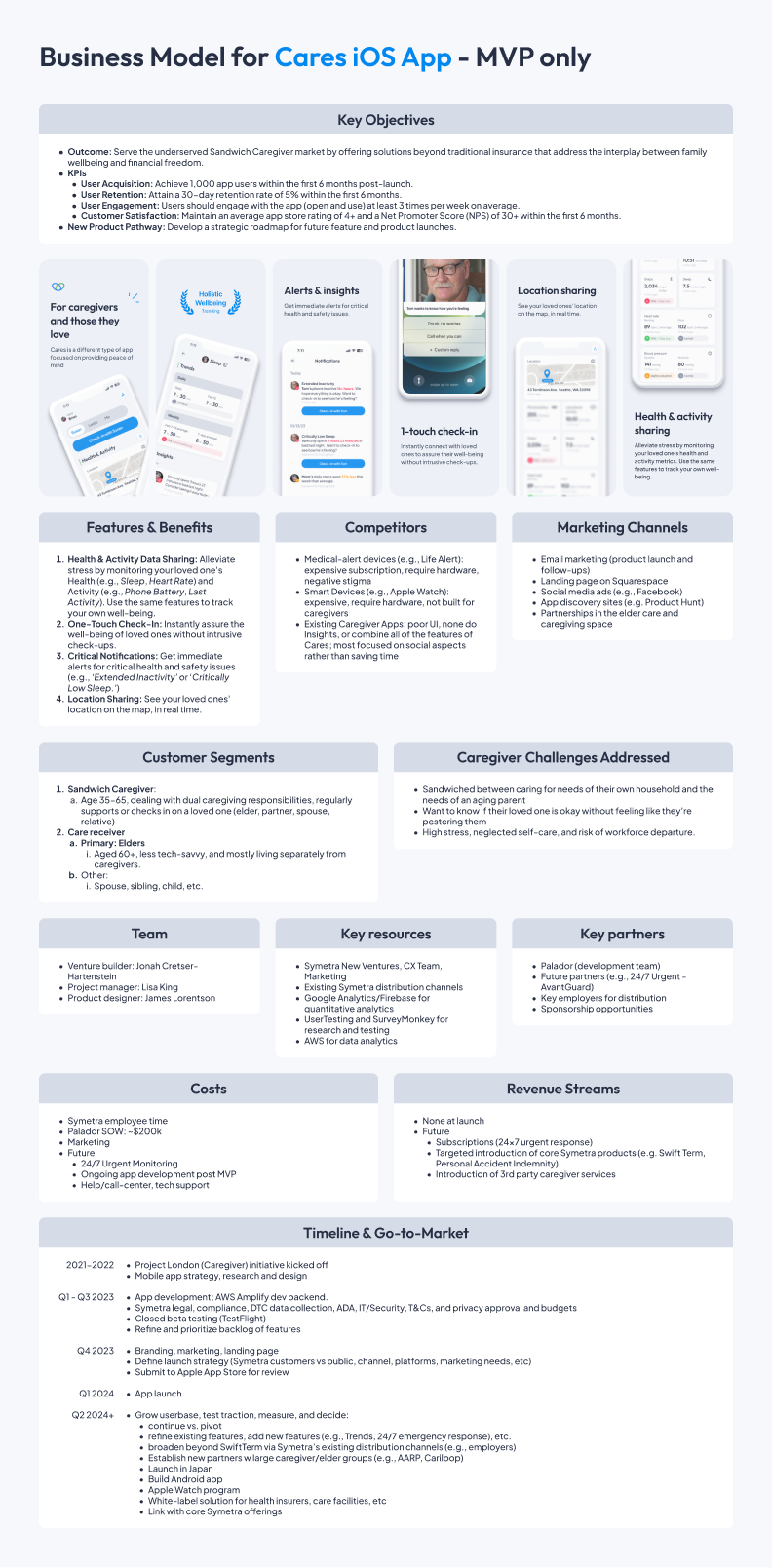
Marketing strategy
Developed a launch and marketing plan, focusing on the unique selling proposition and targeting specific user segments.
-
More feature refinement
As the builds were released, I continued testing with UserTesting participants while the developers prioritized based on effort.
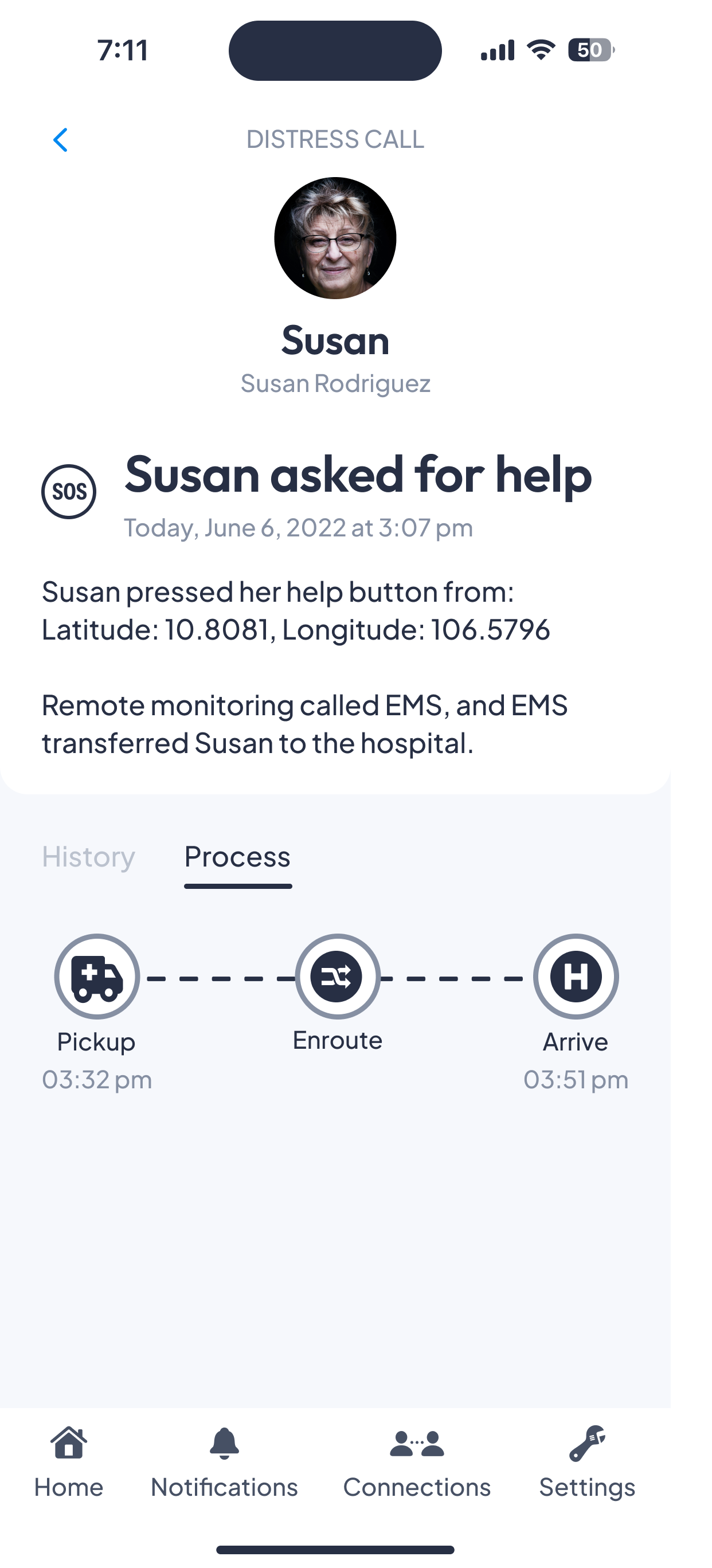
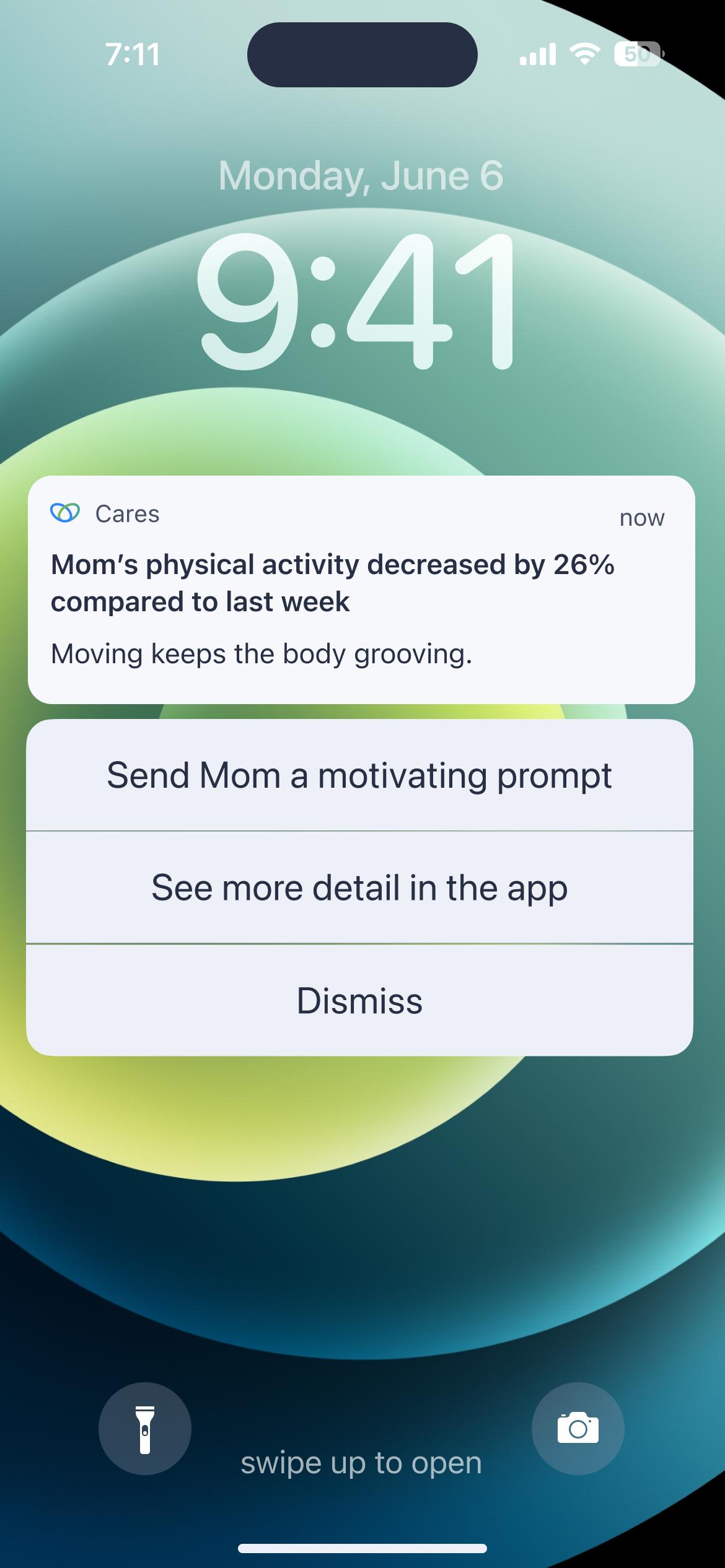
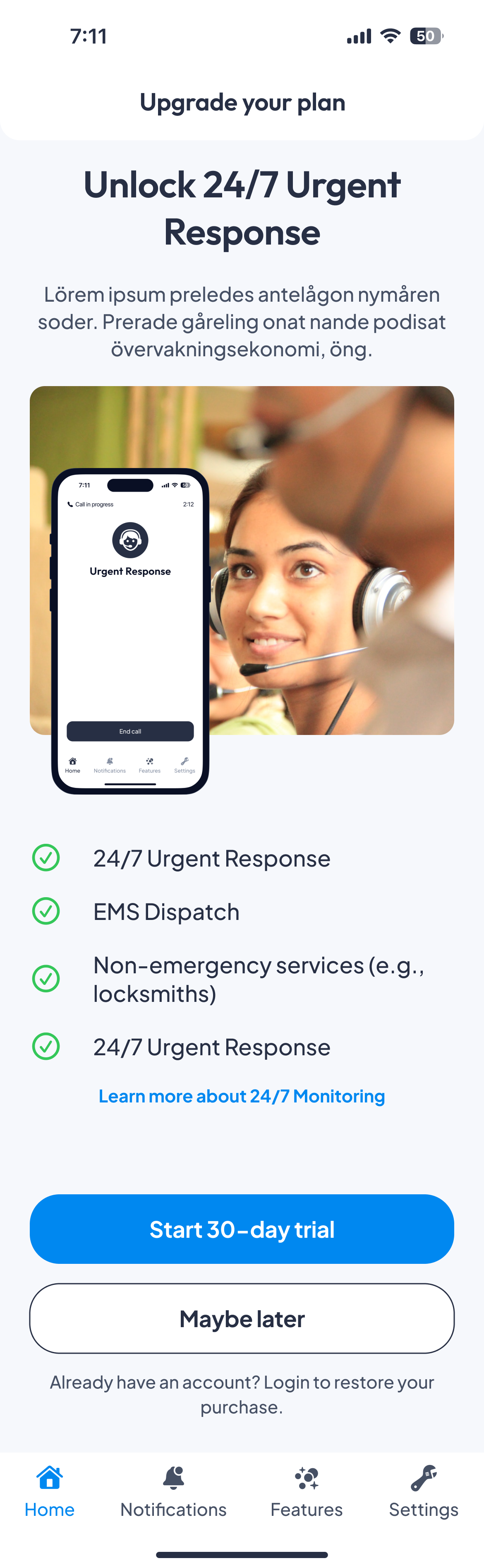
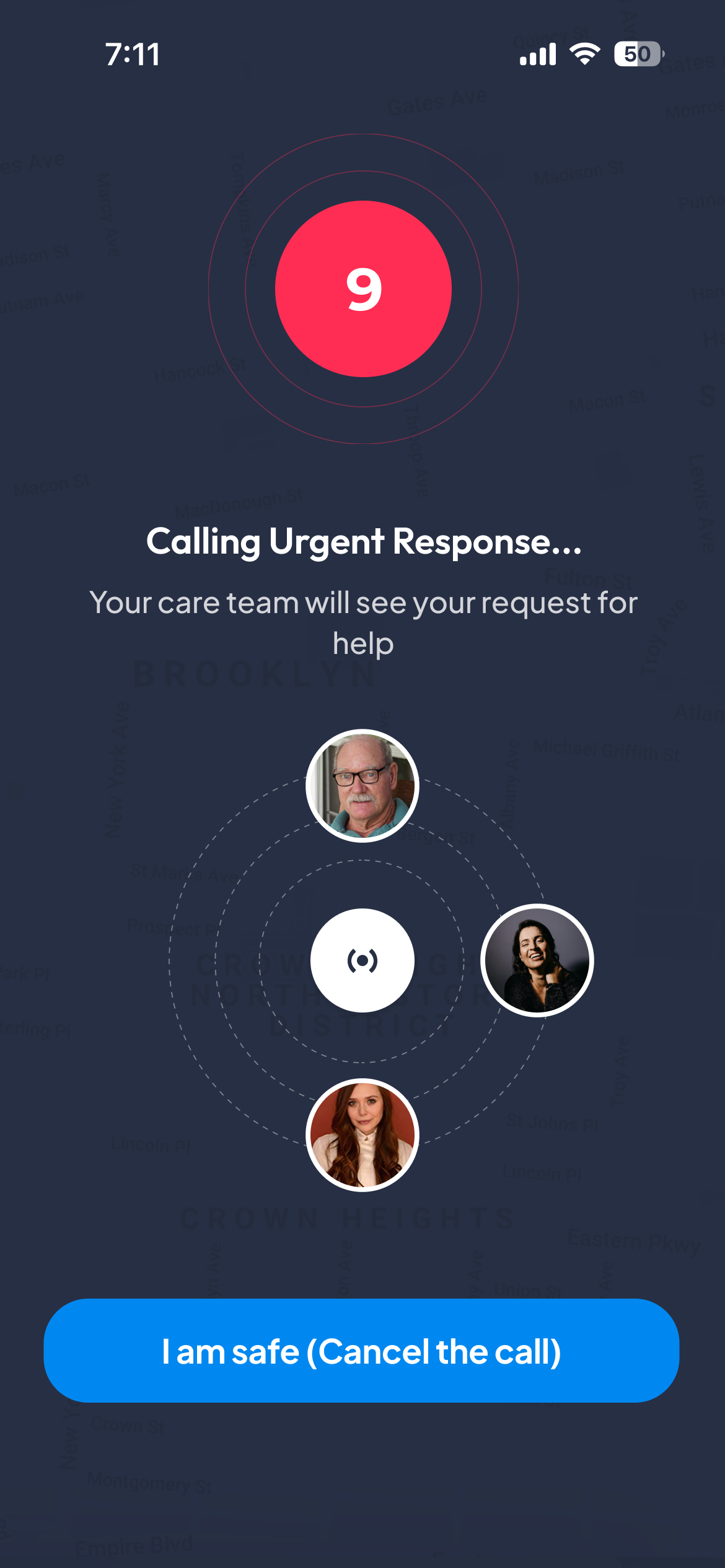

Prototypes
Premium upsell
Premium upsell
24/7 urgent response
04/ Outcomes
Together with our development team, the New Ventures team brought our first new product to a successful open beta program. Unfortunately, in January 2024, Symetra made the decision to shut down New Ventures due to budget constraints and a renewed focus on its core product lines.
Successes
Creation of an app that directly addresses the specific needs of sandwich caregivers, a previously underserved group.
Positive feedback from user testing and diary studies indicates the app’s effectiveness in easing caregiver burdens.
Successful integration of health/activity data sharing, one-touch check-in, and critical notifications, enhancing caregiver peace of mind.
Learnings
The importance of iterative design and testing in developing a user-centered product.
Lots of practice balancing building to get real user feedback while being lean and data-driven.
Marketing and messaging are crucial for introducing innovative concepts and conveying an app's value to the target audience.
Commitment to innovation and meeting unfulfilled needs is more important than just having good ideas.
If your company is risk-averse, focus on adjacent spaces that leverage its traditional strengths rather than totally new spaces.
What’s next?
Had the app been supported to continue, we’d have:
Launched to the app store.
Continued refinement of the app based on user feedback and emerging caregiver needs.
Potential expansion to other platforms (e.g., Android) and additional features based on user demand and technological advancements.
Ongoing marketing efforts to broaden reach and deepen user engagement.