
SoftBank Robotics
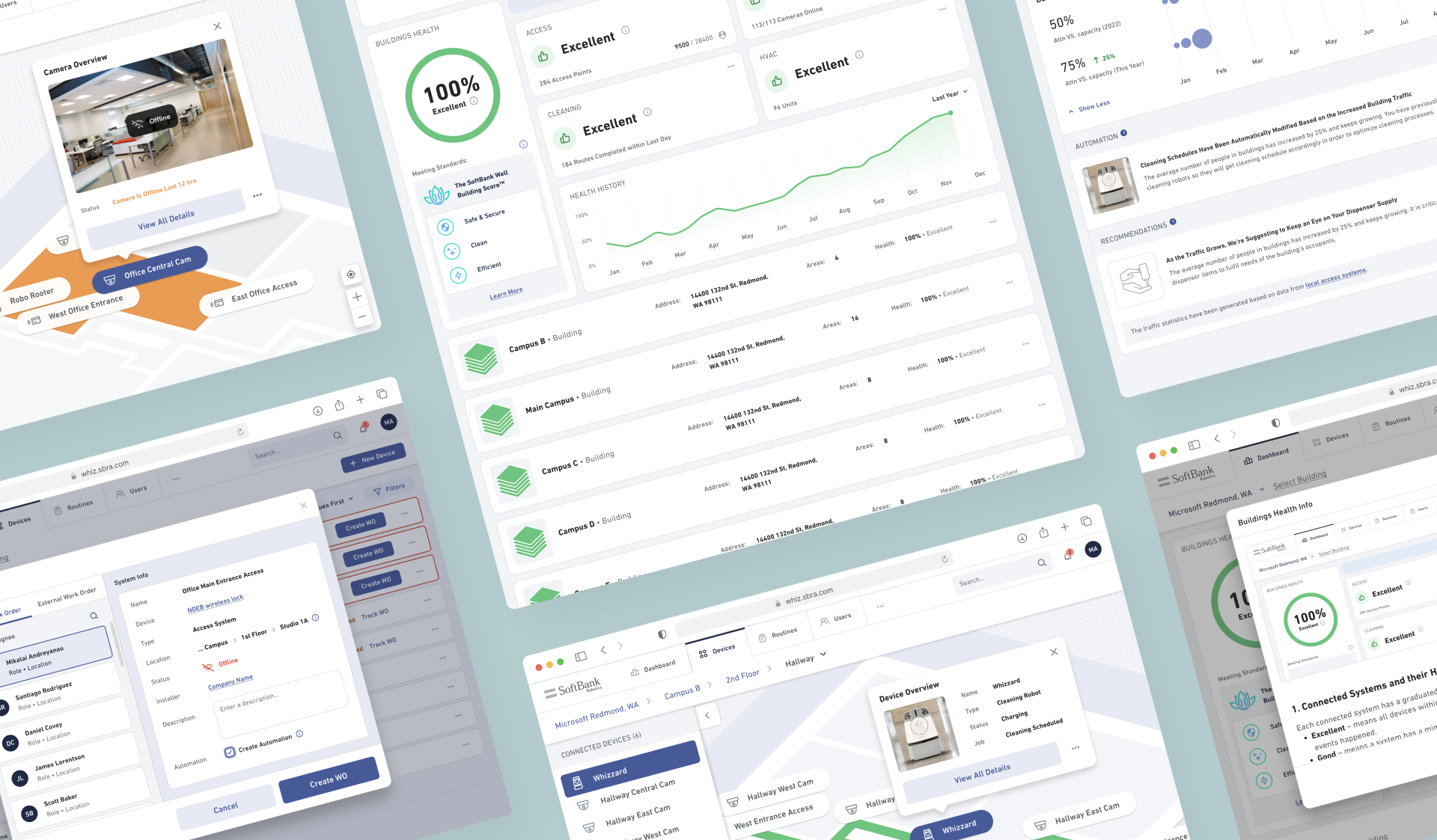
building health Dashboard
Revolutionizing how property owners manage building health by providing real-time, comprehensive insights and a holistic view of a building’s health and performance.
TEAM
James L - Designer
Mikalai A - Designer
Dorothy B - Strategist
Sean P - Dev
My Role
UX Strategist
UX Researcher
UX/UI Designer
DURATION
5-months
01/ Summary
Services
Concept strategy
Market research
Mural workshops
In-person workshops
Ideation
Branding
Mockup design
Design system
Prototype testing
Technical discovery (dev did this)
Deliverables
Refined vision, mission, & purpose statements
New Whiz robot dashboard
Branding & styles
Workshop recaps
Sitemap (IA), wireflows
Figma mockups & prototype
Figma design system (component library)
Presentation to SoftBank Japan
Outcomes
Defined vision & aligned team
Refreshed branding
Building health intelligence concept designs & landing page
Redesign of Whiz robot dashboard
This project significantly impressed the SoftBank team, leading to an expanded partnership with them. It included the execution of the new dashboard, an initiative to update their brand styles, and redesigning their existing Whiz robot dashboard.
02/ Opportunity
SoftBank Robotics is renowned for developing robots that assist people, also known as cobotics.
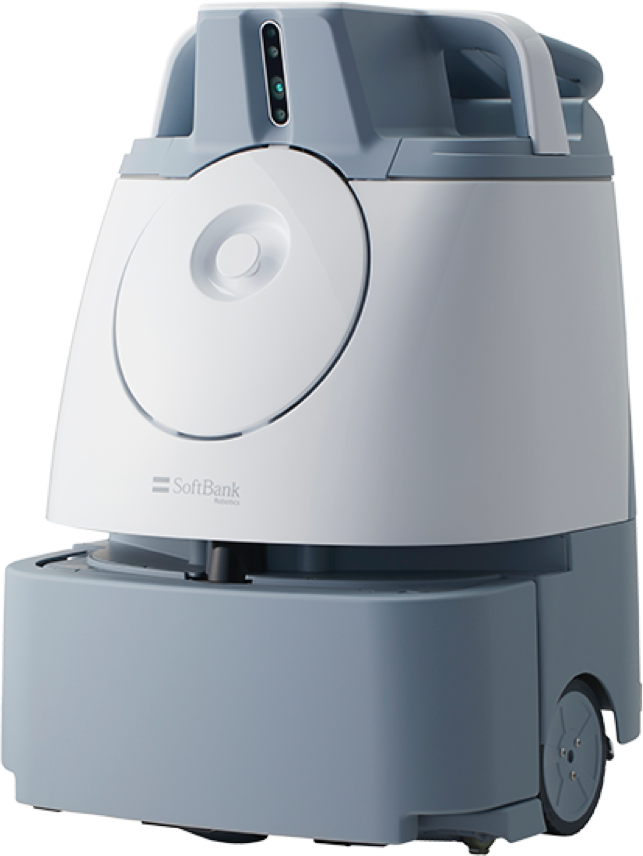
They aimed to provide property owners and facility managers with building health intelligence that would help automate cost savings and make informed decisions. SoftBank already had a dashboard for managing their Whiz cleaning robots, but it was basic with a mediocre user experience. The primary objectives were to validate the market and personas, refine the feature set, and visually conceptualize the future of building intelligence. They came to us with an idea of disrupting this space, but needed help refining their vision.
Driving Factor 1
Building monitoring systems like fire alarms, temperature regulation, and even video cameras are outdated and disconnected.
Driving Factor 2
Smart and connected devices are expected in many aspects of life, but they are missing in building health/management space.
03/ Process
Before developing designs and features, we needed to define our goals. This meant bringing together the SoftBank team to ideate and align on the key competencies, outcomes, and driving vision.
Team approach
Along with the SoftBank product manager, the project team included myself, a visual designer, product strategist, and developer. I led research and ideation and co-led strategy and design.
Ideation & alignment
-
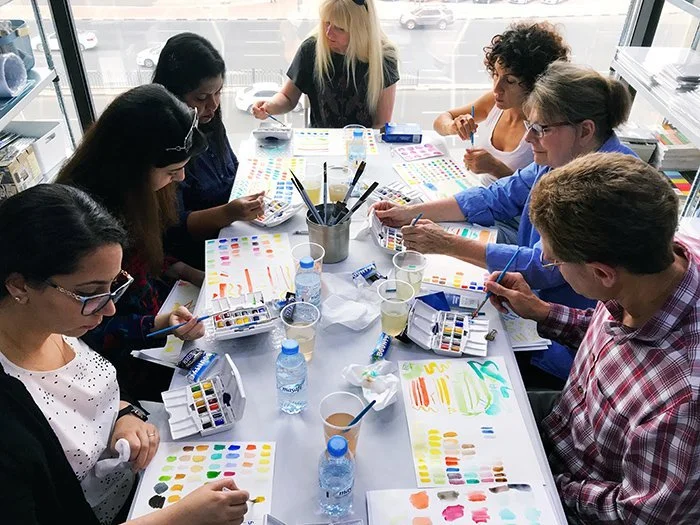
In-person workshops
Facilitated in-person workshops to align and ideate on the vision
-
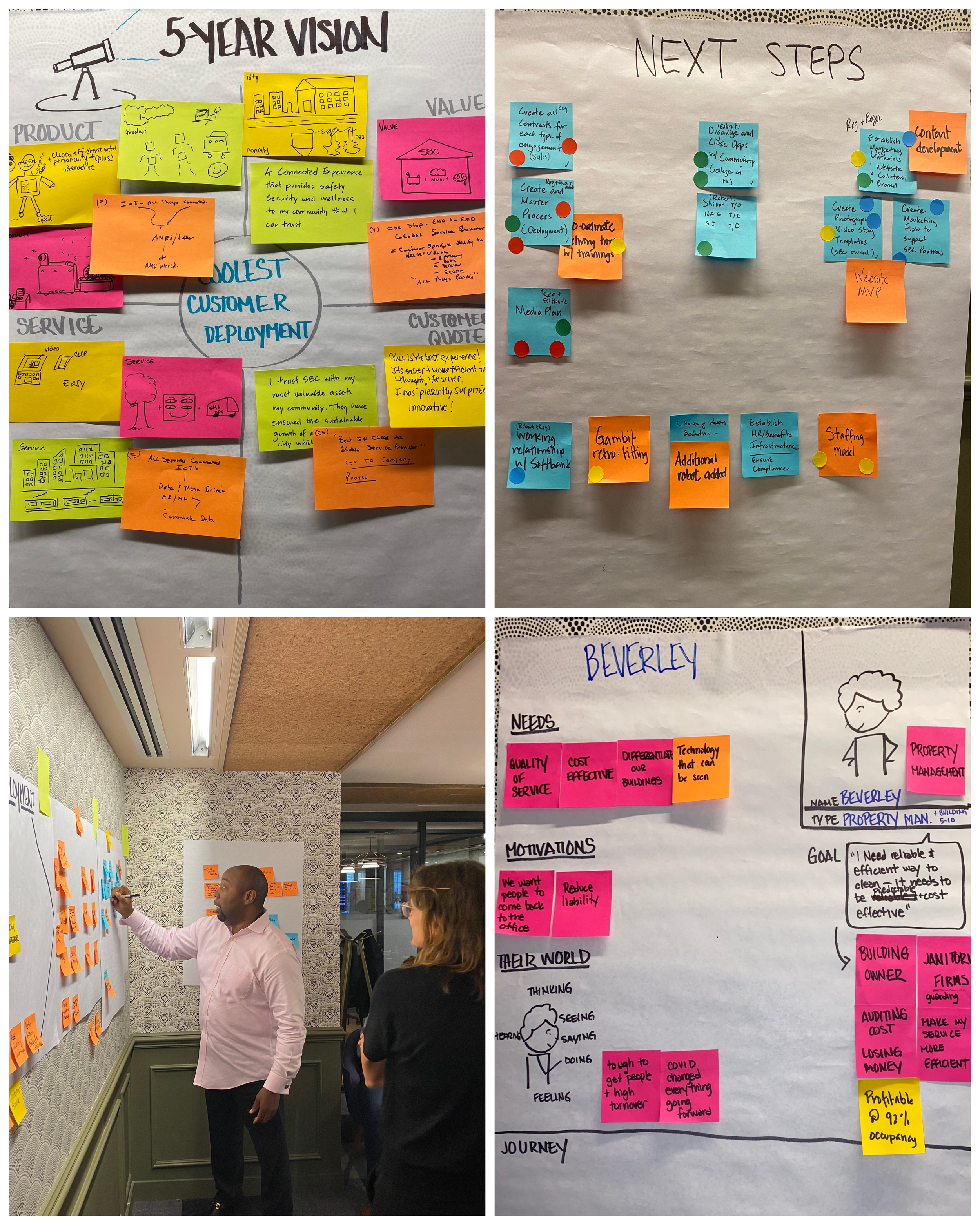
Defining the vision
Analyzed the workshop and existing business principles to define the new vision
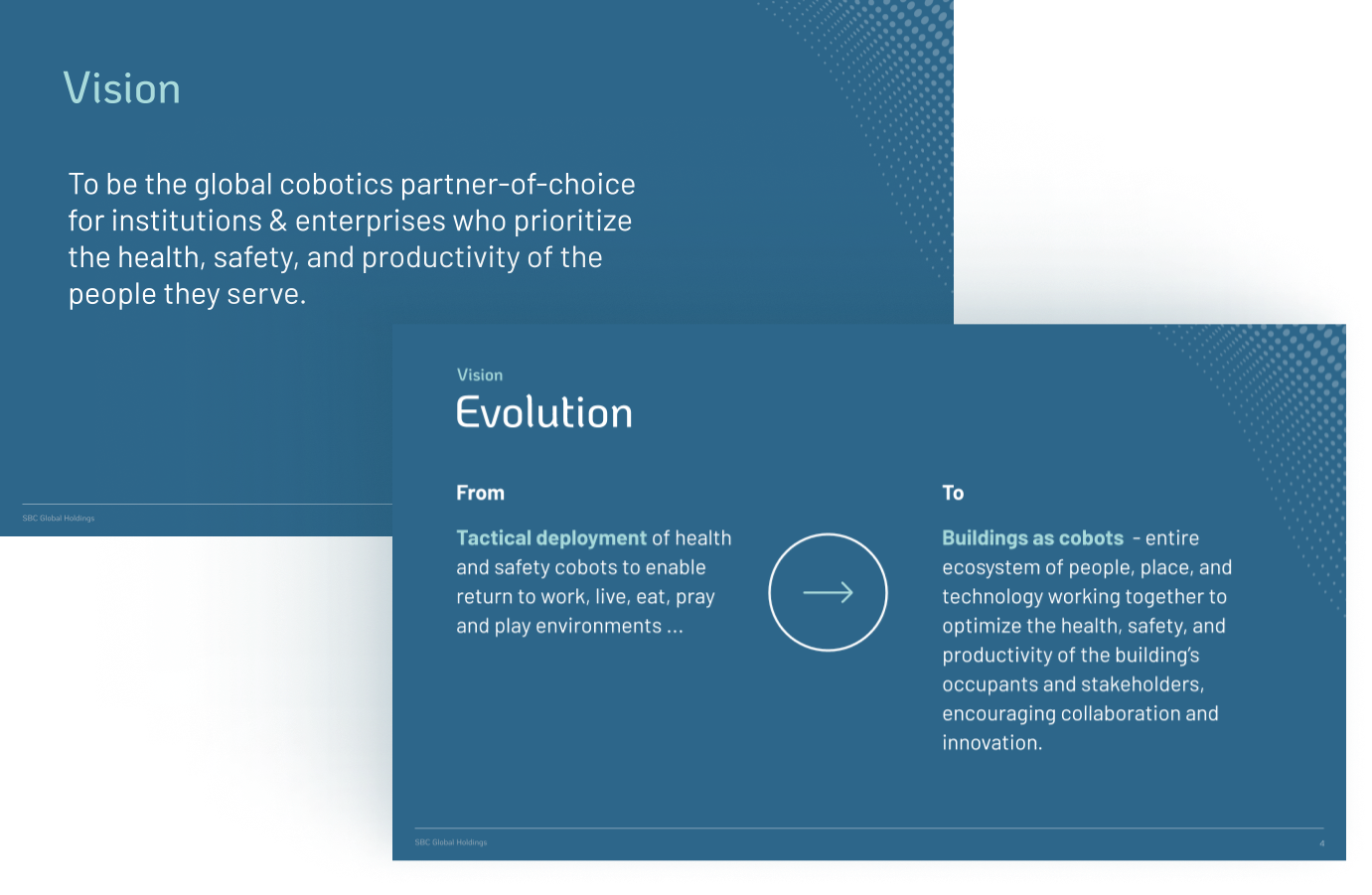
The SoftBank team had good ideas but hadn’t defined precisely who we were building for or what problems we aimed to solve.
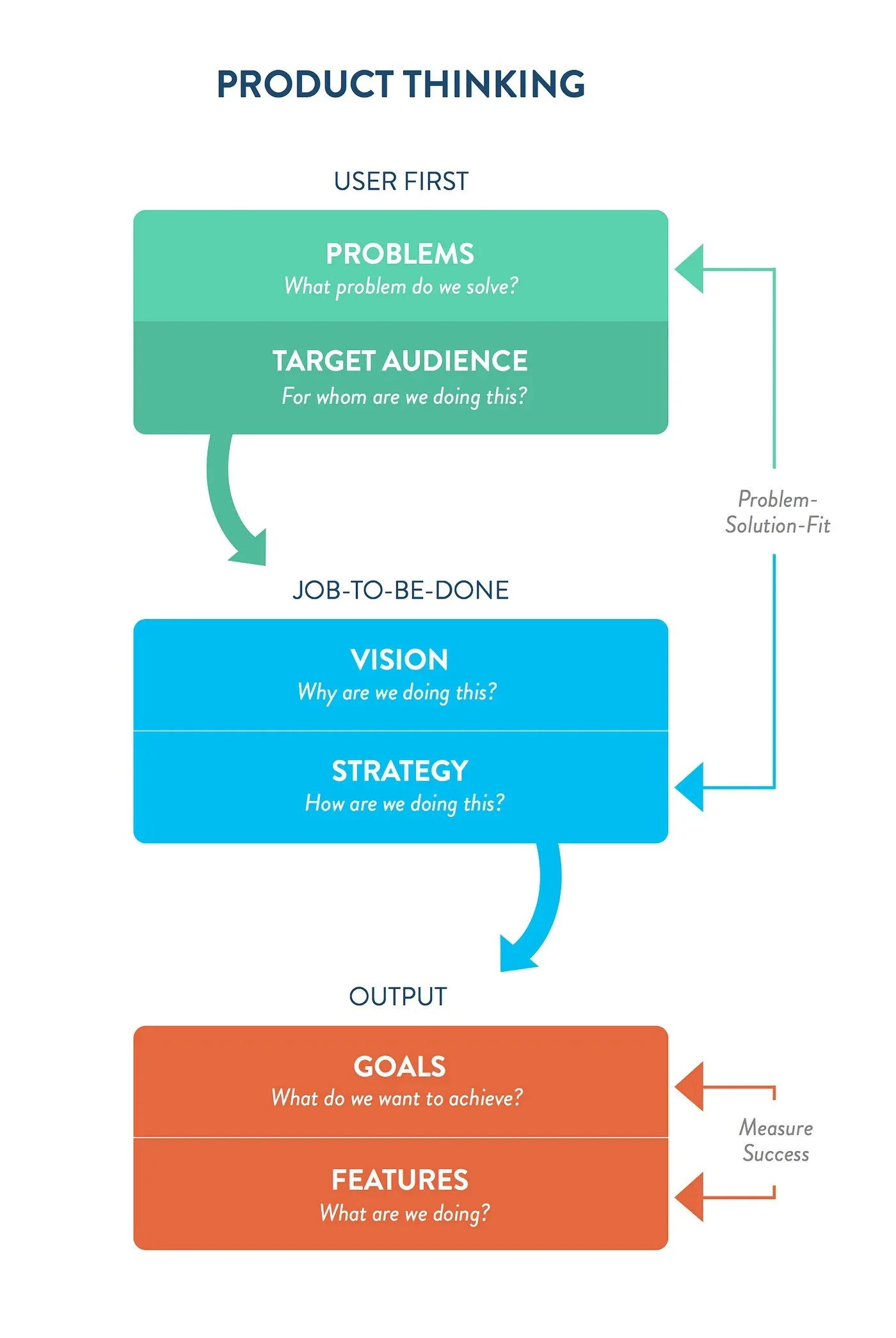
HMW Workshop
With the vision defined, I facilitated a How Might We (HMW) workshop to address these questions:
User problem: What problem do we solve?
Target audience: For whom are we doing this?
Vision: Why are we doing this?
Strategy: How are we doing this? How might we bring together multiple data sources to improve building health intelligence? How might we use Whiz robot data to feed into a broader “building health dashboard?”
Goals: What do we want to achieve?
Features: What exactly are we doing?
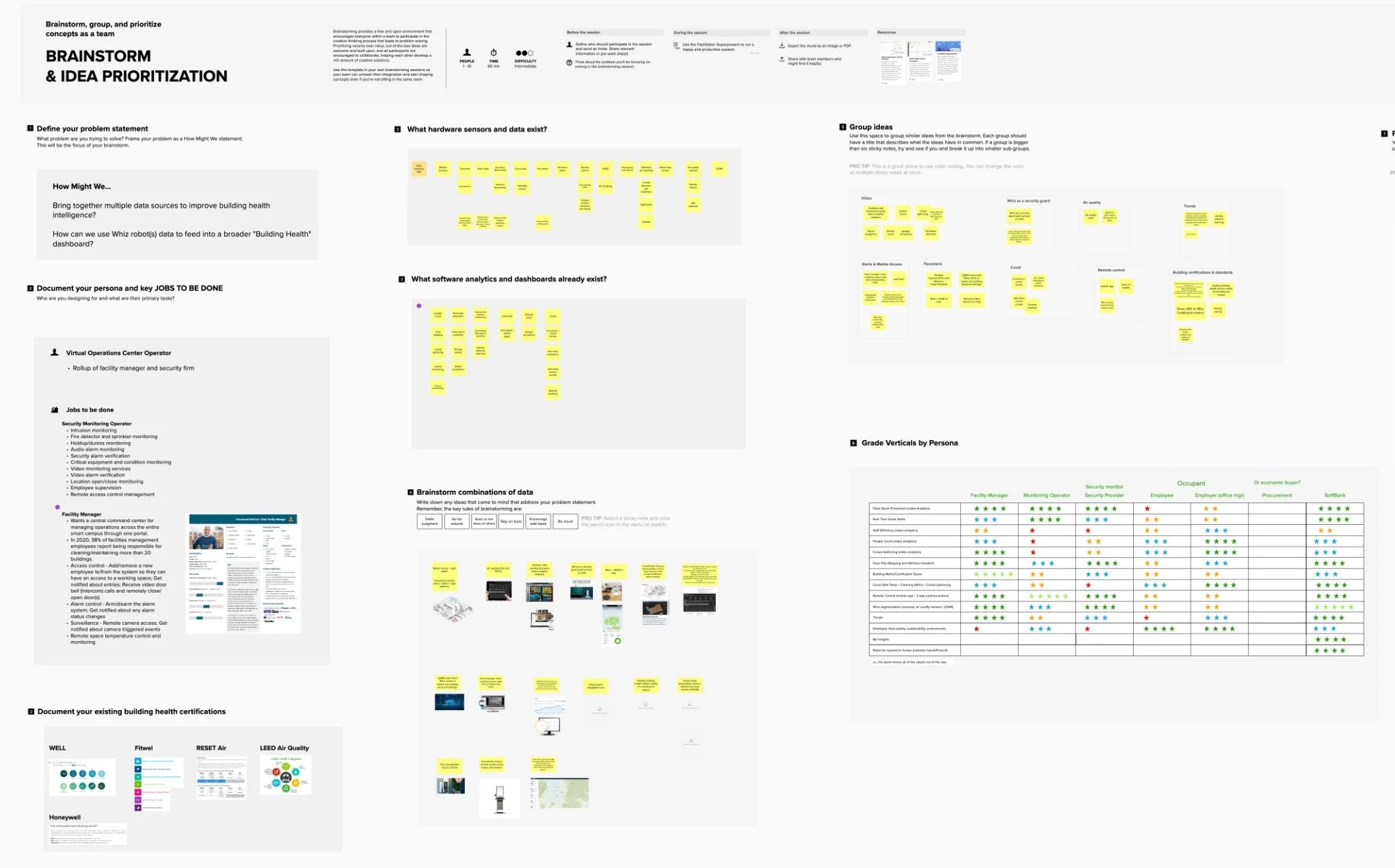
Workshop screens
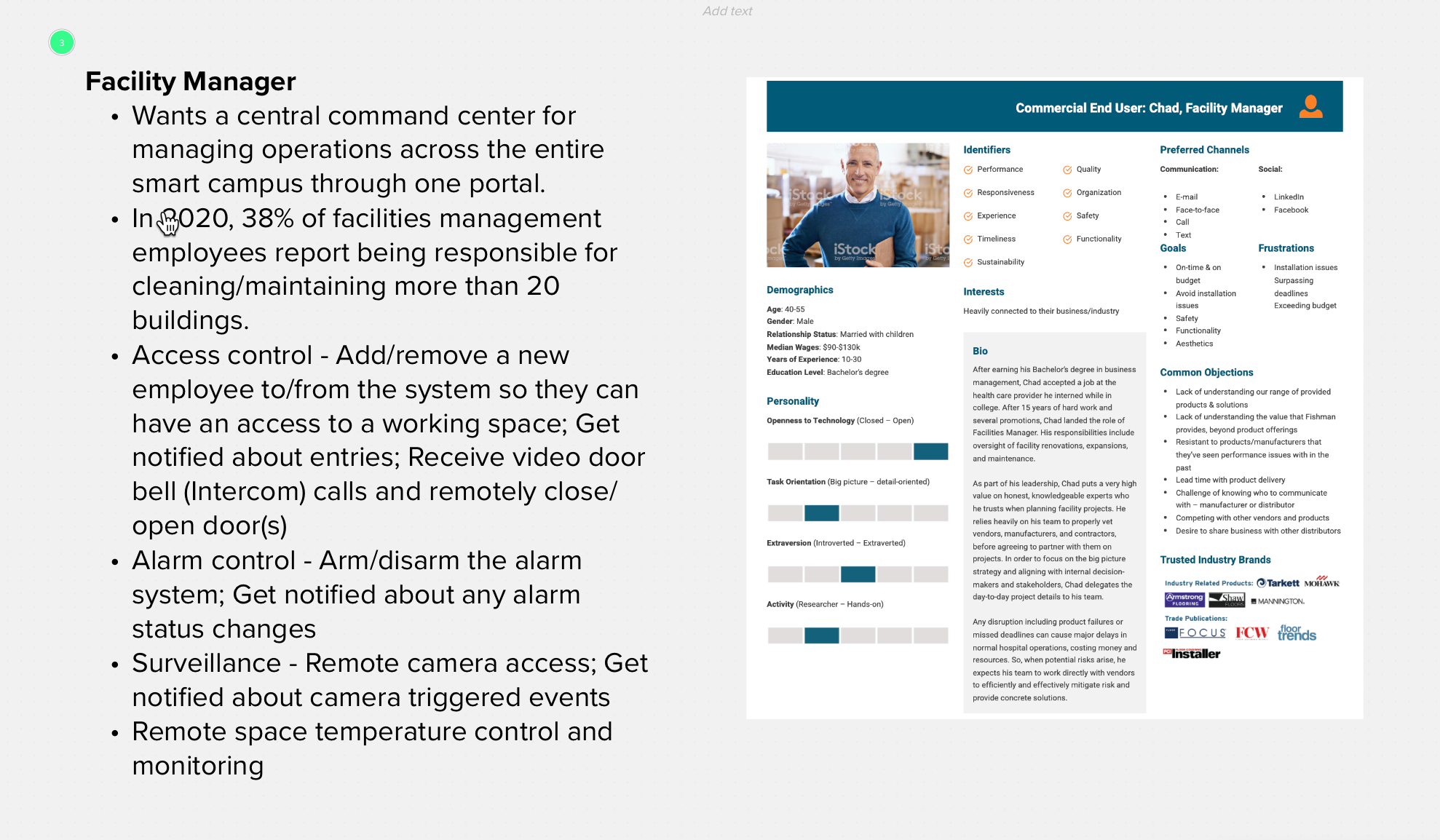
Persona of the key buyer
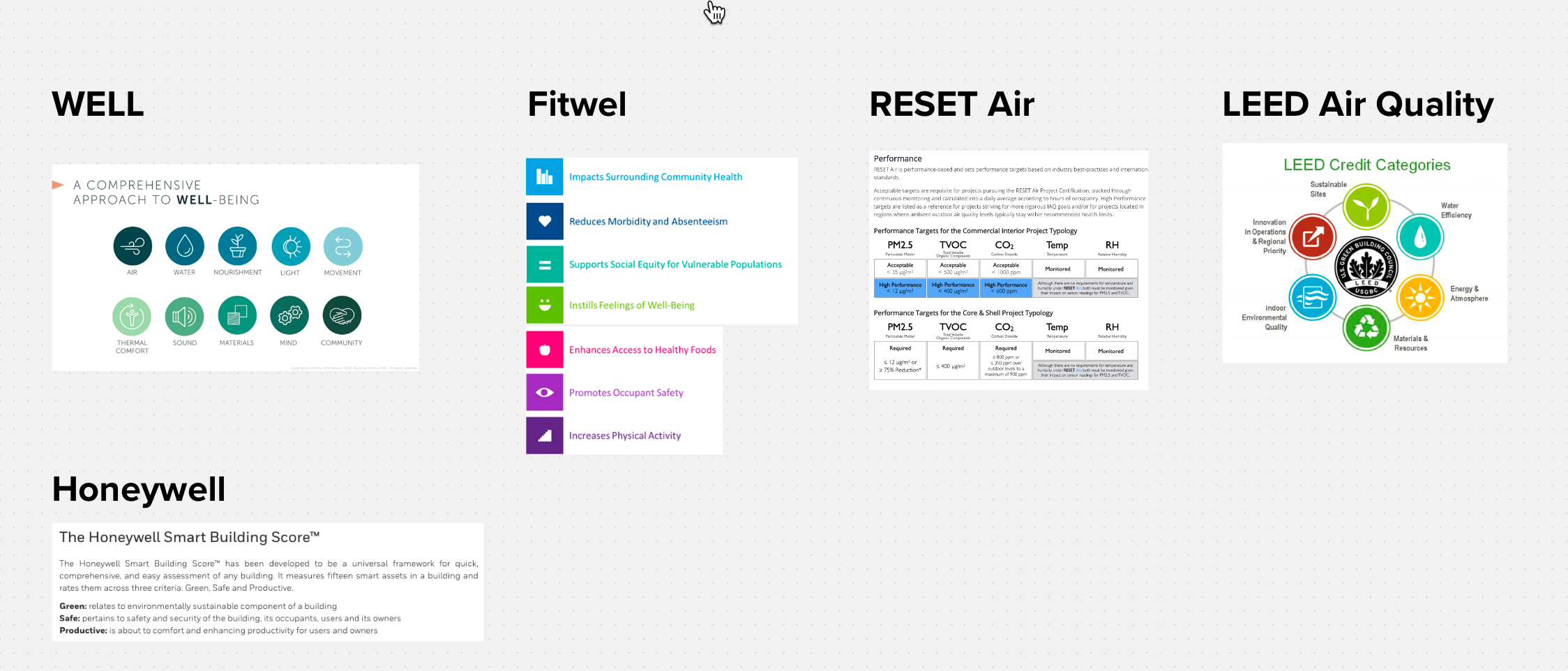
Competitor inspiration
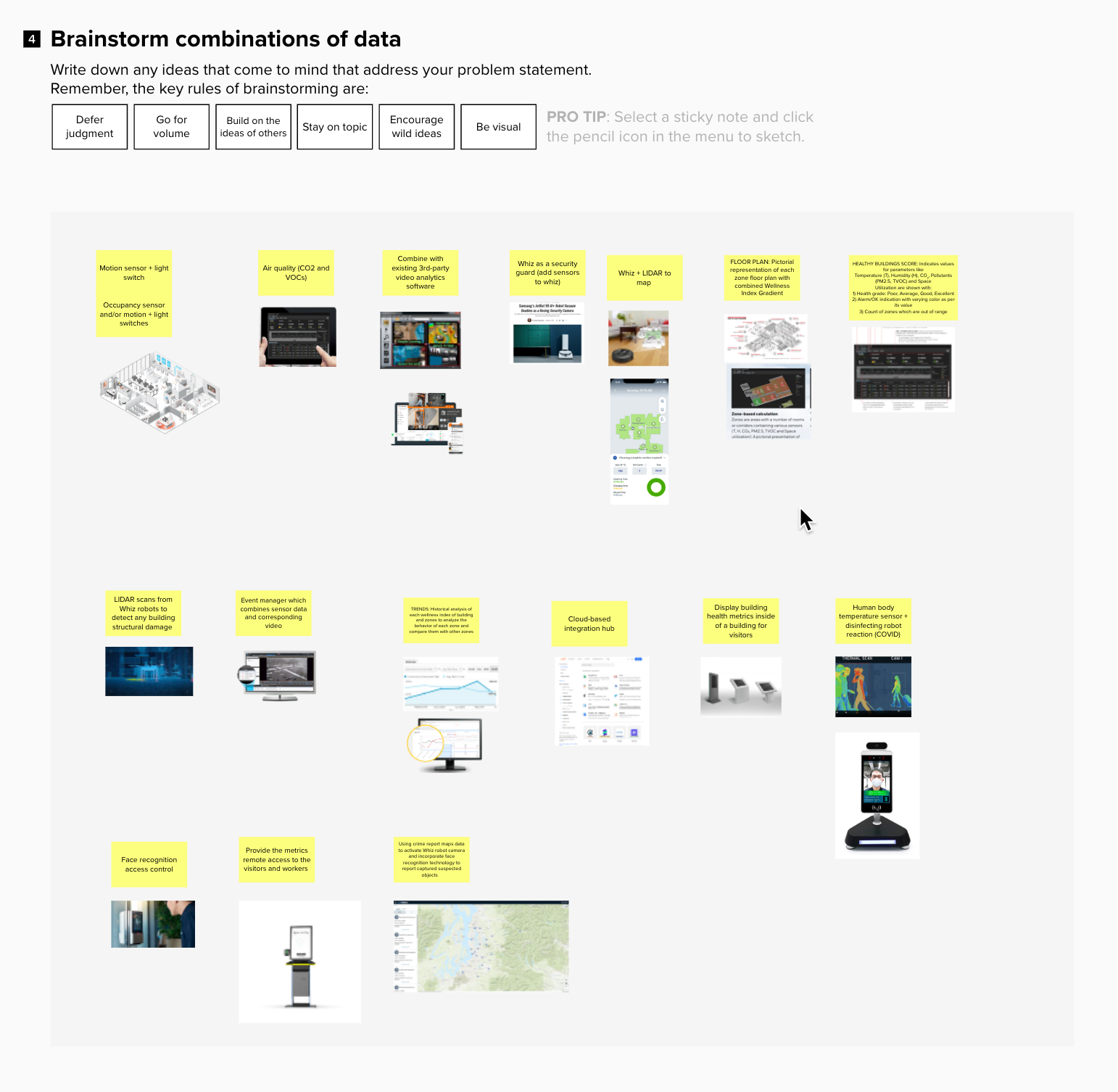
Imagining 'smart building' scenarios
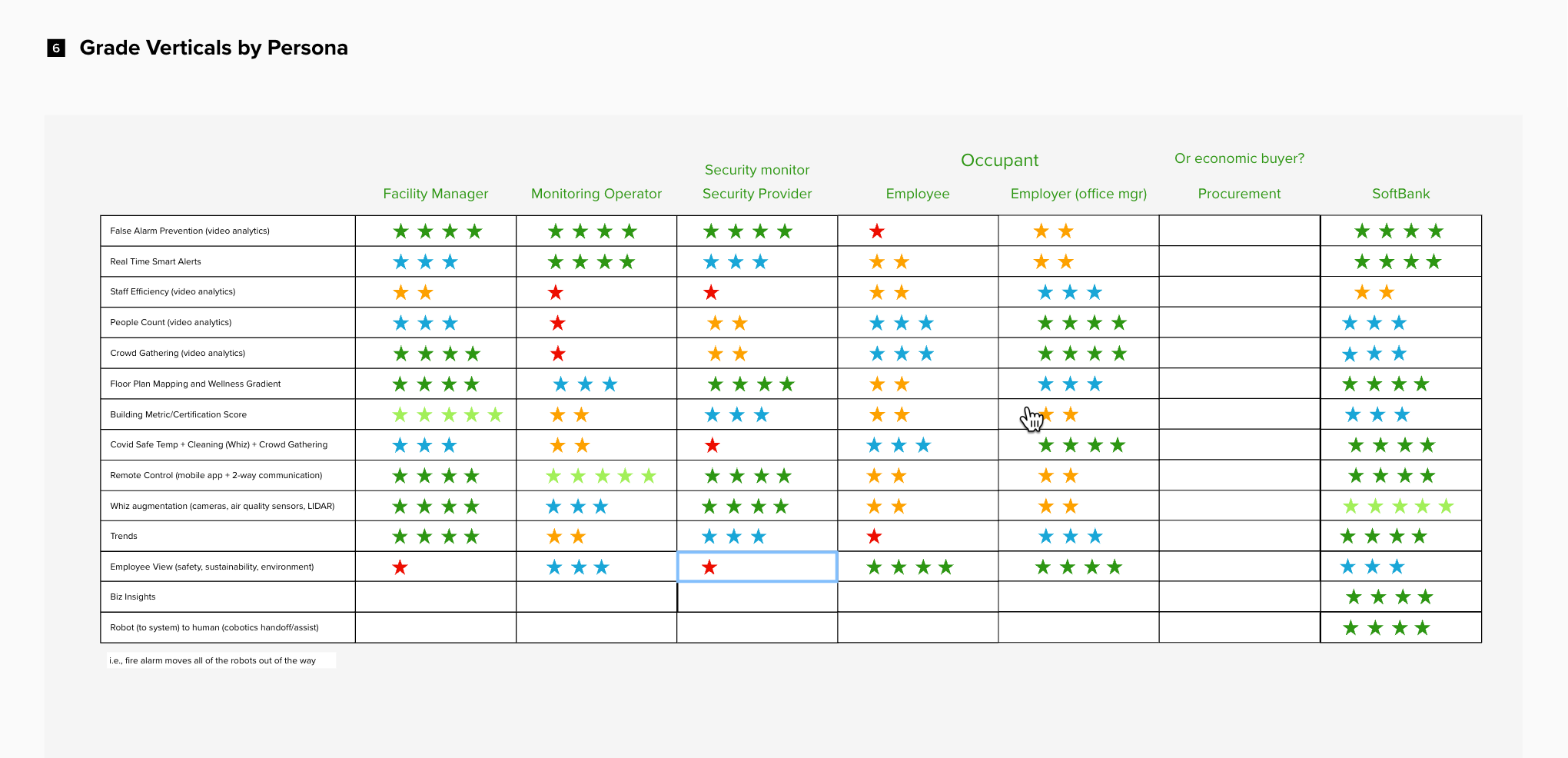
Evaluating ideas against all of our stakeholders and personas
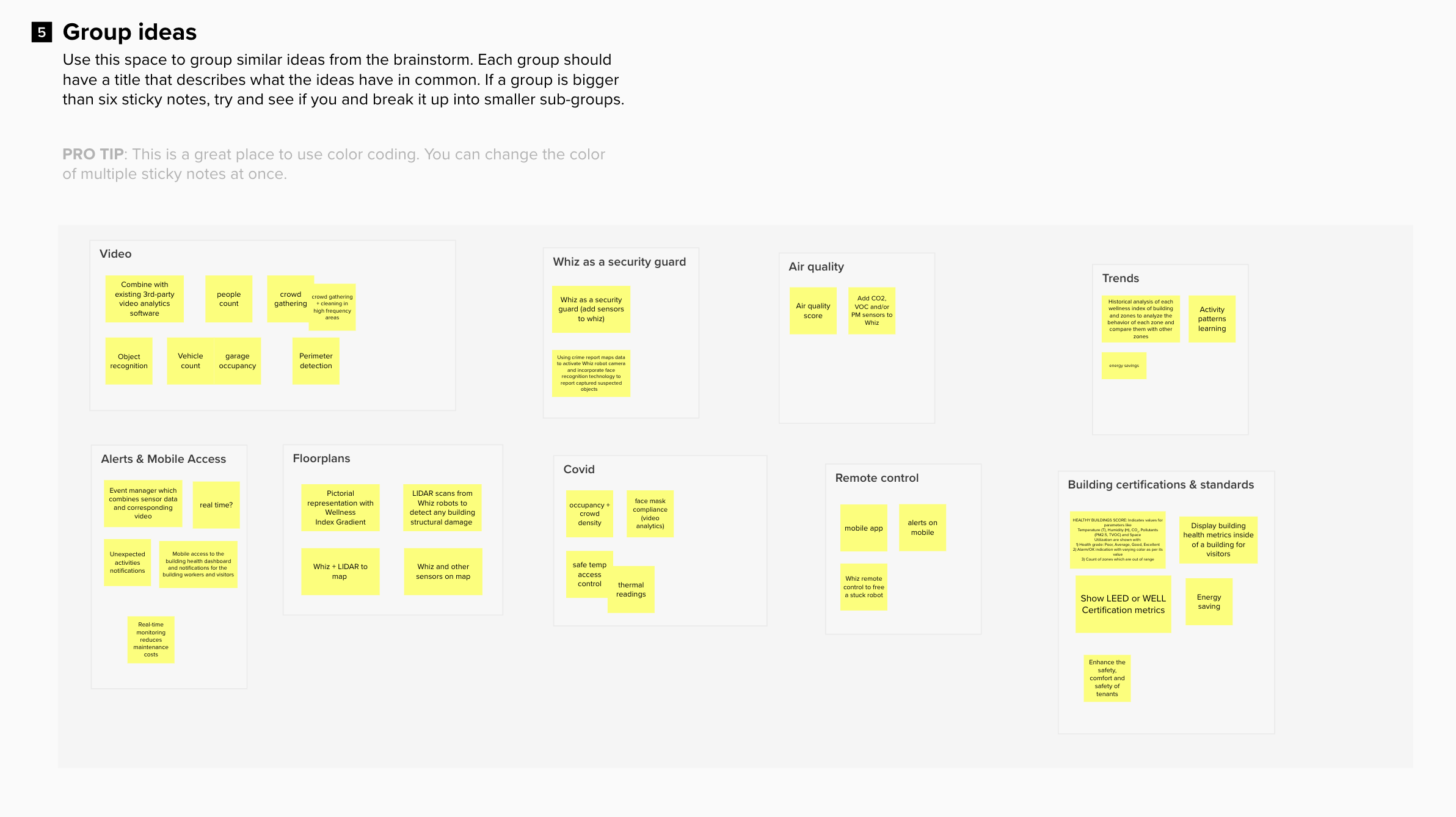
Grouping ideas into logical chunks of work
Prioritizing
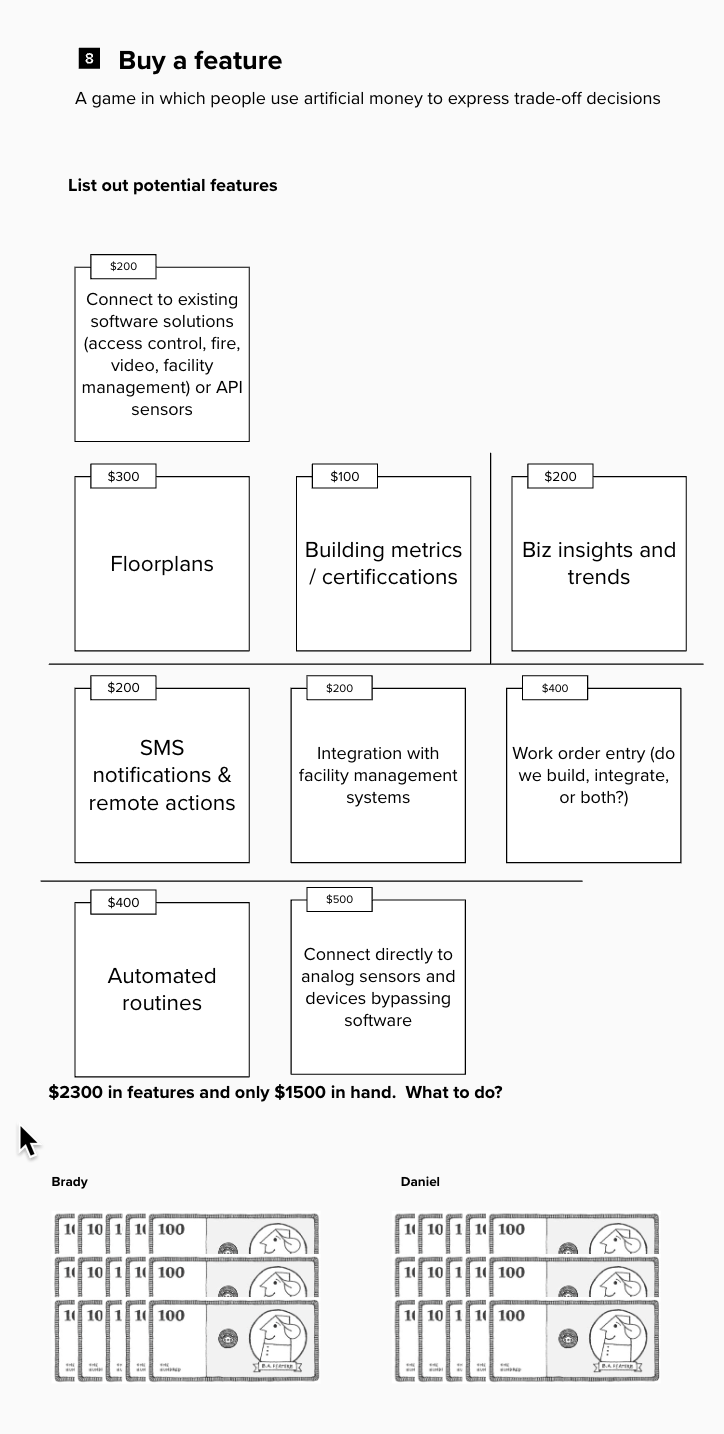
Buying features
Workshop take-aways:
These are the highest-rated ideas that we came away with:
Floor plan mapping and wellness gradient
Connect to existing software solutions (access control, fire, video, facility management) or api sensors
Building metric/certification score
Business insights & building health trends
Robot location visualization
Integration with facility management systems
Work order entry (do we build, integrate, or both?)
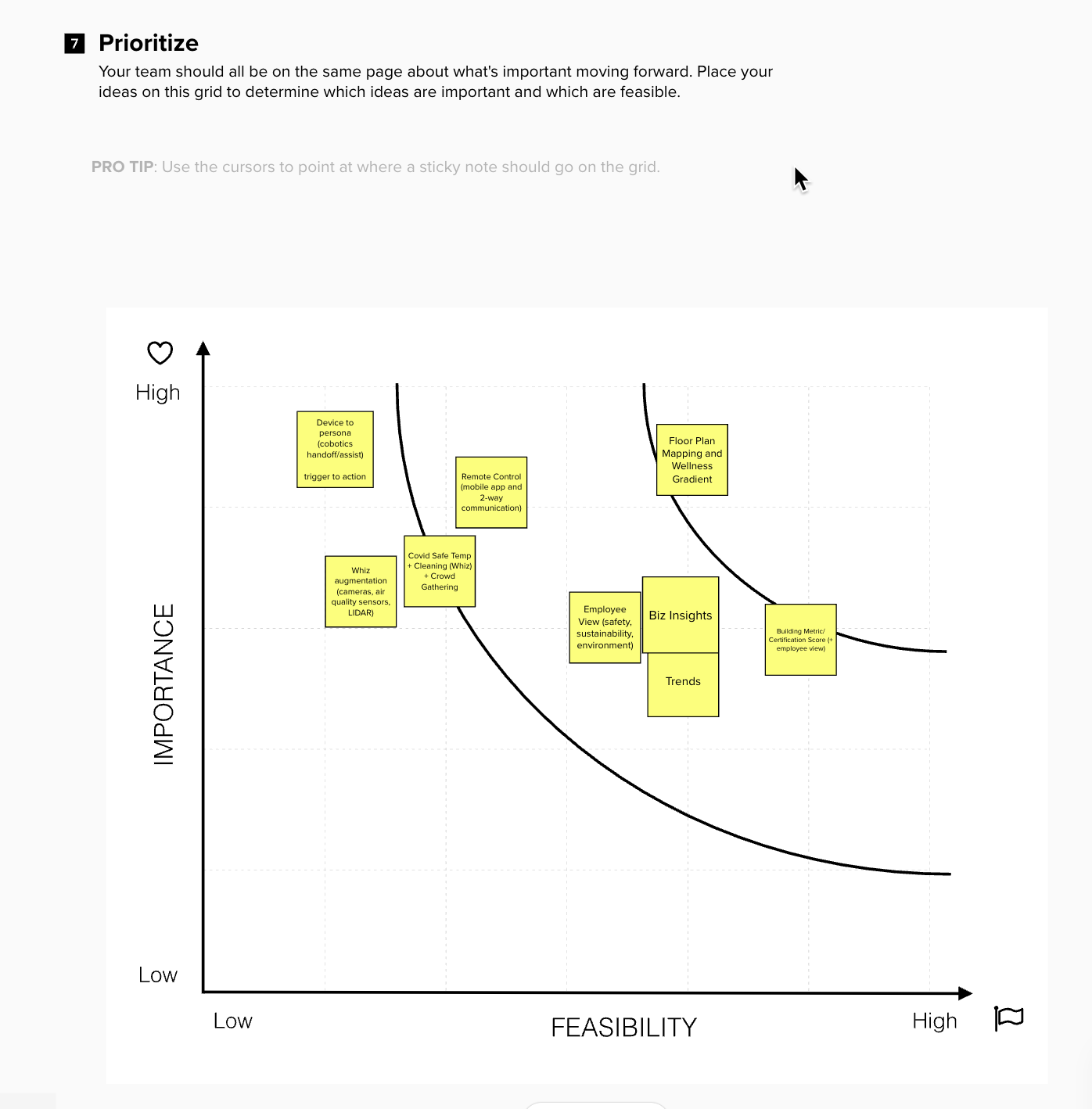
Research
-
Market research
Conducted comprehensive market research to understand the cobotics and smart building landscape
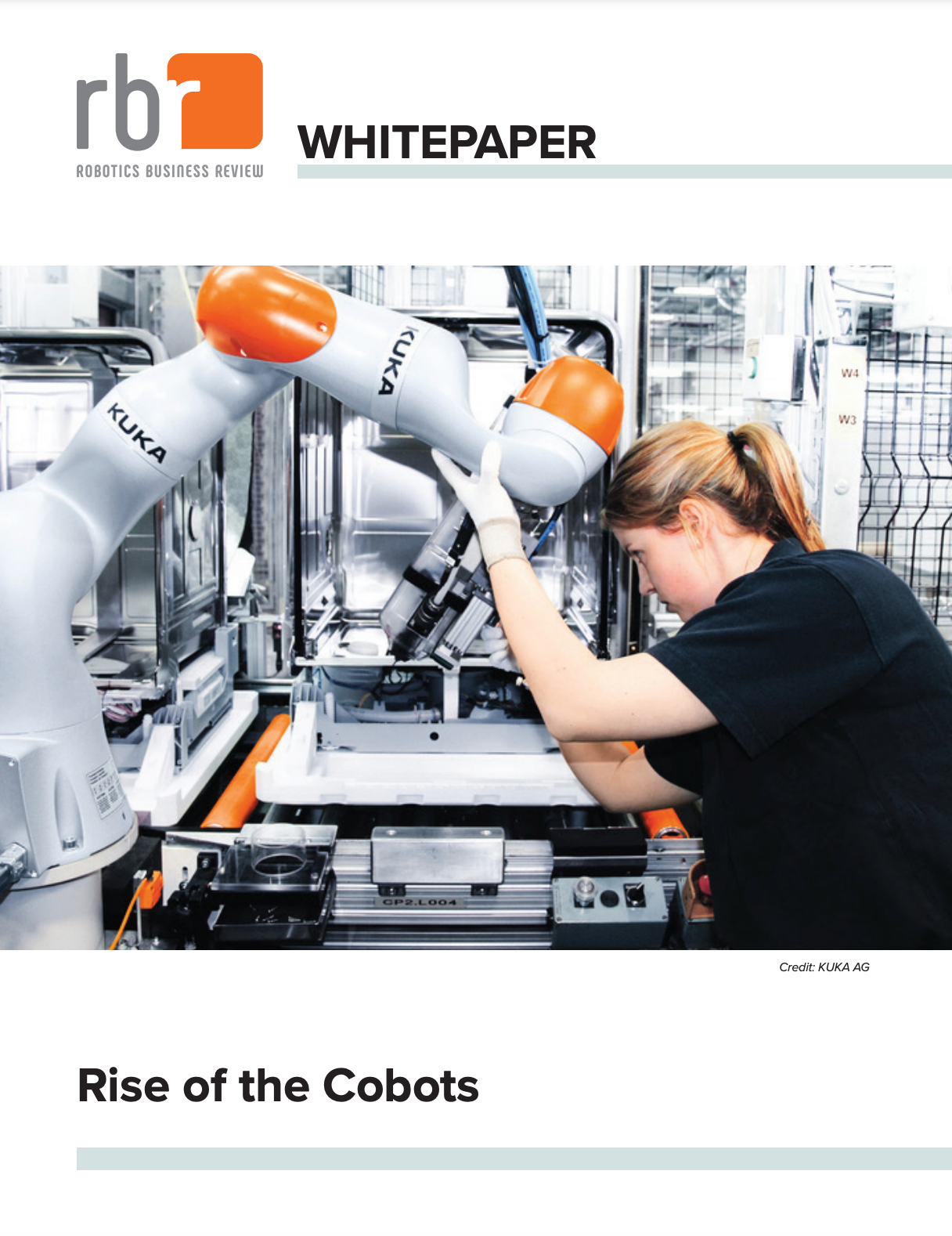
-
Audit of existing dashboards
I analyzed SoftBank’s existing Whiz dashboards to understand the patterns and functionality
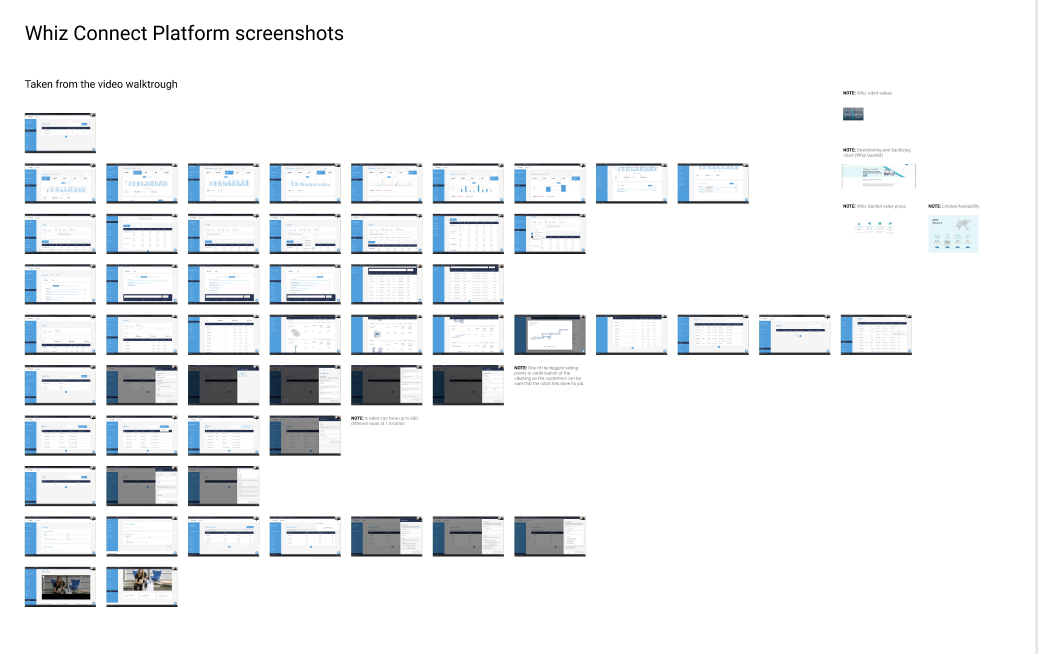
-
Audit of potential partners / competitors
I reviewed security companies and smart-building-sensor providers
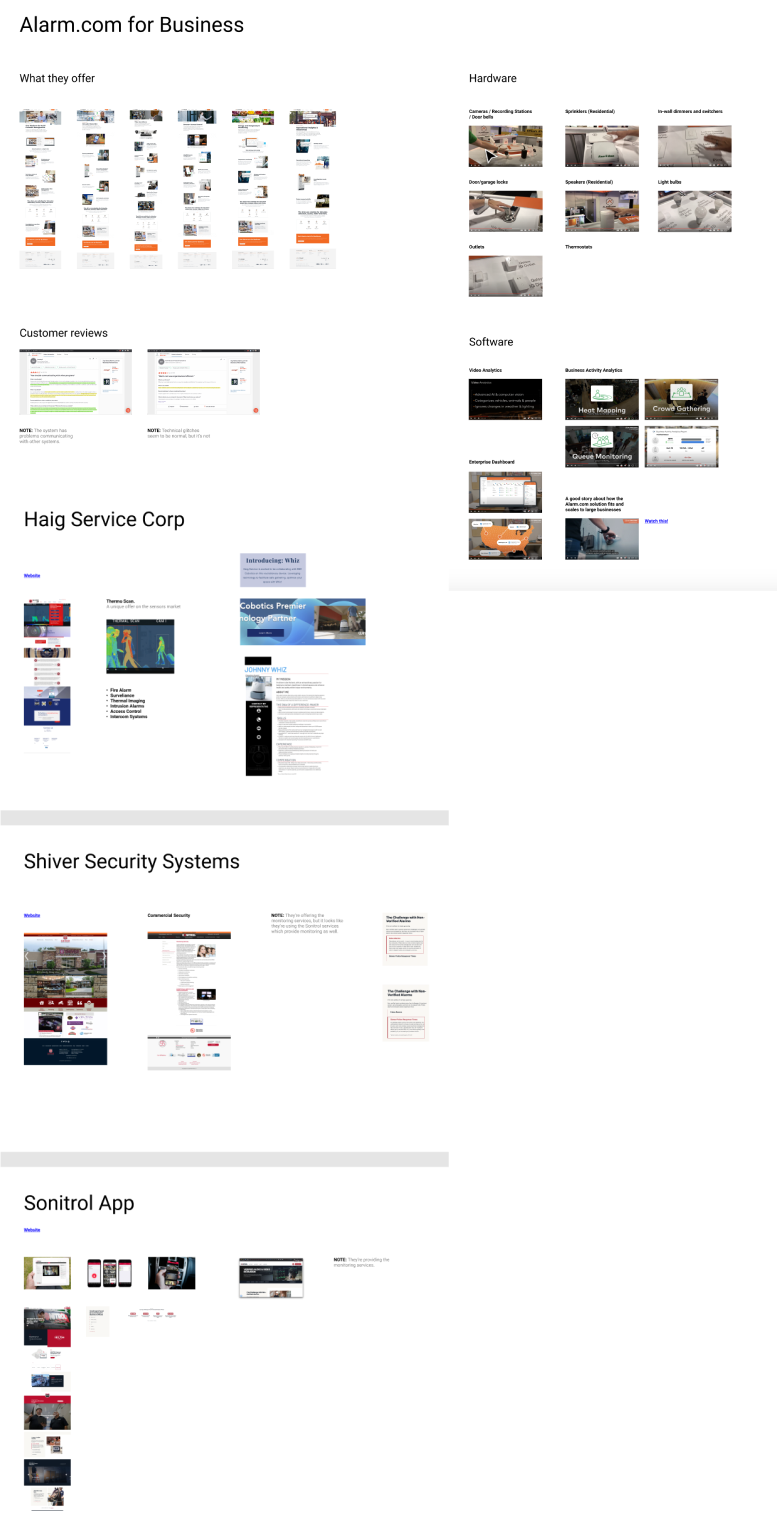
-
Low-fidelity conceptual wireframes
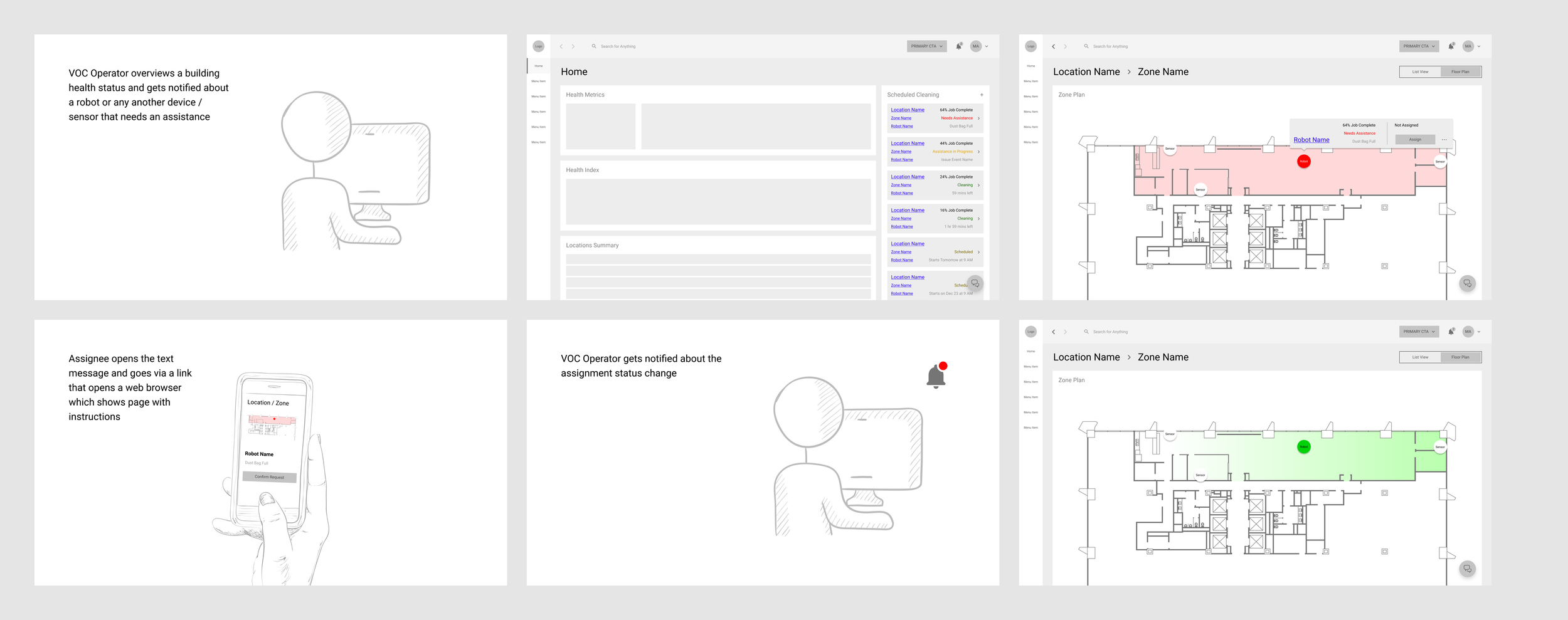
Design time!
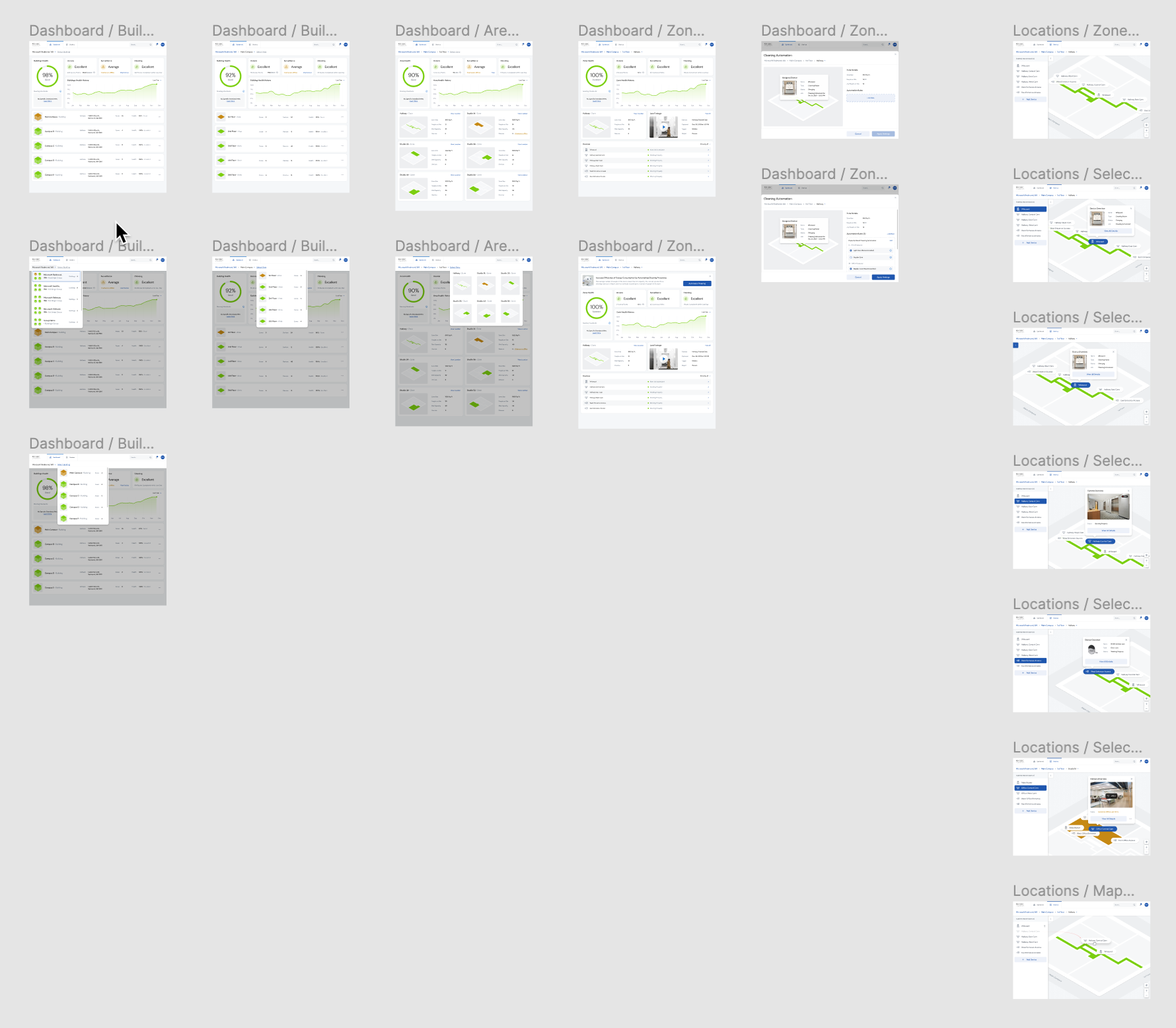
V1 Wireframes
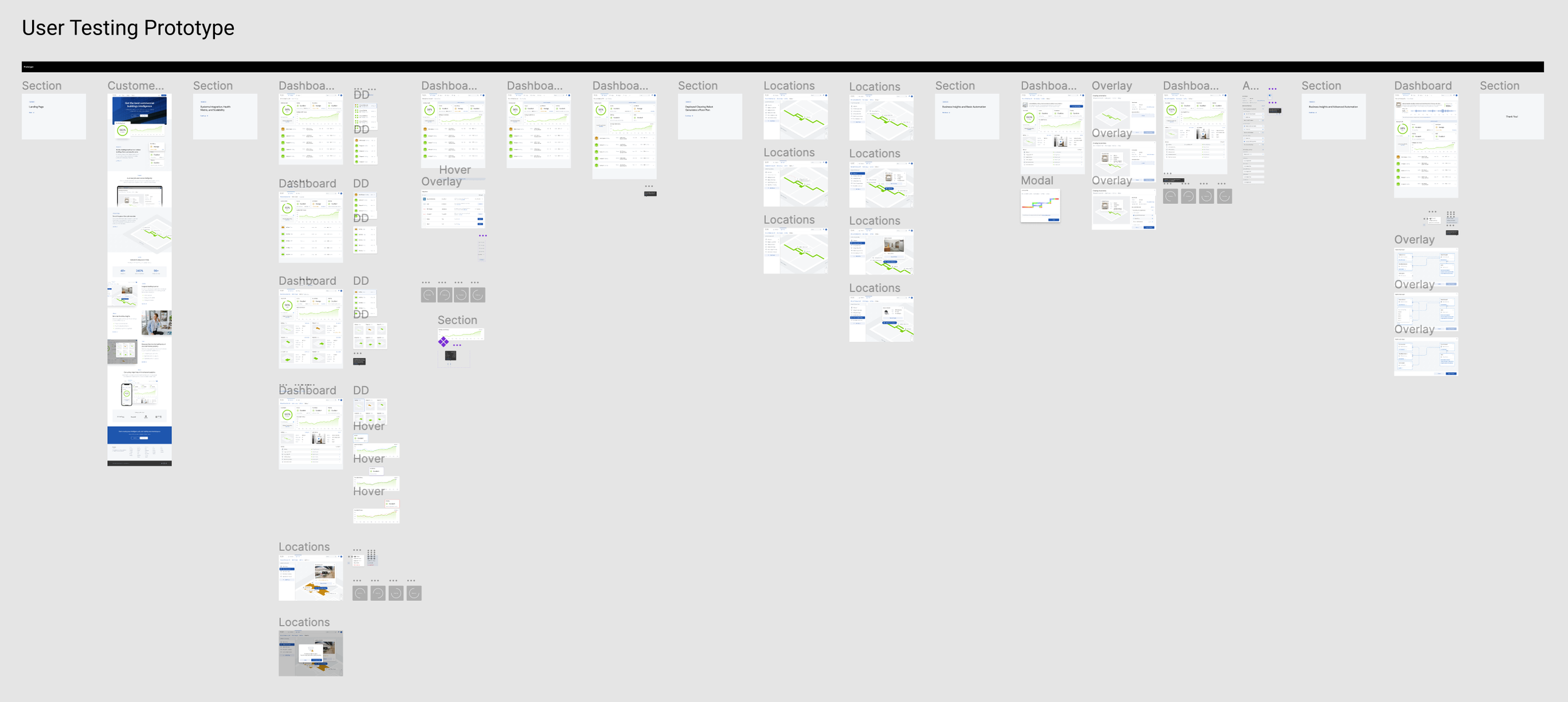
User testing prototype
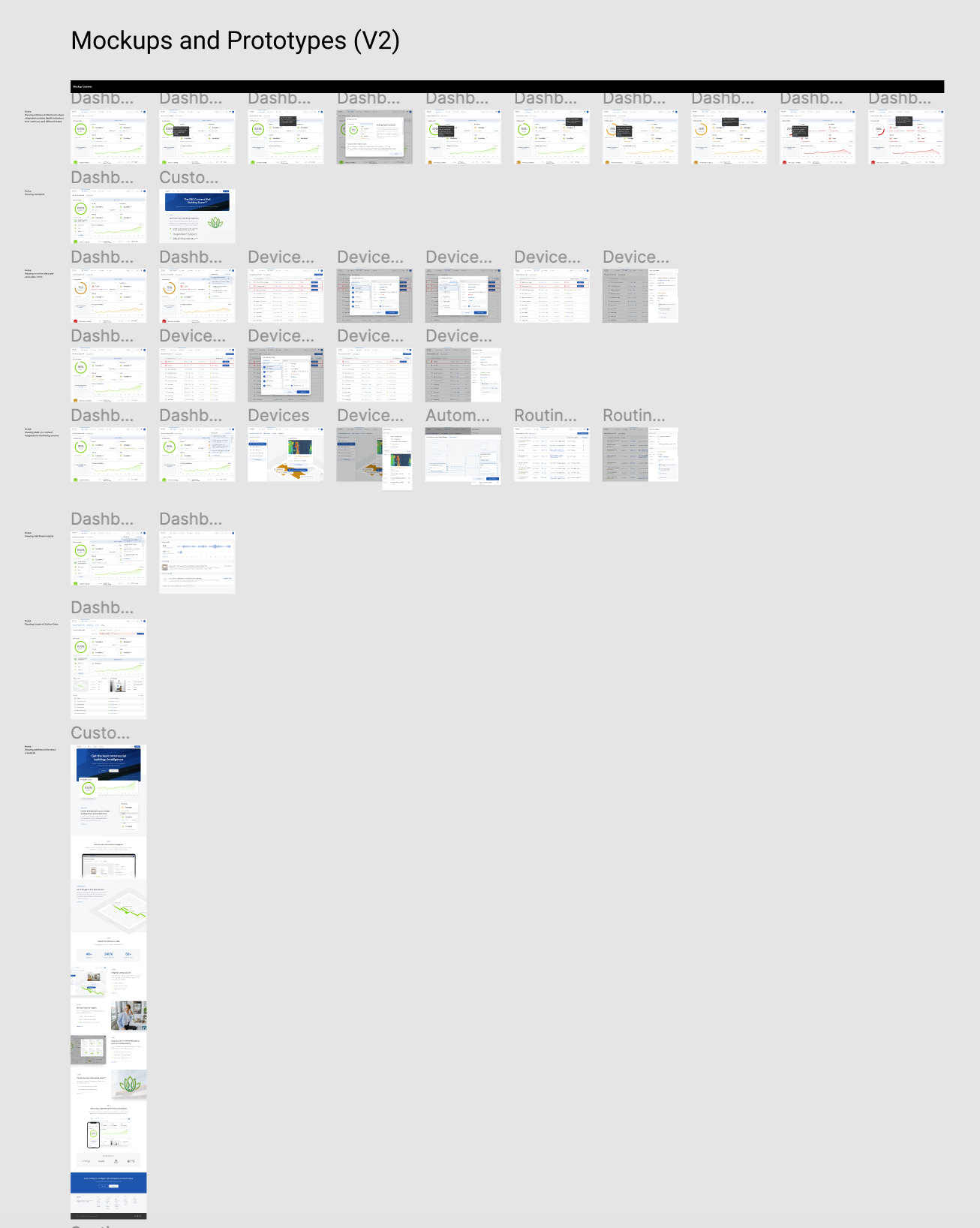
V2 Wireframes

Landing page
User testing prototype
Make sure to view full-screen!
-
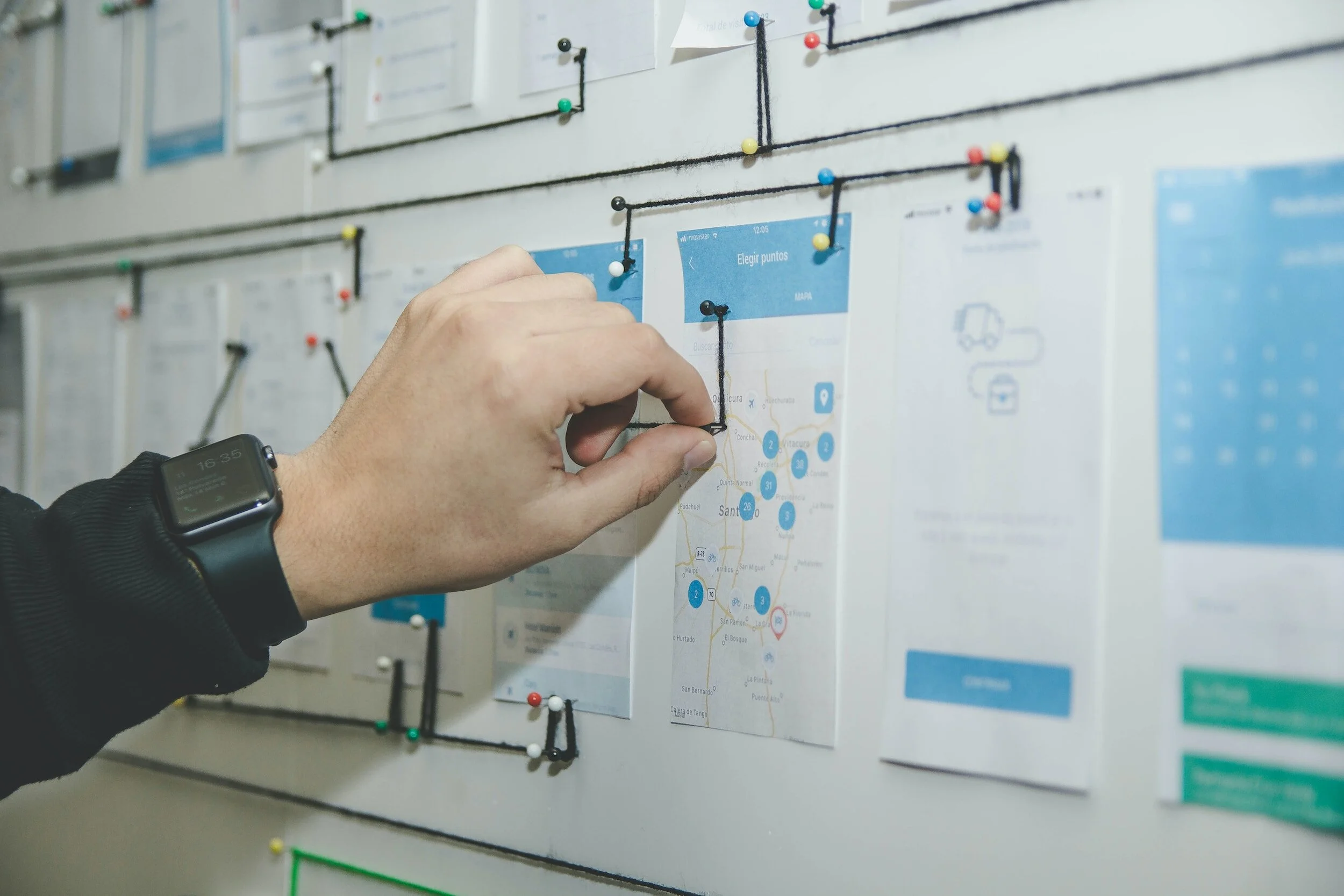
User testing
Conducted user interviews to gain insights and refine designs
-
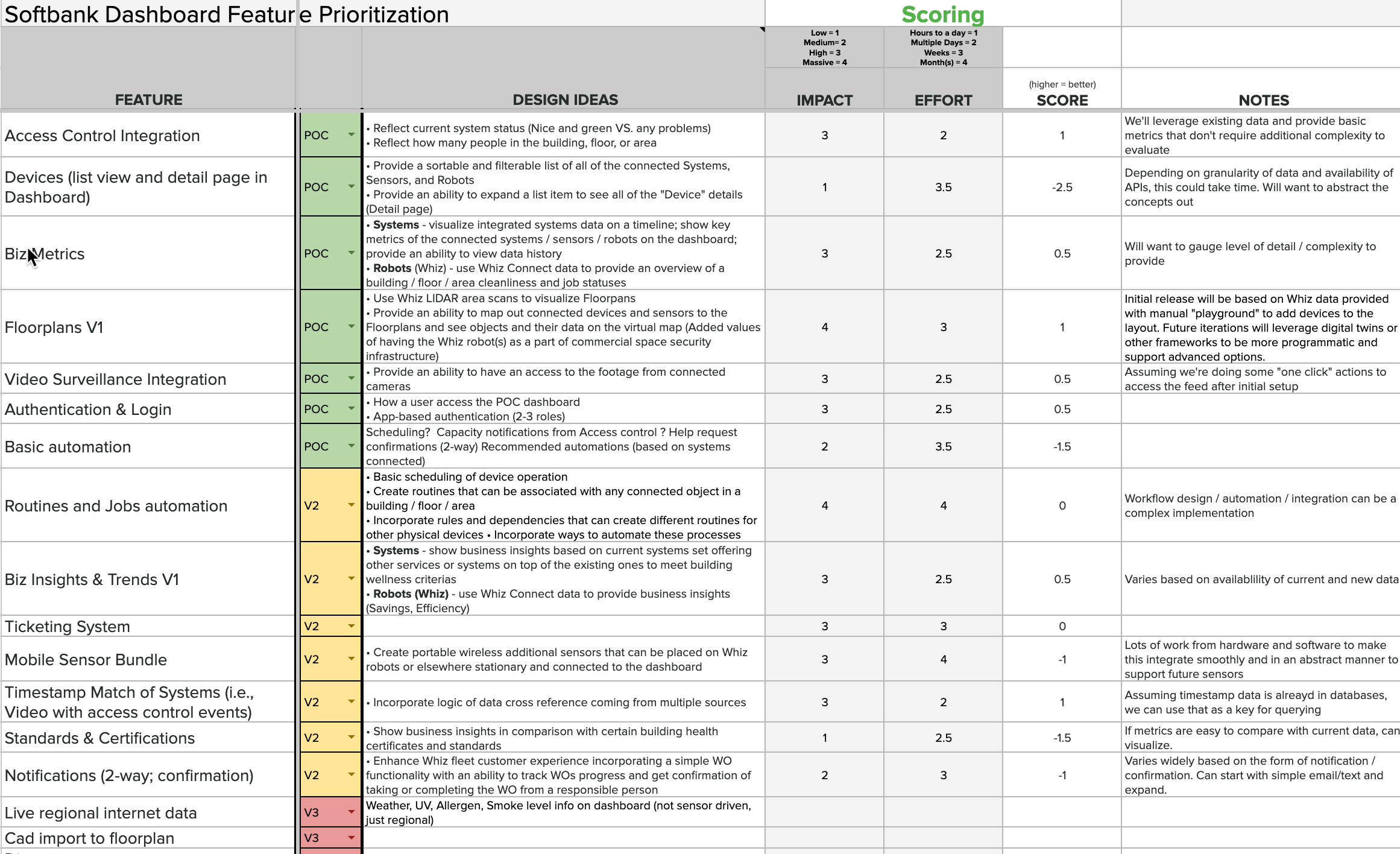
Prioritized features
Employed RICE feature prioritization to identify key features and developed a risk mitigation plan.
-
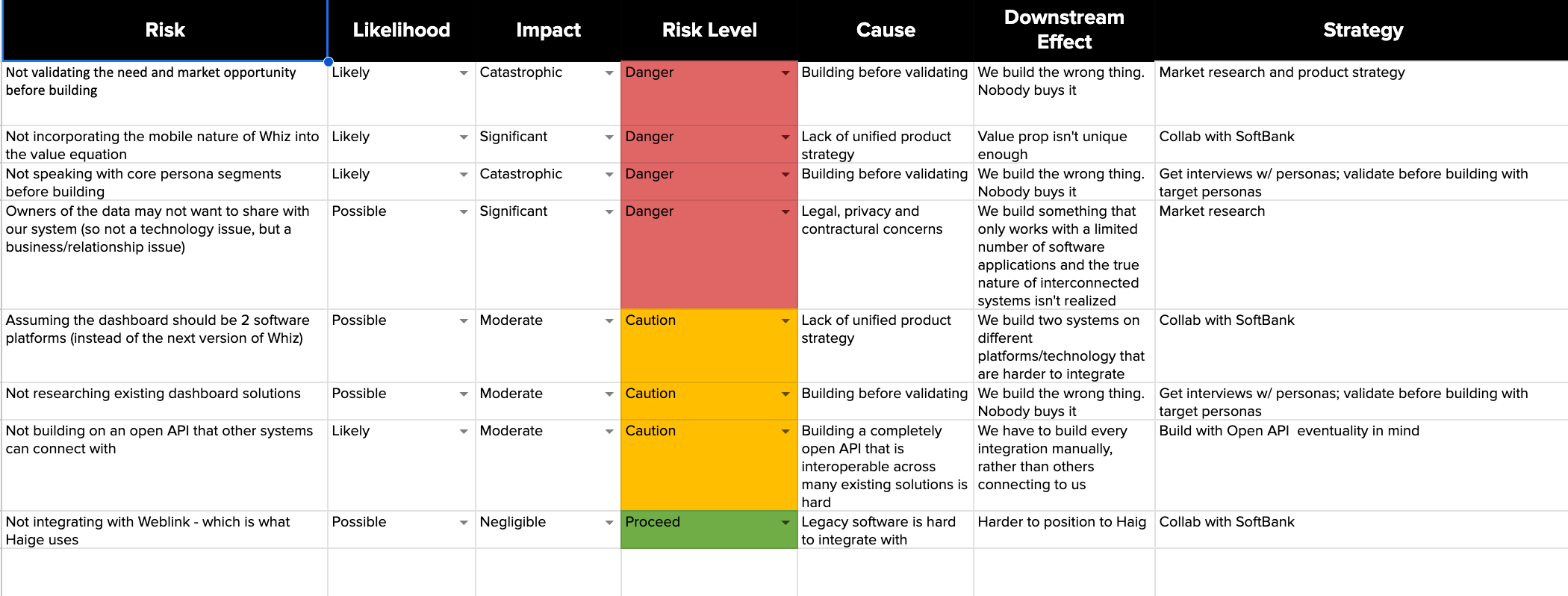
Mitigated risks
Developed a risk mitigation plan for all of the stakeholder concerns and issues raised during testing
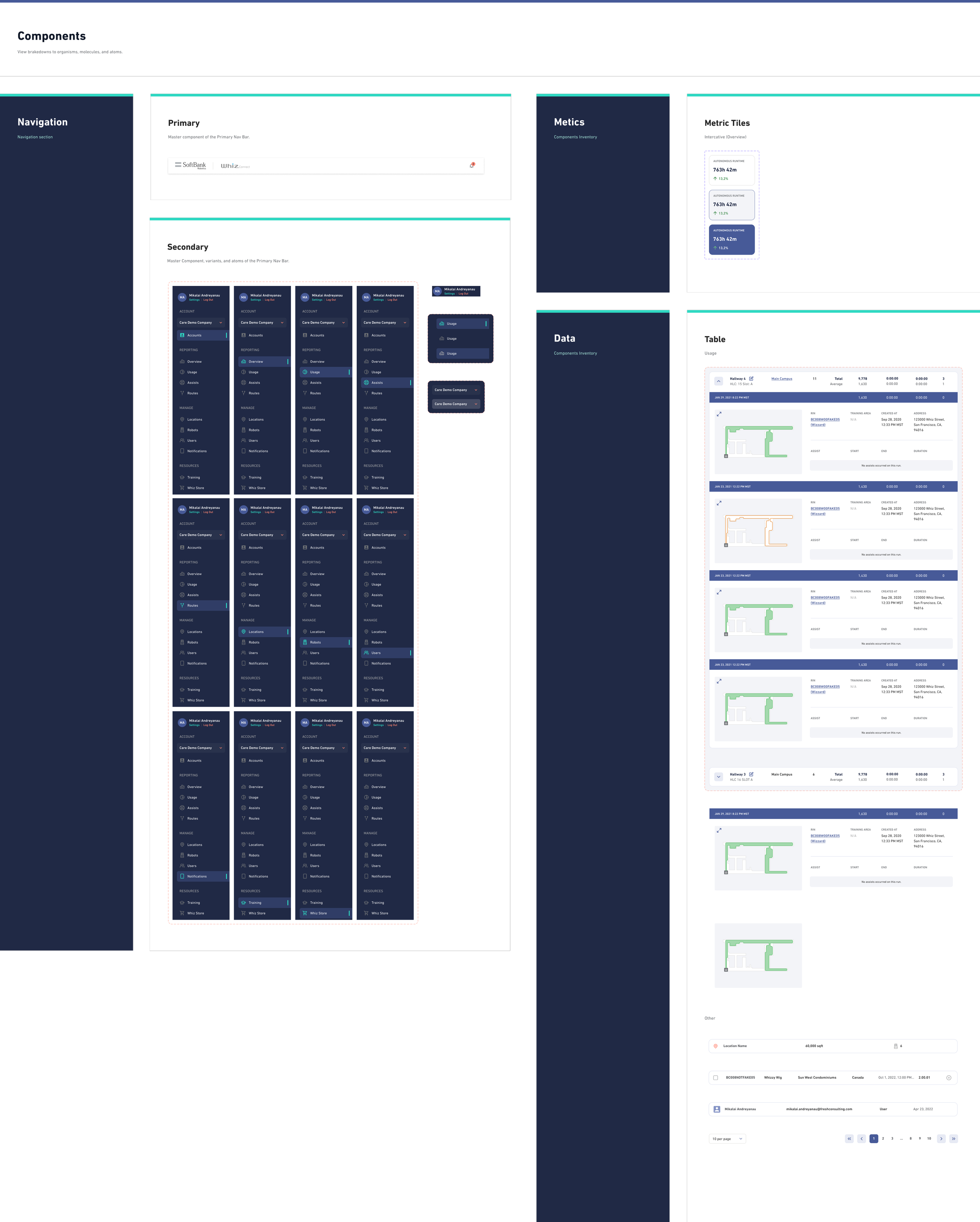
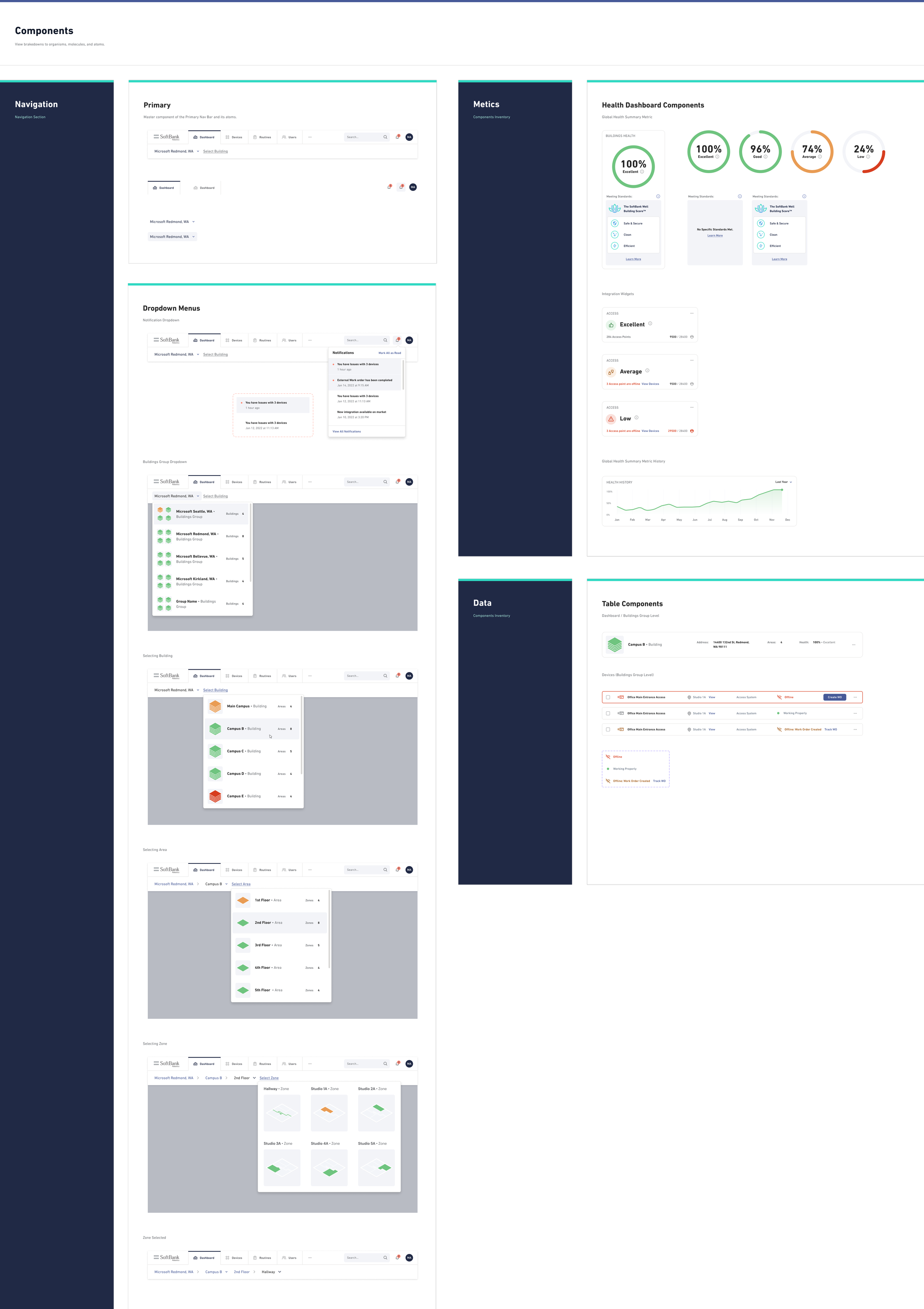
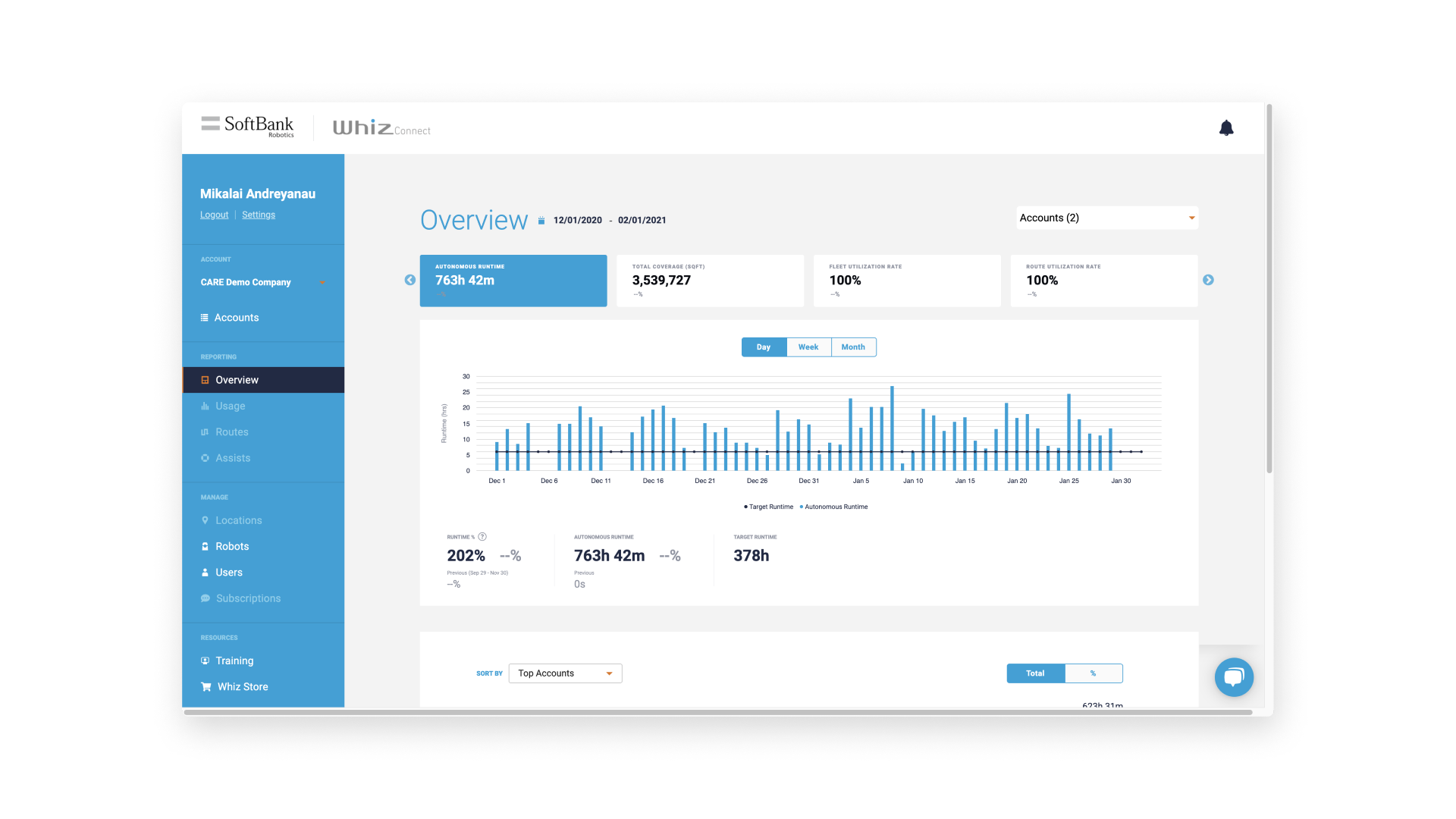
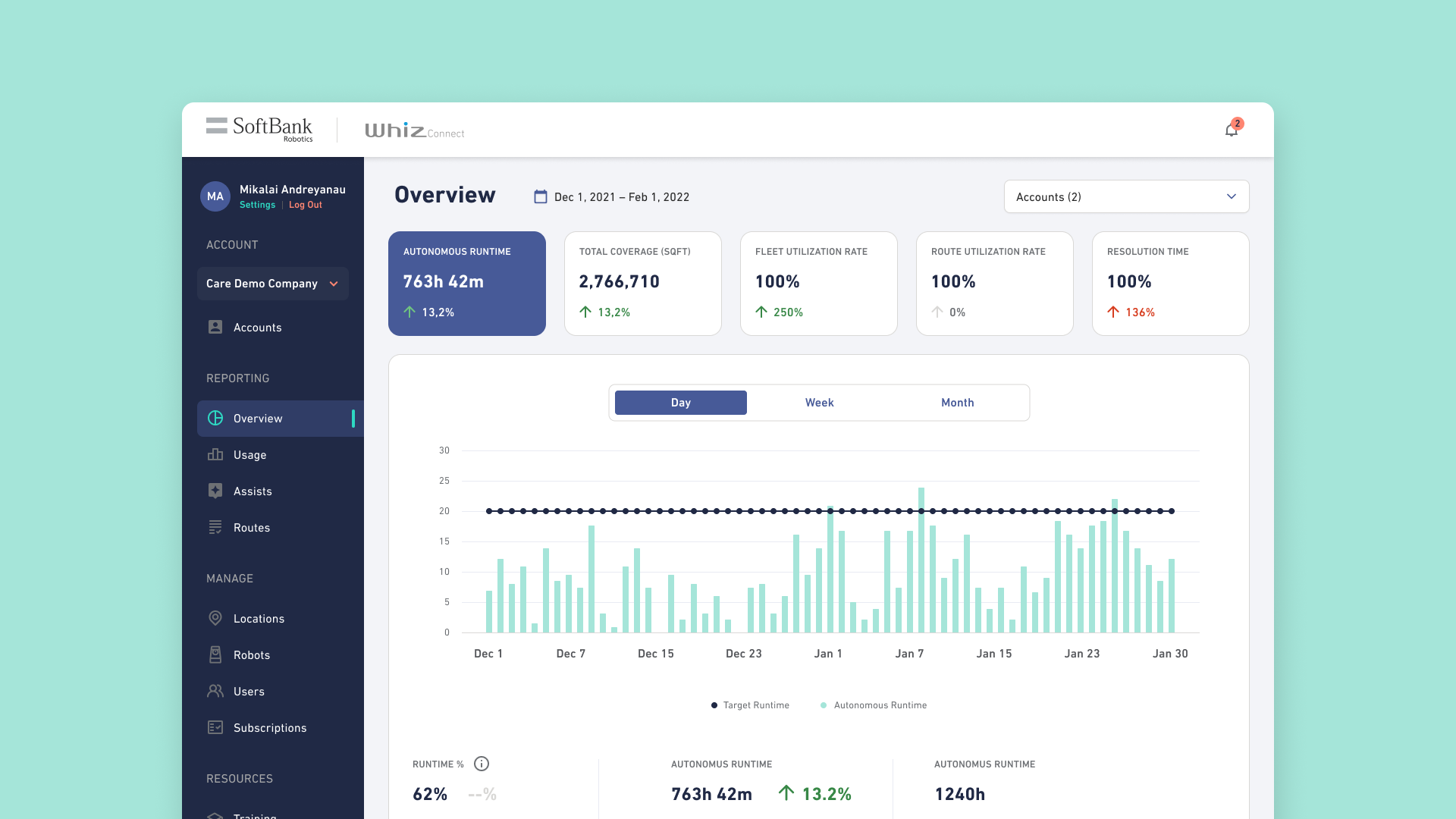
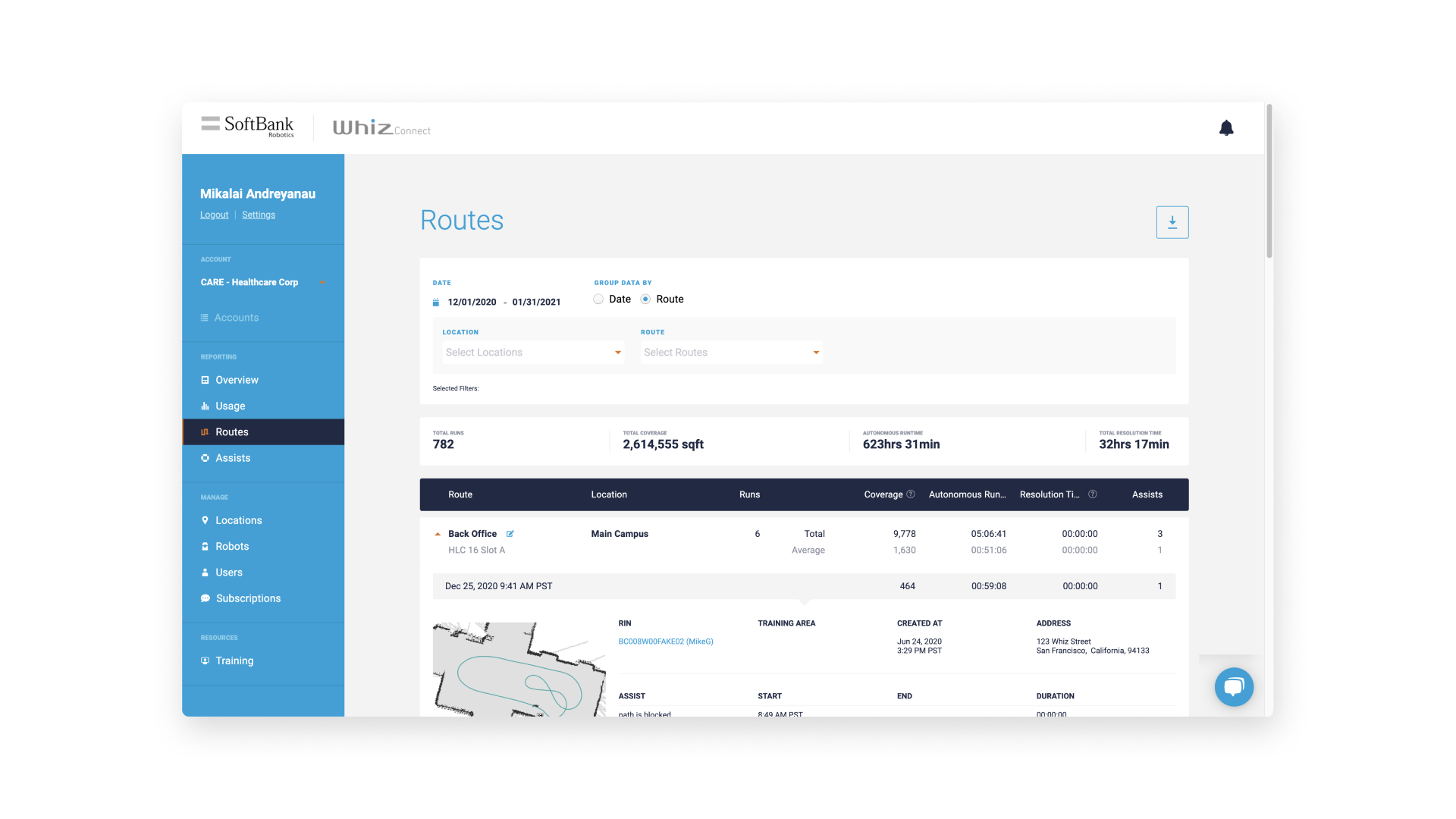
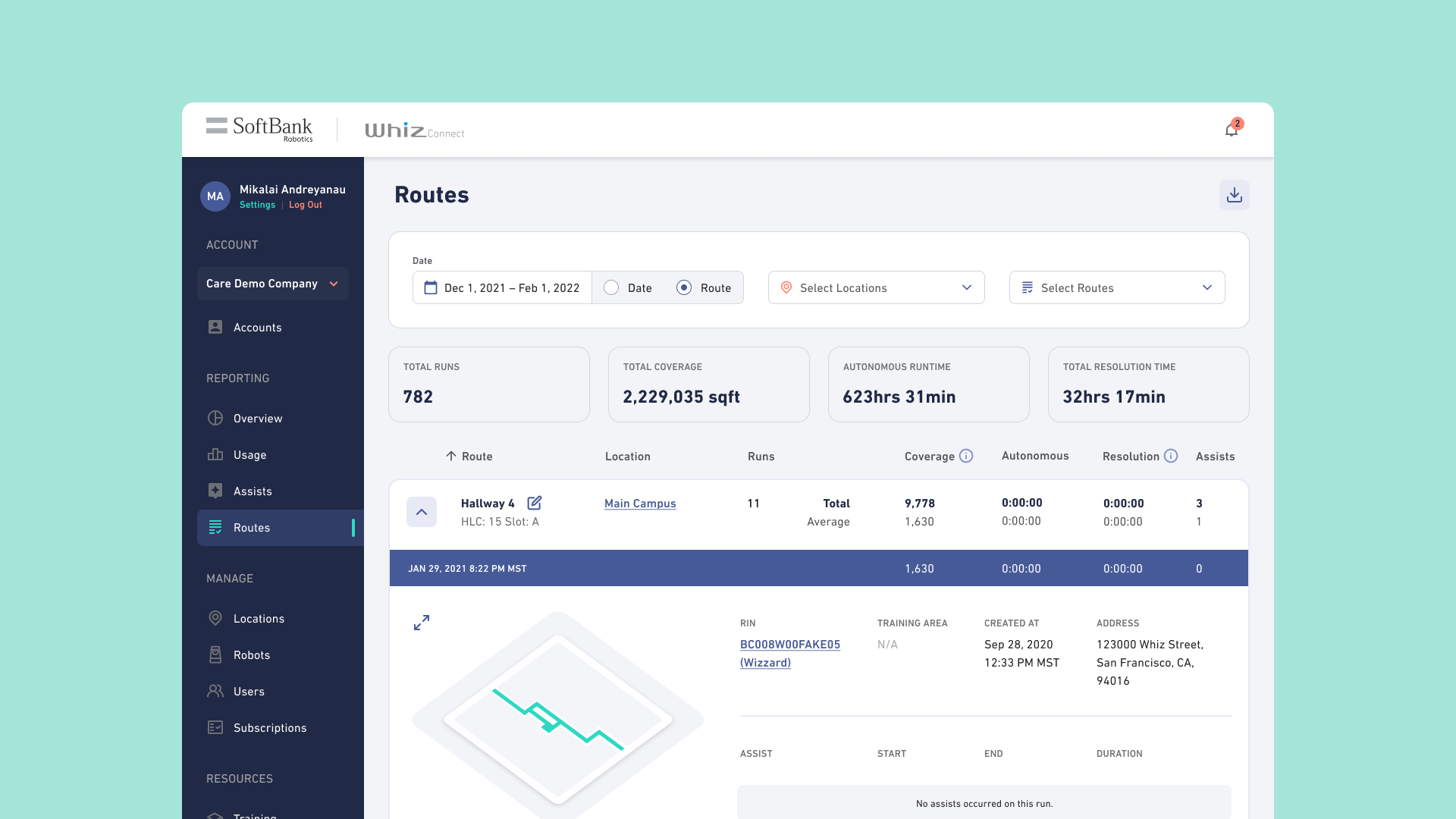
After getting feedback from SoftBank and testers, I learned how to improve the designs. Softbank also wanted us to update their branding to match the new designs, so I created new styles and a component library in Figma.
Styles
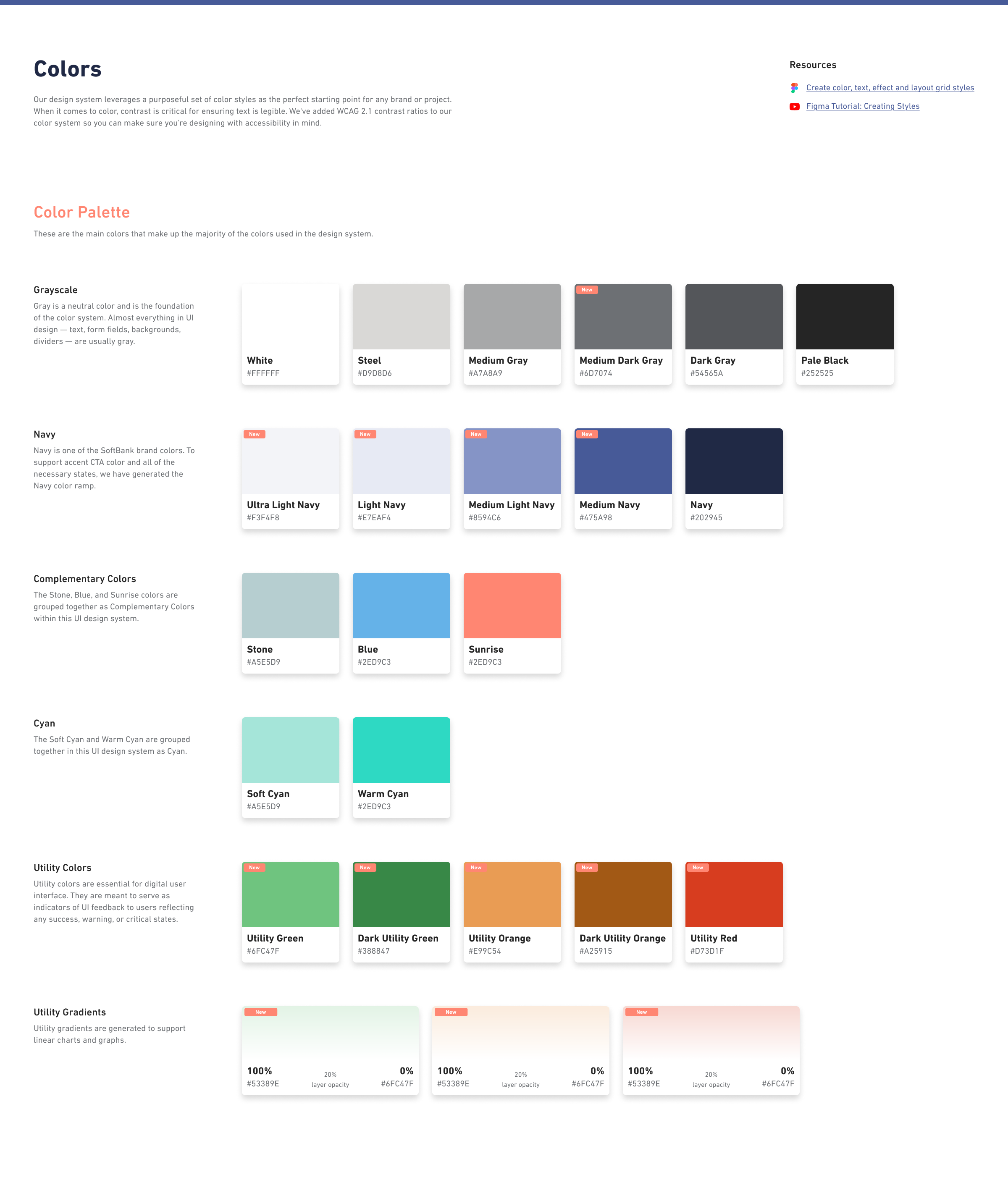
Colors
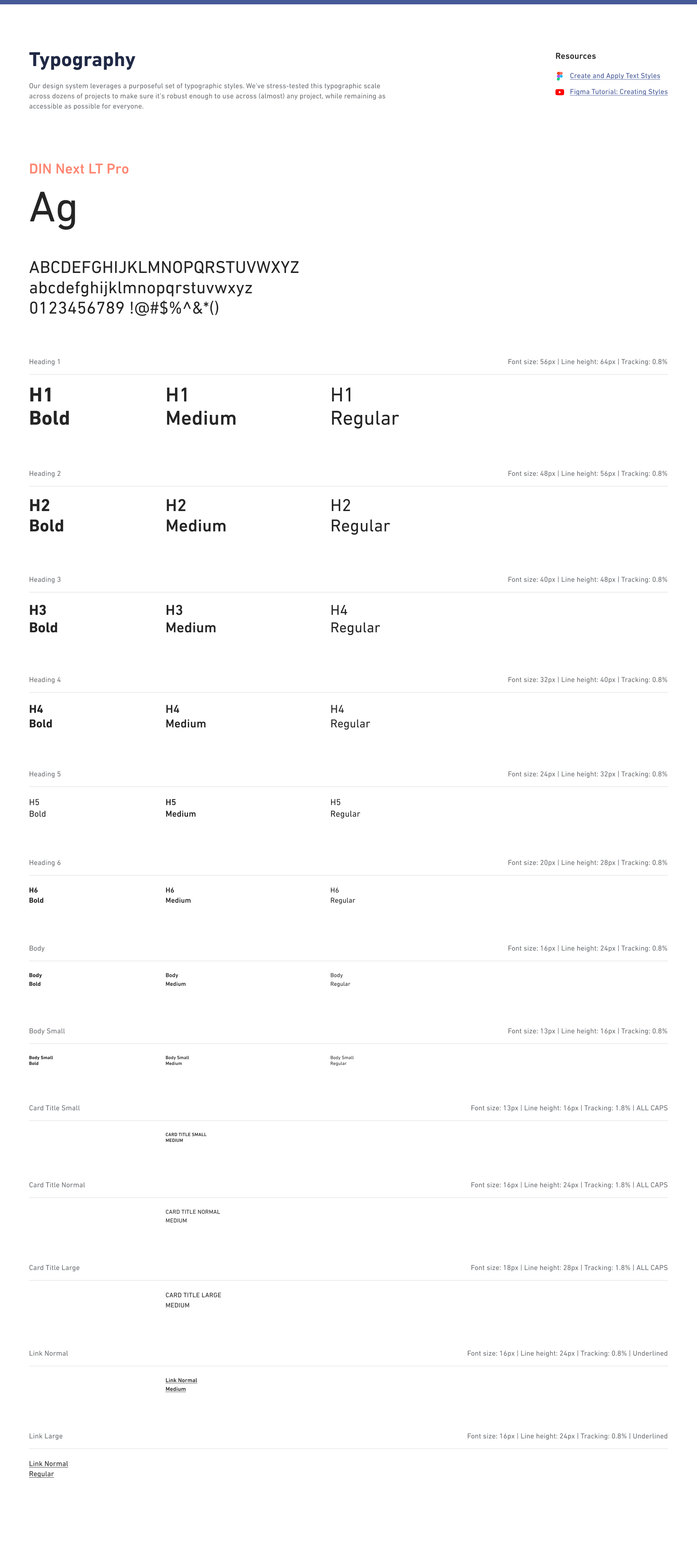
Typography
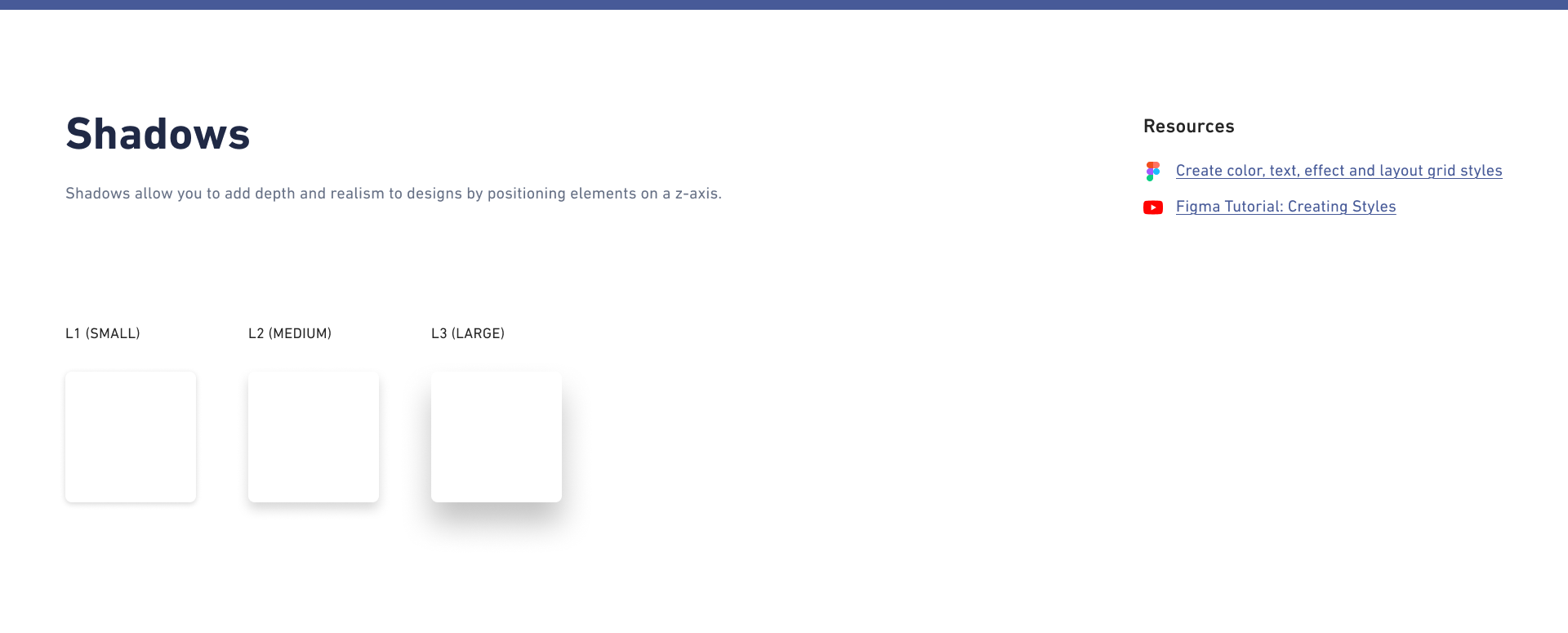
Shadows
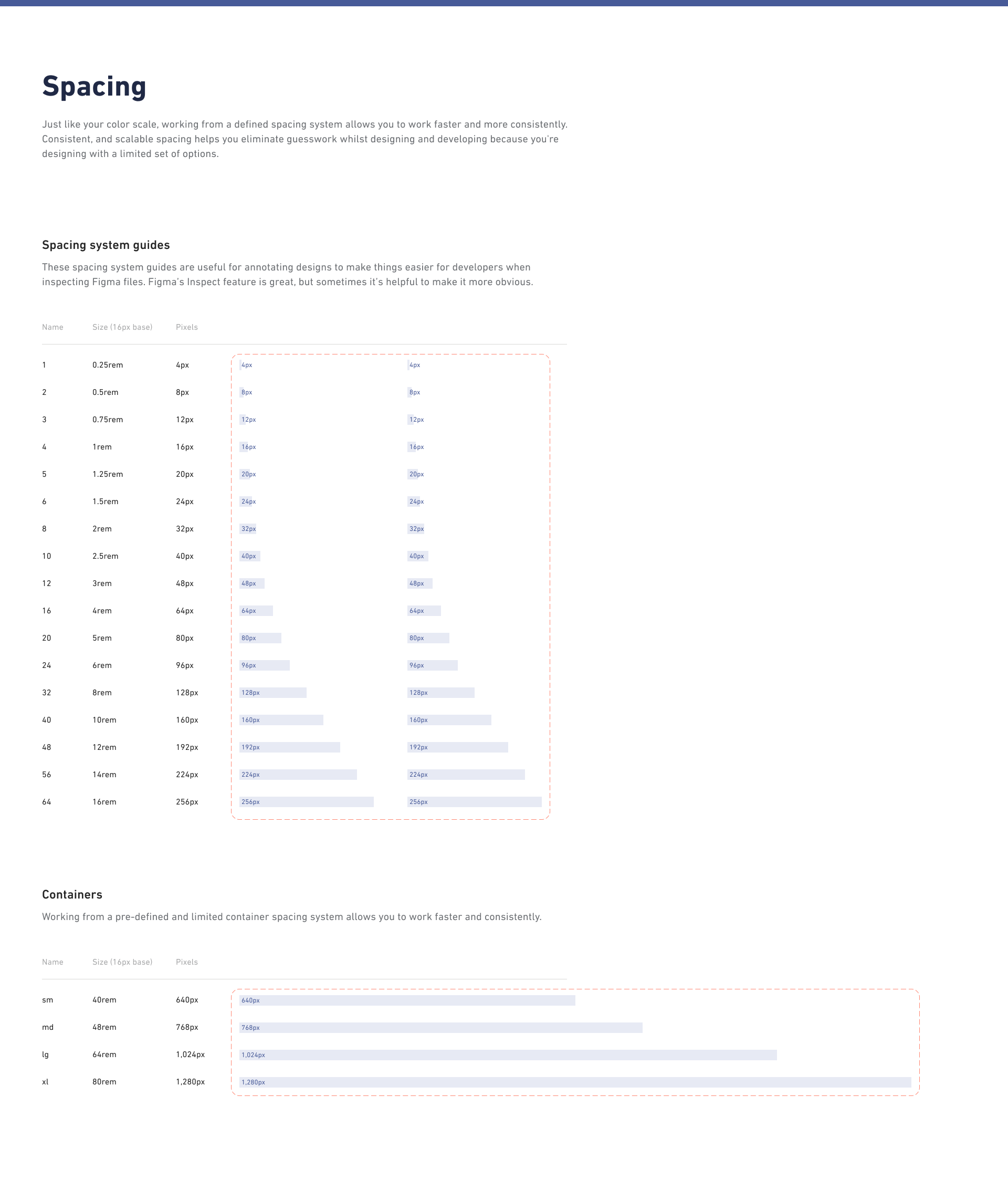
Spacing
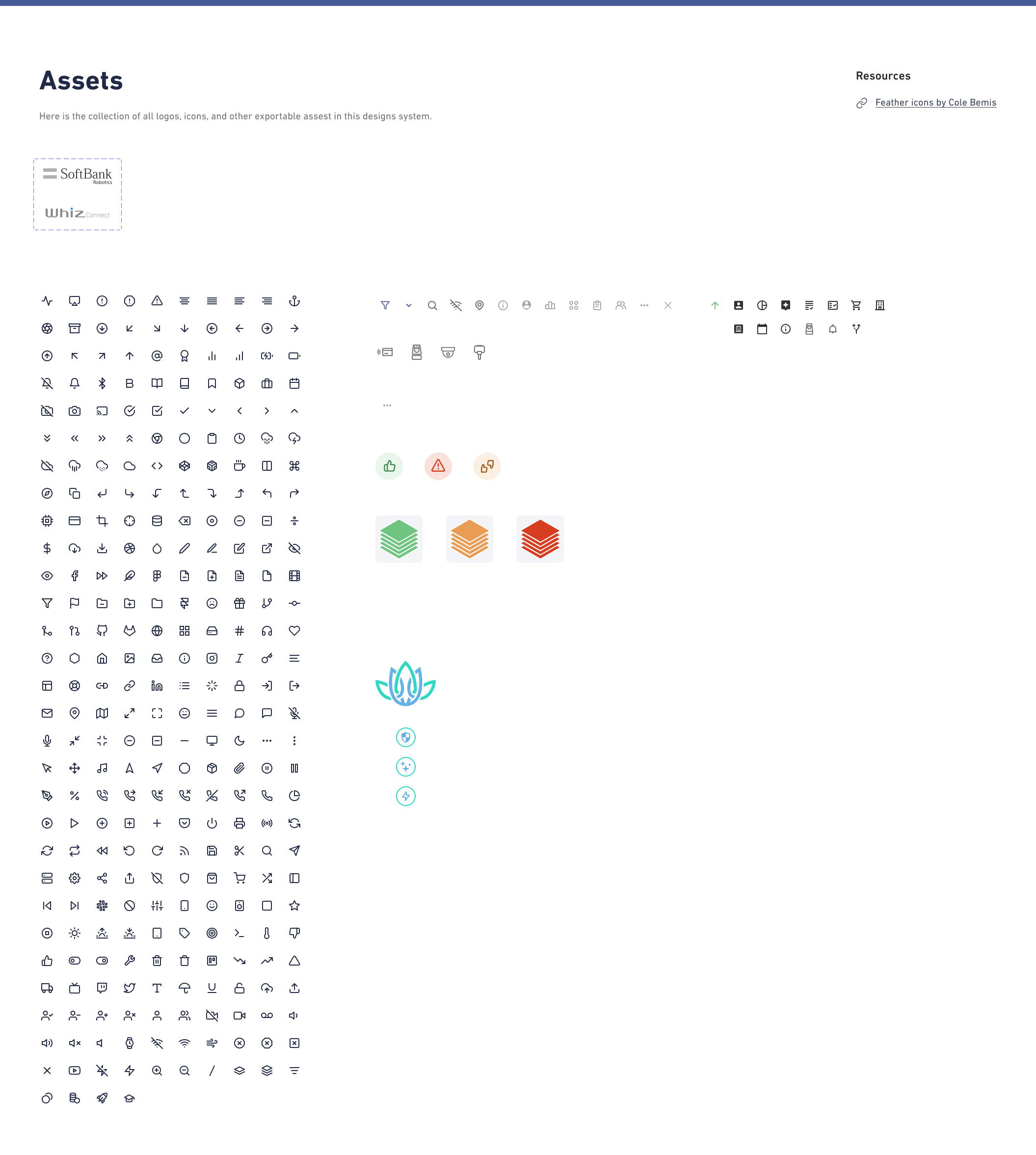
Assets
Components
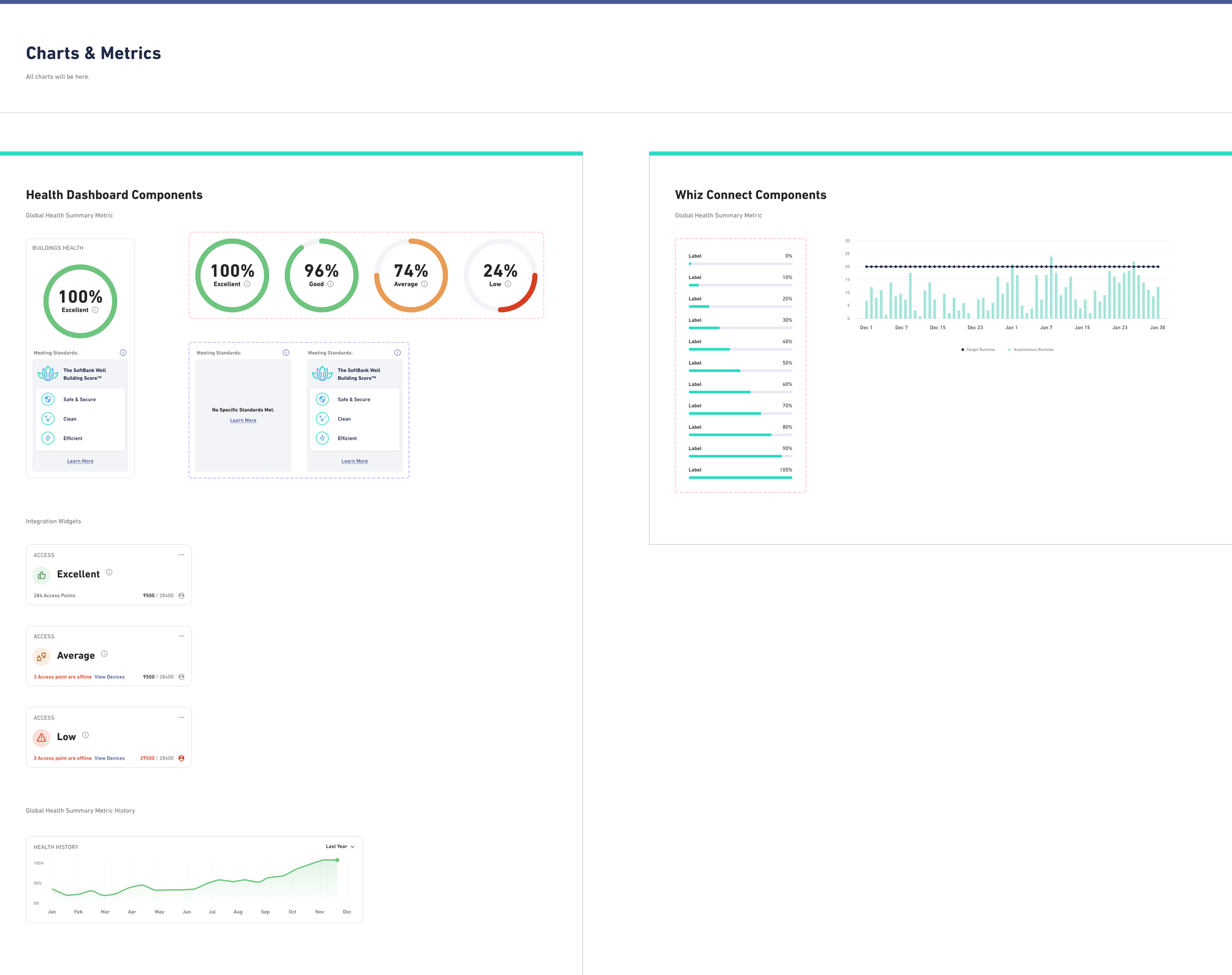
Charts
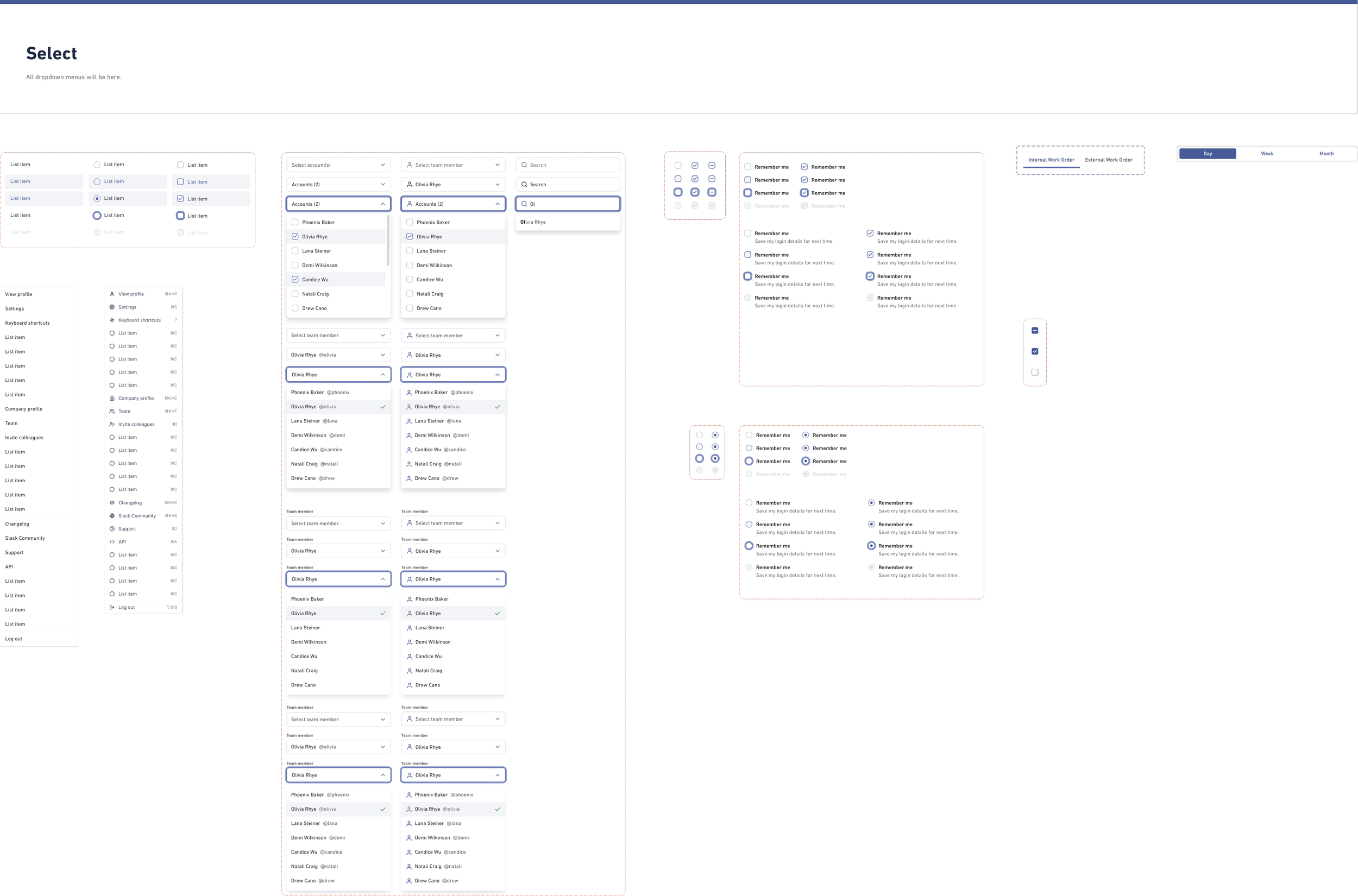
Selects
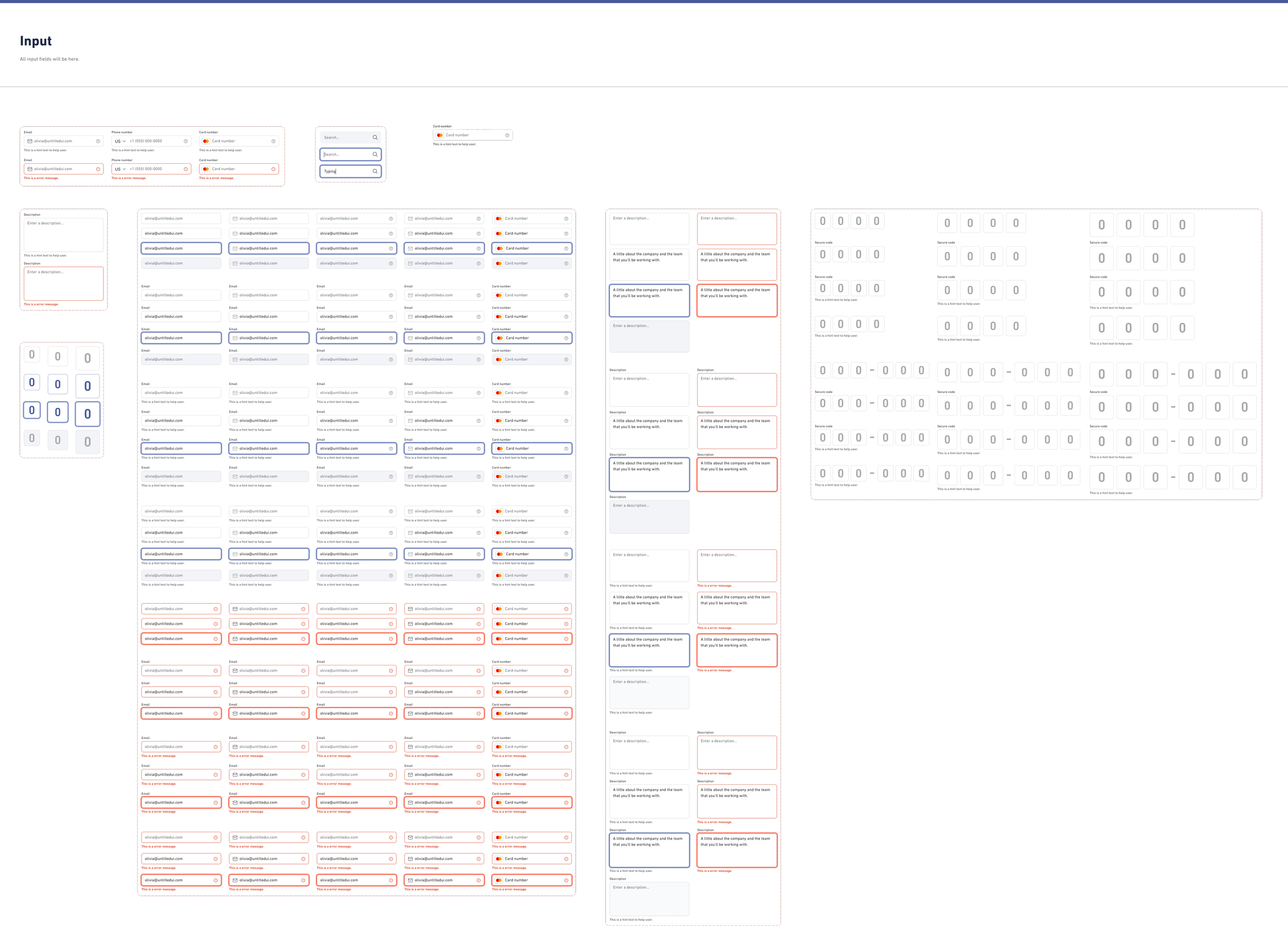
Inputs
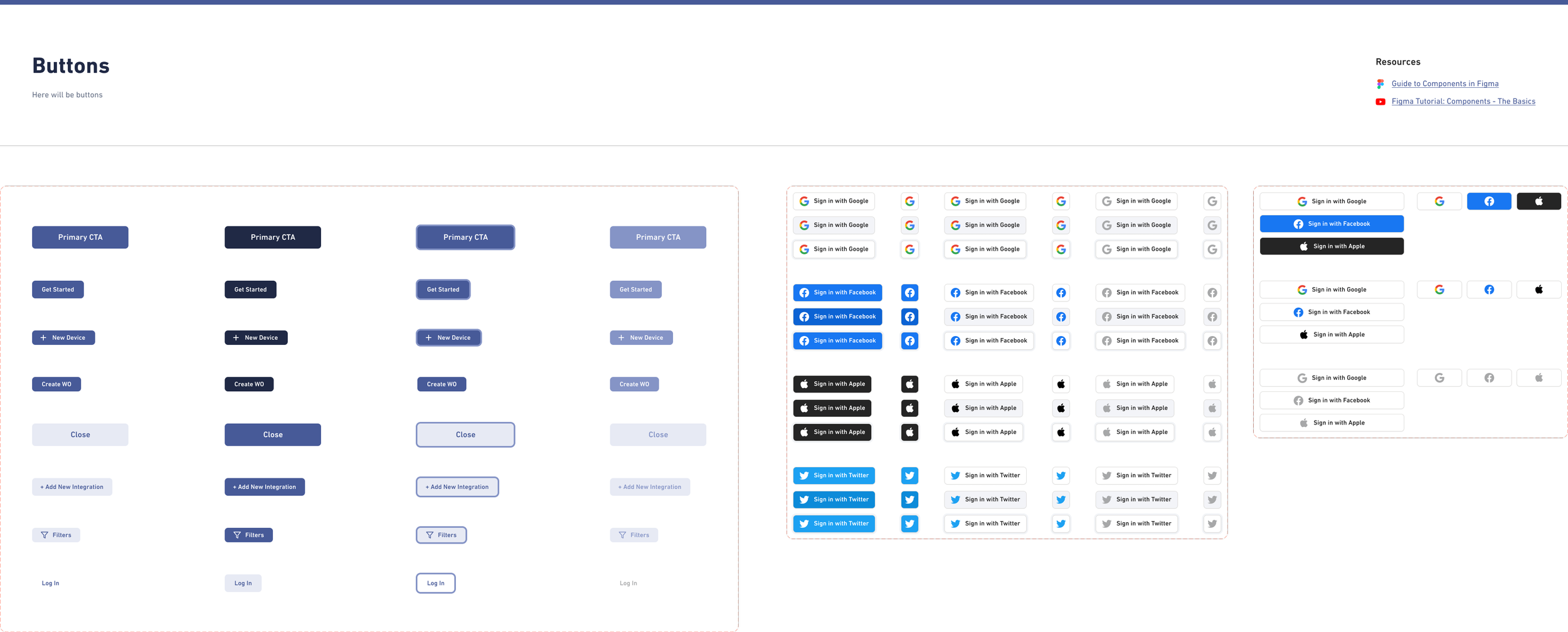
Buttons
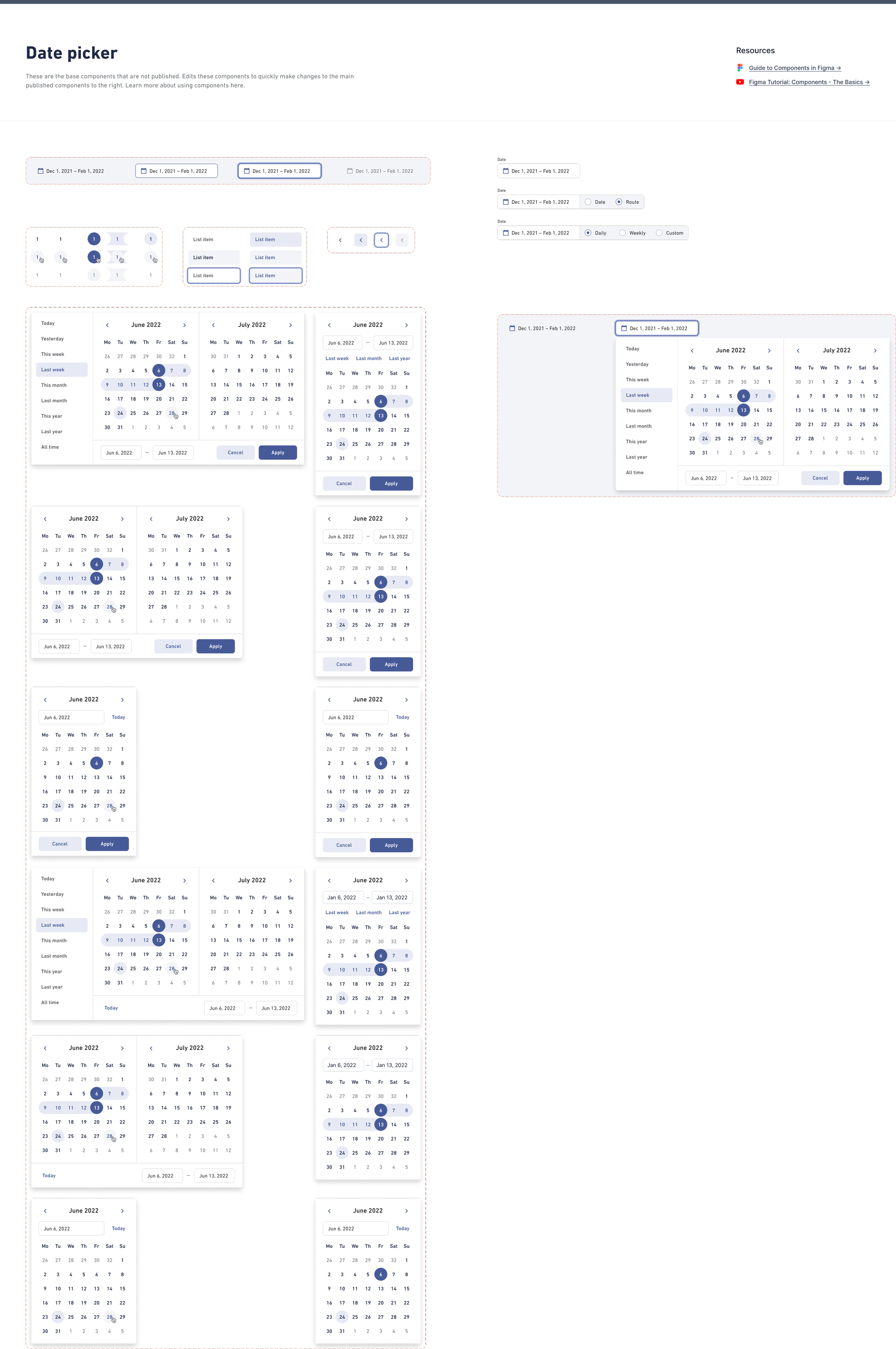
Date picker
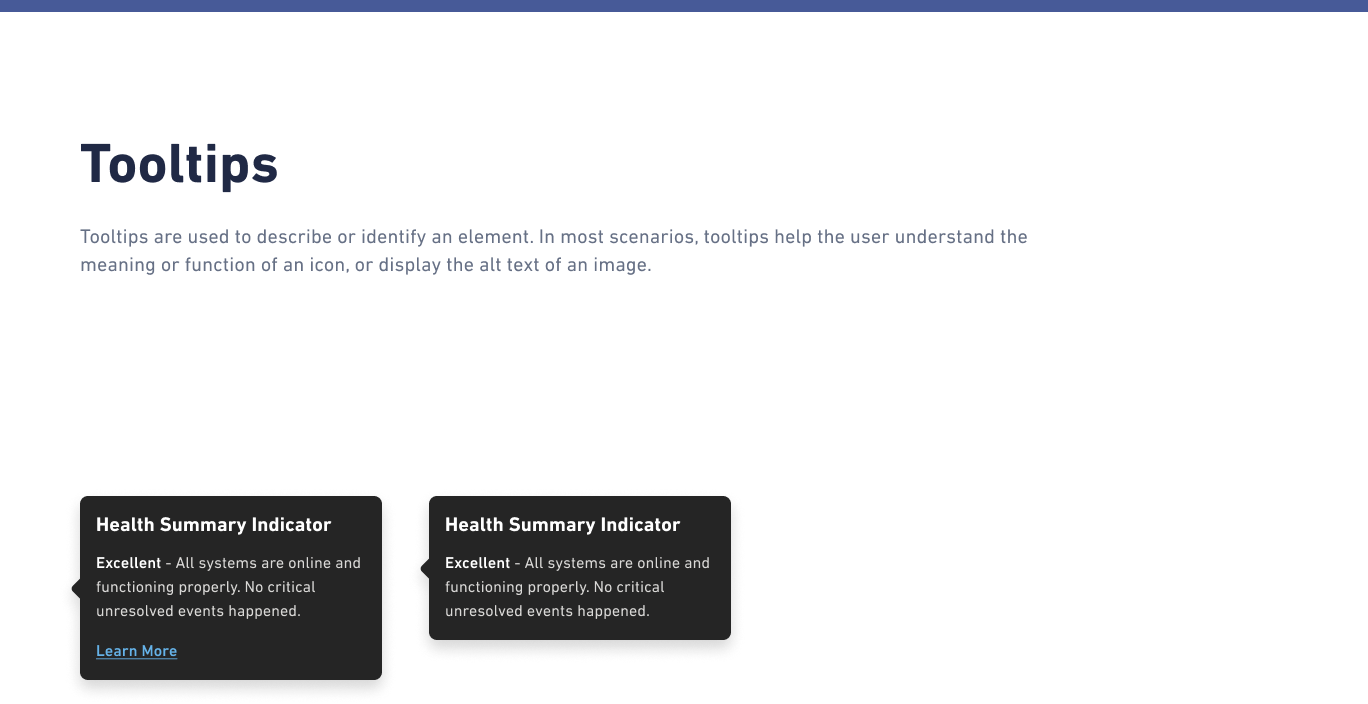
Tooltips
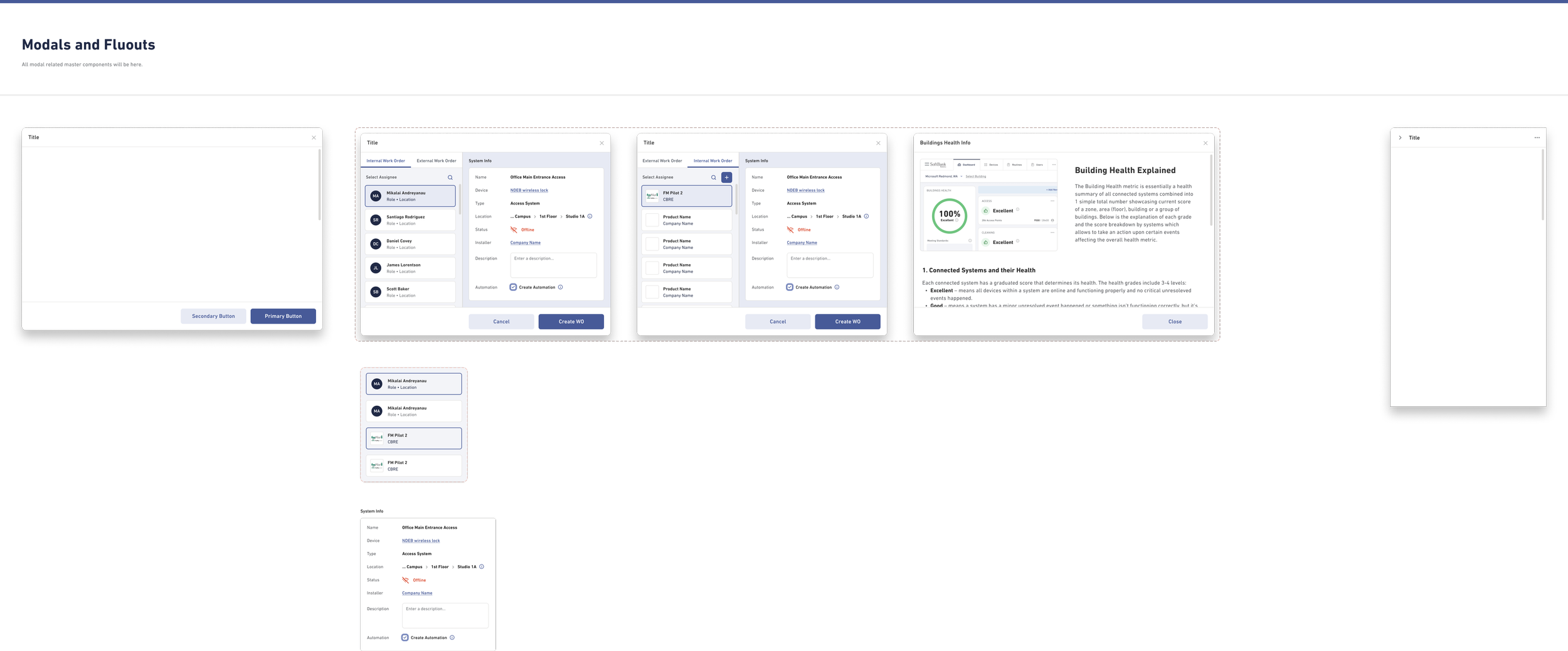
Modals
Building Health Screens
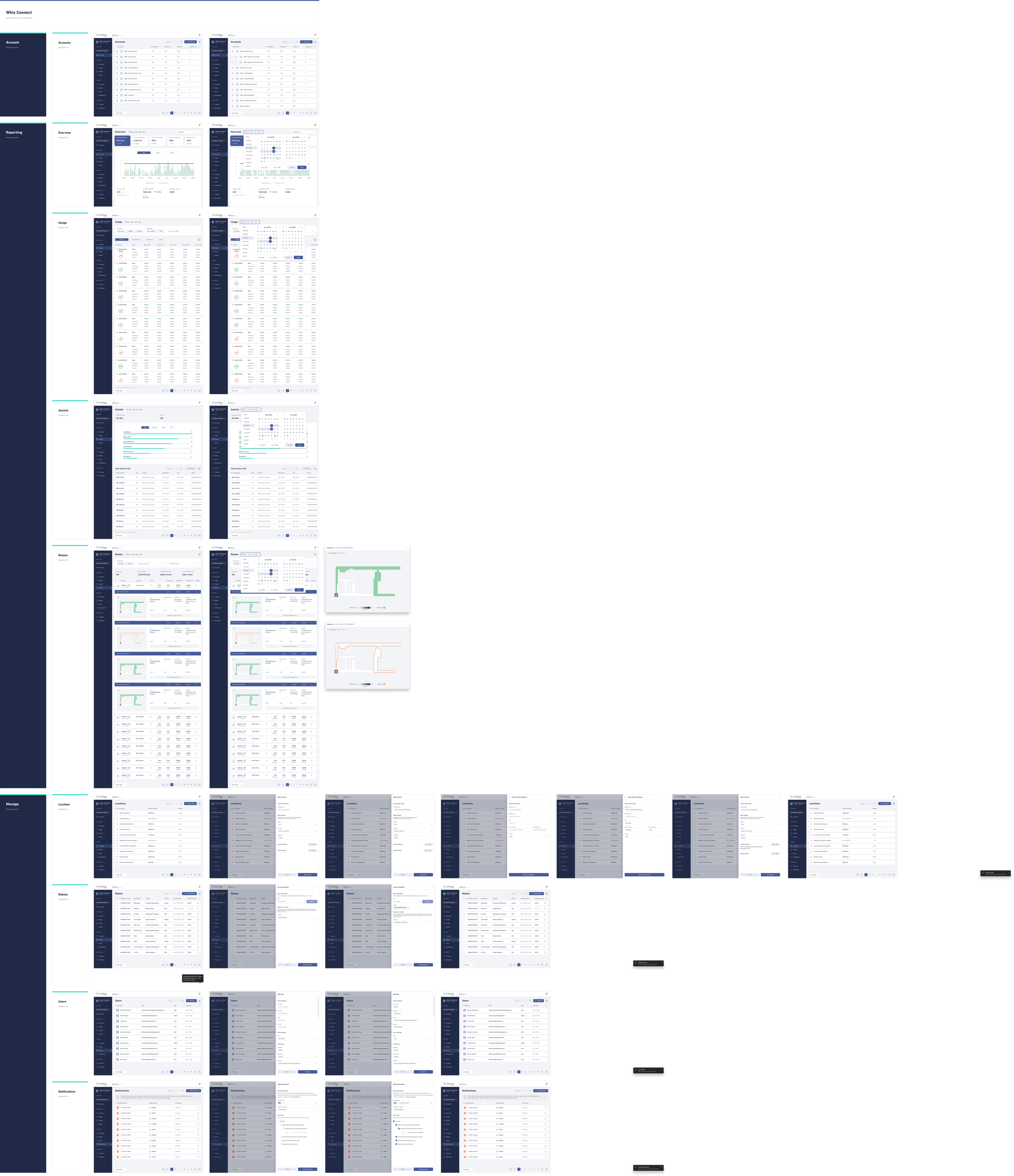
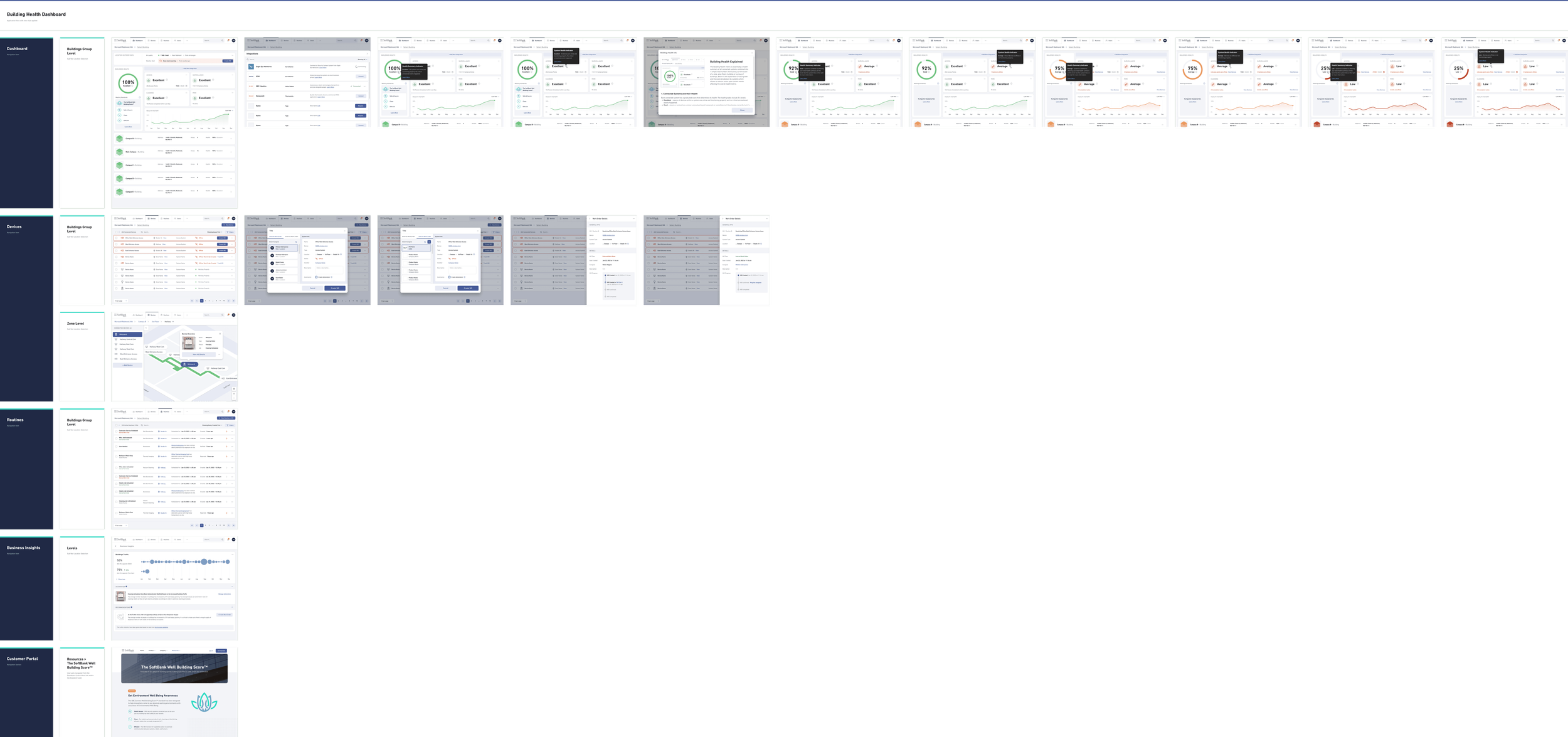
Whiz Robot Dashboard Screens
I then applied the new styles and components to the Whiz Connect dashboard. Here are a couple ‘before/after’ comparisons:
04/ Outcomes
Successes
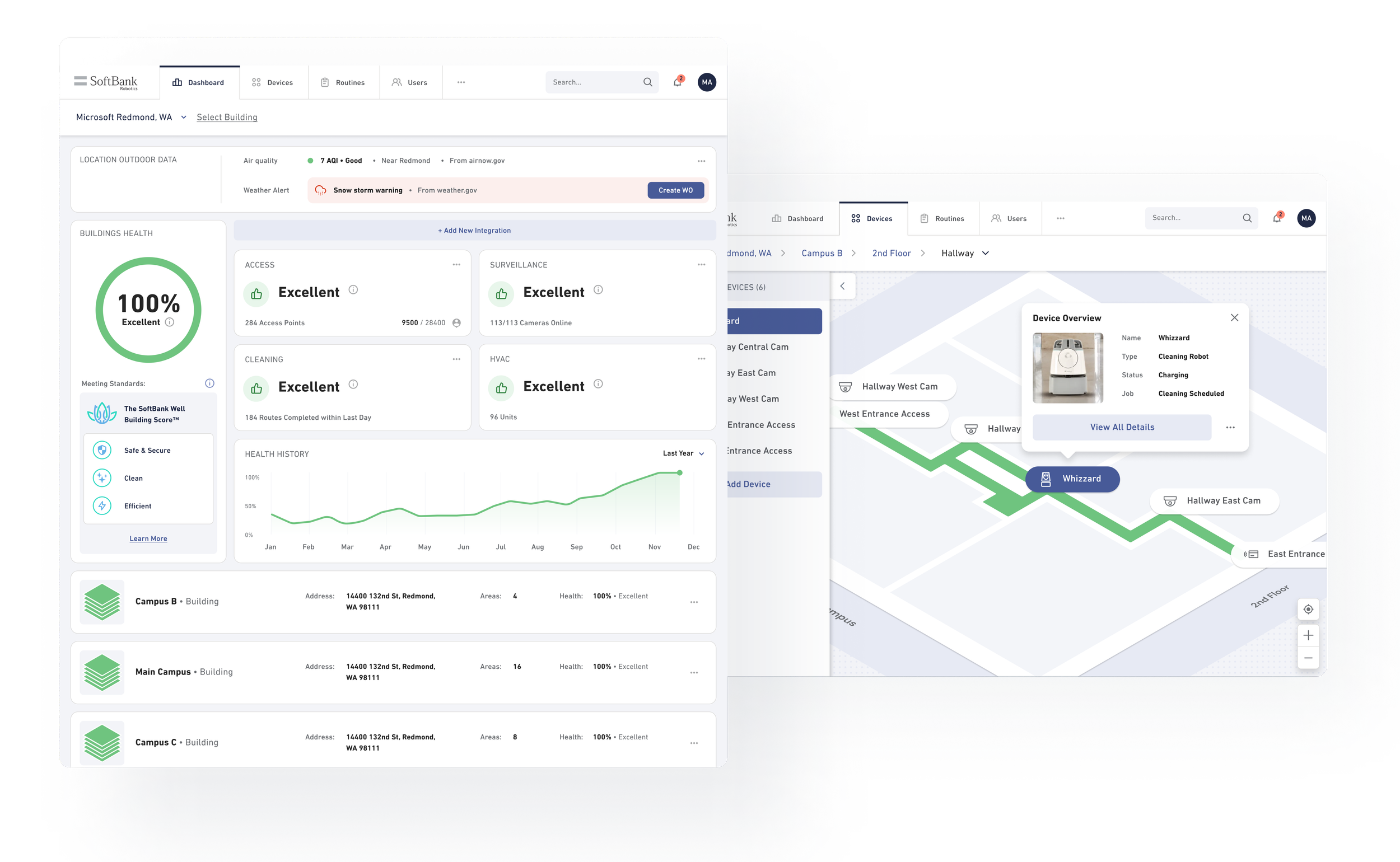
The project was a resounding success, culminating in an enhanced dashboard that provides real-time, comprehensive insights into building health. We also revamped the brand and applied the new components and styles to the existing Whiz Connect dashboard. It also led to a broader partnership with SoftBank, including additional contracts for further development and design initiatives.
Learnings
The project underscored the importance of user-centered design, collaborative ideation, and thorough market research in creating a product that meets user needs and business objectives.
I learned how to move forward with ‘good enough’ while identifying the risky assumptions we’ll need to address.
What’s next?
Moving forward, the focus will be on executing (developing) the new dashboard, mitigating the risks with targeted persona validation, and redesigning the existing Whiz robot dashboard, ensuring continuous improvement and innovation in line with SoftBank’s evolving needs and market trends.